
Description
In the evolving landscape of urban energy infrastructure, city gas flow measurement has emerged as a critical component that directly impacts commercial settlement accuracy, operational efficiency, and regulatory compliance. As natural gas distribution networks expand globally, the challenge of achieving reliable custody transfer measurement—where gas ownership changes hands between suppliers and consumers—has never been more pressing. The core issue lies in ensuring that every cubic meter of gas is accurately accounted for, regardless of fluctuating pressure, temperature, or flow conditions.
Understanding Custody Transfer Measurement Challenges
Custody transfer points represent the financial intersection of gas distribution networks. At these critical junctures, measurement inaccuracies translate directly into revenue loss or billing disputes. Traditional metering technologies often struggle with several fundamental challenges: they require extensive straight pipe sections for flow profile stabilization, exhibit poor performance at low flow rates, and lack integrated compensation for varying operating conditions. For commercial facilities such as hotels, catering establishments, and industrial boiler operations, these limitations create significant billing discrepancies that erode trust between suppliers and consumers.
The technical complexity stems from the physical behavior of gases under different conditions. Natural gas volume expands and contracts with temperature changes while compressing under pressure variations. Without real-time compensation mechanisms, meters recording volumetric flow at working conditions can deviate substantially from the standard volume that forms the basis of commercial transactions. This gap between measured and actual consumption has driven the industry toward more sophisticated metering solutions.
Volumetric Metering Technology: The Foundation of Accuracy
Modern volumetric gas metering employs positive displacement principles that fundamentally differ from inferential measurement methods. Unlike turbine or vortex meters that derive flow from velocity measurements, volumetric meters physically capture discrete gas parcels and count them. This approach delivers measurement accuracy that remains independent of flow profile distortions, eliminating the need for upstream and downstream straight pipe requirements that complicate installation in space-constrained urban environments.
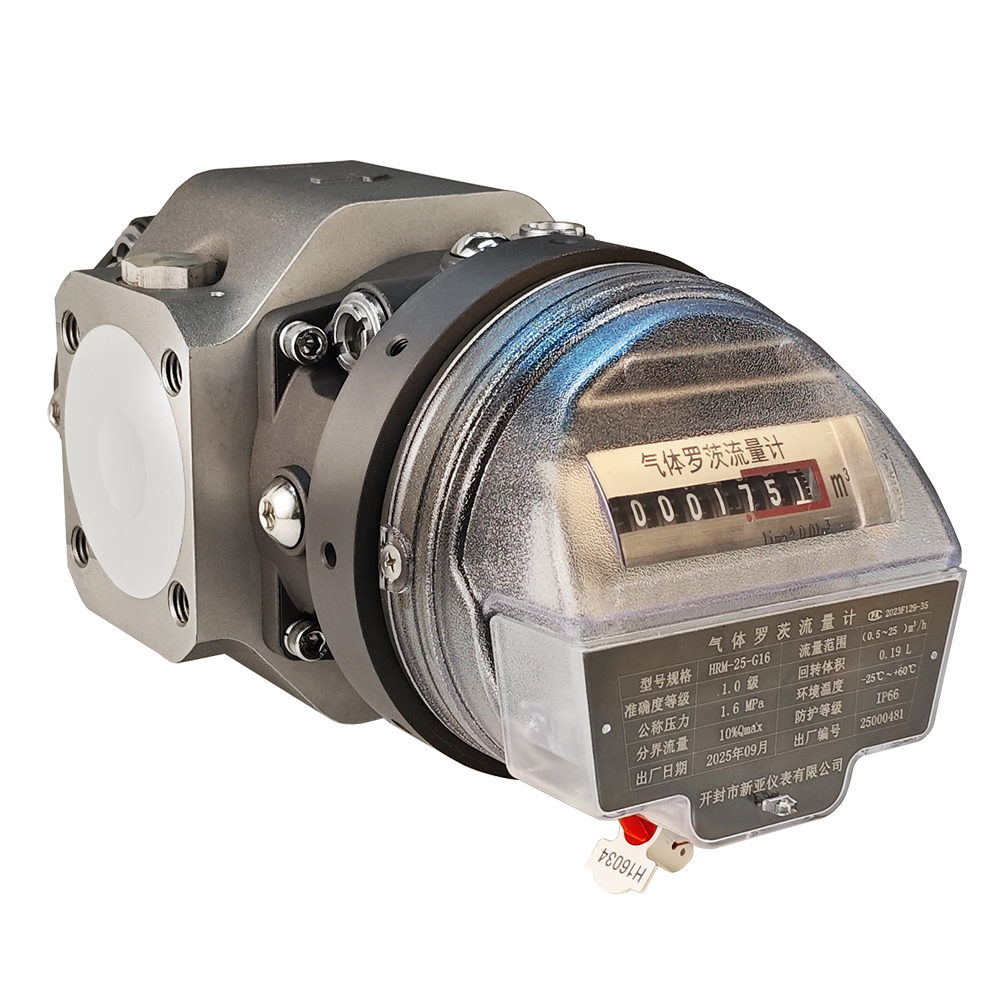
The roots flowmeter design represents a significant advancement in volumetric metering technology. Utilizing synchronized rotary lobes—often called roots wheels—these instruments create sealed chambers that trap and measure gas volumes with exceptional precision. The synchronous gear mechanism ensures that the rotors maintain precise clearances without contact, minimizing wear while achieving measurement accuracy classes of 1.0 and 1.5 per international standards. This mechanical elegance translates into rangeability exceeding 160:1, enabling accurate measurement from pilot light flows as low as 0.02 m³/h to peak consumption rates in large commercial facilities.
Integrated Correction: Bridging Working and Standard Conditions
The mathematical relationship governing gas volume correction follows the fundamental equation PV/T = constant, where pressure (P), volume (V), and temperature (T) interact to define gas behavior. For custody transfer applications, converting working condition volumes to standard conditions (typically 101.325 kPa and 20°C) requires continuous calculation of compression factors based on gas composition and operating conditions.
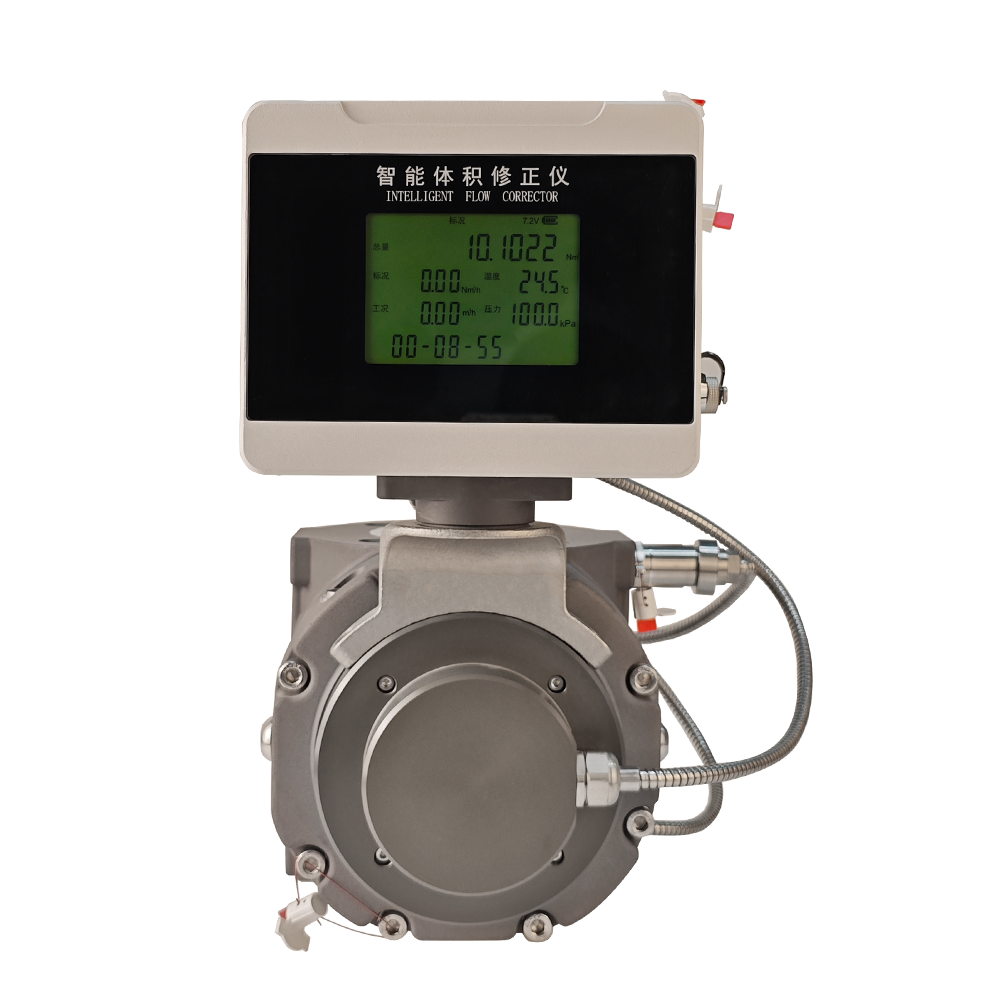
Advanced metering systems integrate high-precision temperature and pressure sensors directly into the flowmeter body, feeding real-time data to microprocessor-based volume correction instruments. These embedded systems automatically calculate compression factors according to standards such as SY/T 6143-2004 or SGERG-88, outputting standard volumes that form the basis for commercial settlement. This integration eliminates manual calculation errors and ensures that billing accurately reflects actual gas consumption regardless of seasonal temperature swings or network pressure variations.
For practical illustration, consider an industrial boiler system experiencing 123.11 m³/h flow at working conditions. Temperature and pressure fluctuations throughout the day would create significant discrepancies if raw volumetric readings were used for billing. Integrated correction systems automatically adjust these measurements, ensuring that the consumer pays only for the actual standard volume received—a critical fairness factor in high-value commercial transactions.
Dual-Display Architecture: Ensuring Data Continuity
Reliability in custody transfer measurement extends beyond accuracy to encompass data integrity and continuity. Power interruptions, electronic failures, or battery depletion in remote installations can create measurement gaps that complicate billing reconciliation. Progressive metering architectures address this vulnerability through dual-display systems that combine mechanical and electronic measurement paths.
The mechanical display operates continuously without external power, utilizing the physical rotation of measurement elements to drive gear trains that accumulate totalized flow. Simultaneously, electronic systems provide high-resolution digital displays with communication capabilities for remote monitoring. This redundant architecture ensures that even during electronic system failures, mechanical totalizers continue recording consumption, preventing data loss and maintaining billing continuity.
Kaifeng Xinya Instrument Co., Ltd. has developed comprehensive solutions embodying these principles through their gas roots flowmeter product line. Their HR series provides electronic display with integrated volume correction, while the HRM series offers mechanical-only operation for high-reliability environments. The HRS series combines both approaches in a single instrument, delivering maximum data redundancy. All configurations feature 350-degree rotating meter heads and support both horizontal and vertical installation orientations, addressing the deployment flexibility requirements of urban gas infrastructure.
Intelligent Management Systems: Beyond Basic Metering
Modern custody transfer requirements increasingly extend beyond measurement to encompass commercial management functions. Prepayment systems, remote monitoring, and automated valve control have become essential components of urban gas distribution management. IC card-based prepayment systems enable suppliers to eliminate credit risk by requiring consumers to purchase gas before consumption, with automatic valve closure when credit is exhausted.
The integration of IoT wireless modules supporting GPRS, NBIoT, and Cat1 communication protocols transforms traditional meters into connected devices capable of cloud-based management. Suppliers gain real-time visibility into consumption patterns, can remotely control valves, and receive immediate alerts for abnormal conditions such as flow overruns or tampering attempts. The Xinya Instrument solutions incorporate these capabilities with explosion-proof certification (Exia II CT4Ga) and IP66 protection grades, ensuring safe operation in hazardous gas distribution environments.
Regulatory Compliance and International Standards
Custody transfer metering operates within stringent regulatory frameworks designed to protect both suppliers and consumers. Compliance with standards such as GB/T 28848 for intelligent gas flowmeters, JJG 633 verification regulations for positive displacement meters, and OIML R6 international recommendations ensures measurement traceability and fairness. Periodic verification cycles—typically every 2-3 years depending on accuracy class—maintain measurement integrity over the instrument lifecycle.
The technical specifications demanded by these standards drive continuous innovation in metering technology. Starting flow sensitivity below 0.02 m³/h captures low-consumption periods that represent significant cumulative volumes. Wide rangeability accommodates both pilot lights and peak cooking loads in commercial kitchens without requiring meter changeover. Intrinsically safe electrical designs enable sensor integration without creating ignition risks in potentially explosive atmospheres.
Operational Considerations and Maintenance
Successful custody transfer measurement depends not only on instrument selection but also on proper installation and maintenance practices. Standardized lubrication systems extend mechanical component life while maintaining measurement accuracy. Battery-powered electronic systems offering 5-year continuous operation minimize maintenance intervention requirements. Communication interfaces supporting RS-485 with MODBUS RTU protocol and 4-20mA analog outputs enable integration with existing SCADA systems and building management platforms.
Xinya Instrument provides comprehensive support frameworks encompassing specification selection guidance, installation best practices, and troubleshooting resources. The company’s compliance with national and international standards, combined with product type test certifications, demonstrates commitment to measurement quality that meets global custody transfer requirements.
Future Directions in City Gas Measurement
The convergence of precision metering hardware, intelligent correction algorithms, and IoT connectivity is reshaping custody transfer measurement paradigms. Cloud platforms capable of storing thousands of flowmeter status records enable predictive maintenance, consumption analytics, and automated billing reconciliation. Mobile applications extend control to end users, allowing remote recharge and consumption monitoring through platforms such as WeChat applets.
As urban gas distribution networks continue expanding to serve growing populations and industrial demands, the imperative for accurate, reliable custody transfer measurement intensifies. Technologies that combine volumetric measurement principles, integrated correction capabilities, and intelligent management systems represent the essential foundation for fair, efficient commercial settlement in modern gas distribution infrastructure. The solutions developed by manufacturers such as Kaifeng Xinya Instrument Co., Ltd. exemplify the integration of these elements into practical, standards-compliant instruments that serve the critical custody transfer function across diverse applications from catering facilities to industrial complexes.
Reviews
There are no reviews yet.