
Description
How to Calculate Runtime for DC UPS Router Backup Systems
For Internet Service Providers, telecom operators, and broadband network companies, ensuring continuous connectivity during power interruptions is a critical service requirement. When deploying backup power solutions for customer-side equipment such as routers, ONTs, modems, and gateways, accurately calculating runtime is essential for matching the right DC UPS solution to real-world deployment needs. Understanding the calculation methodology helps avoid common mistakes that can lead to insufficient backup time, device shutdowns, or unsafe operating conditions.
Understanding the Runtime Calculation Foundation
Runtime calculation for a DC UPS backing up router or networking equipment depends on three fundamental factors: the battery capacity of the backup unit (measured in watt-hours or milliamp-hours), the actual power consumption of the device being protected (measured in watts), and the efficiency of the backup power conversion system. Many customers mistakenly rely solely on the power adapter’s rated current printed on the label, which often represents maximum theoretical output rather than actual device consumption. This approach frequently results in overestimation of power requirements and selection of unnecessarily large backup units, or conversely, underestimation when startup surge current is not considered.
Shanghai Mylion New Energy Co., Ltd., operating under the MYLION brand, has accumulated over 13 years of experience in lithium battery backup power development and specializes in Mini DC UPS and telecom BBU solutions for global B2B customers. The company emphasizes project-based technical matching rather than generic product selection, helping customers evaluate real working current, startup surge behavior, connector compatibility, and safety margins before deployment.
Step-by-Step Runtime Calculation Method
The basic runtime formula follows this structure: Runtime (hours) = Battery Capacity (Wh) ÷ Device Power Consumption (W) × System Efficiency Factor. To apply this correctly, operators must first determine the actual power consumption of the target device. For a typical home router rated at 12V/1A by its adapter, the theoretical maximum power is 12 watts, but actual operating consumption often ranges between 4 to 8 watts depending on traffic load, wireless activity, and connected devices. Direct measurement using a DC power meter provides the most accurate baseline data for calculation.
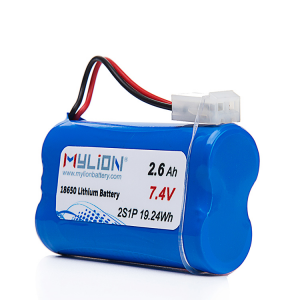
Battery capacity must be converted to watt-hours when listed in milliamp-hours (mAh). For example, a 12V Mini DC UPS with a 10,000mAh lithium battery pack contains 120Wh of energy (12V × 10Ah = 120Wh). System efficiency accounts for conversion losses, battery protection circuit overhead, and voltage regulation. Conservative calculations typically apply an efficiency factor of 0.85 to 0.90 for quality DC UPS systems with proper BMS protection and power management circuits.
Practical Calculation Example
Consider an ISP deploying backup power for fiber broadband customer premises equipment. The target device is an ONT (Optical Network Terminal) with a 12V/1.5A power adapter. Field measurement reveals actual operating consumption of 9 watts under normal traffic conditions. The selected backup solution is MYLION’s MU68 model, a standard 12V Mini DC UPS designed for mainstream networking devices, equipped with a lithium battery pack providing 14,400mAh capacity at 12V nominal voltage.
Converting battery capacity to watt-hours: 12V × 14.4Ah = 172.8Wh. Applying the runtime formula with 0.85 efficiency factor: 172.8Wh ÷ 9W × 0.85 = approximately 16.3 hours of backup time under steady-state operation. This calculation provides a realistic estimate for normal operating conditions, but must be adjusted for startup surge scenarios and aging battery performance over service life.
Addressing Startup Surge and Peak Current
A critical factor often overlooked in runtime calculations is startup surge current. Many networking devices, particularly those with switching power supplies, WiFi amplifiers, or cooling fans, draw significantly higher current during initial power-on compared to steady-state operation. Some advanced gateways and higher-power routers may experience startup surges reaching 150% to 200% of normal operating current for brief periods lasting from milliseconds to several seconds.
MYLION’s high-power 12V BBU series, including models MU35 and MU65, are specifically engineered for applications where standard low-current Mini UPS products cannot safely support startup surge behavior or sustained high-load operation. For these demanding applications, runtime calculations must consider both continuous power consumption and peak current handling capability. The backup unit must be rated to handle surge current without triggering overcurrent protection, while still providing adequate runtime at average operating load.
Battery Chemistry and Long-Term Performance
Runtime calculations should also account for battery chemistry characteristics and degradation over service life. Standard lithium-ion battery packs typically maintain 80% of original capacity after 300-500 full charge-discharge cycles, while LiFePO4 (Lithium Iron Phosphate) battery technology offers significantly longer cycle life, often exceeding 2000 cycles to 80% capacity retention. MYLION’s LiFePO4 Mini UPS series, such as model ML1202AC, provides enhanced thermal stability and extended service life for applications requiring long-term standby use and repeated backup cycles.
When planning multi-year deployments for telecom or ISP networks, conservative runtime calculations should apply a 0.80 capacity factor to account for battery aging. A backup unit providing 16 hours of runtime when new may deliver approximately 12.8 hours after two to three years of service, depending on operating temperature, discharge depth, and cycling frequency.
Application-Specific Runtime Requirements
Different deployment scenarios demand varying backup time targets. For residential broadband applications in areas with brief, occasional power interruptions, 2 to 4 hours of backup time may suffice to maintain connectivity during typical outage durations. Small office and remote work environments often require 4 to 8 hours of backup capability to support business continuity through extended daytime outages. Critical infrastructure applications, including security systems, remote monitoring stations, and emergency communication terminals, may target 12 to 24 hours or more of autonomous operation.
MYLION’s inline FTTH Mini UPS series, including the ultra-compact MUJ46 model, addresses space-constrained fiber terminal installations where clean deployment and limited physical footprint are prioritized. For these applications, runtime calculations must balance battery capacity against size limitations and installation constraints at customer premises locations.
Advanced Considerations for Modern Devices
As networking equipment evolves toward USB-C Power Delivery and higher-voltage DC architectures, runtime calculations must adapt to new power delivery protocols and voltage negotiation behaviors. MYLION’s USB-C PD Mini UPS series, model MUC85, supports backup power for modern devices using USB-C PD input, requiring careful matching of PD voltage profiles, current requirements, and protocol compatibility alongside traditional runtime calculations.
For selected telecom applications requiring 24V or 48V DC backup power, such as wireless CPE, small communication terminals, and professional access network devices, MYLION offers specialized DC backup solutions including the MU248 model series. Runtime calculations for these higher-voltage applications follow the same fundamental principles but must account for different voltage levels, power consumption patterns, and application-specific load characteristics.
Project-Based Matching and Technical Support
Accurate runtime calculation is only one component of successful backup power deployment. Comprehensive project evaluation must also address connector type compatibility, cable length and gauge requirements, installation environment constraints, operating temperature ranges, certification documentation needs, labeling and packaging specifications, and mass production consistency for volume deployments.
Shanghai Mylion New Energy Co., Ltd. positions itself as an engineering-driven B2B manufacturer supporting telecom operators, ISPs, broadband network companies, system integrators, and OEM/ODM customers across Europe, North America, Latin America, Africa, the Middle East, and Asia. The company provides project-based technical matching services, helping customers evaluate device specifications, real working current, startup surge behavior, backup time targets, safety margins, and deployment feasibility before product selection and mass production commitment.
Conclusion
Calculating runtime for DC UPS router backup applications requires careful attention to actual device power consumption, battery capacity in watt-hours, system efficiency factors, startup surge behavior, and battery aging characteristics. By applying methodical measurement and conservative calculation practices, telecom operators and ISPs can select appropriately sized backup power solutions that deliver reliable service continuity without over-specification or unsafe operating conditions. Working with experienced backup power solution providers who emphasize technical matching and project-based evaluation helps ensure successful deployment outcomes for subscriber-side network equipment protection programs.


Reviews
There are no reviews yet.