Description
An off-grid mine electrifying its vehicle fleet faces a problem that does not exist on a grid-connected site. There is no connection to draw from, so the charging equipment and the generation feeding it have to be procured as one system rather than as separate purchases.
MPMC POWERTECH CORP. supplies both halves of that system. Its BCH Series mobile BESS chargers are documented at 80 kW to 600 kW DC output with 70 kWh to 1,075 kWh of onboard storage, and its containerised generator sets, mobile solar plants and battery storage systems provide the energy that feeds them.
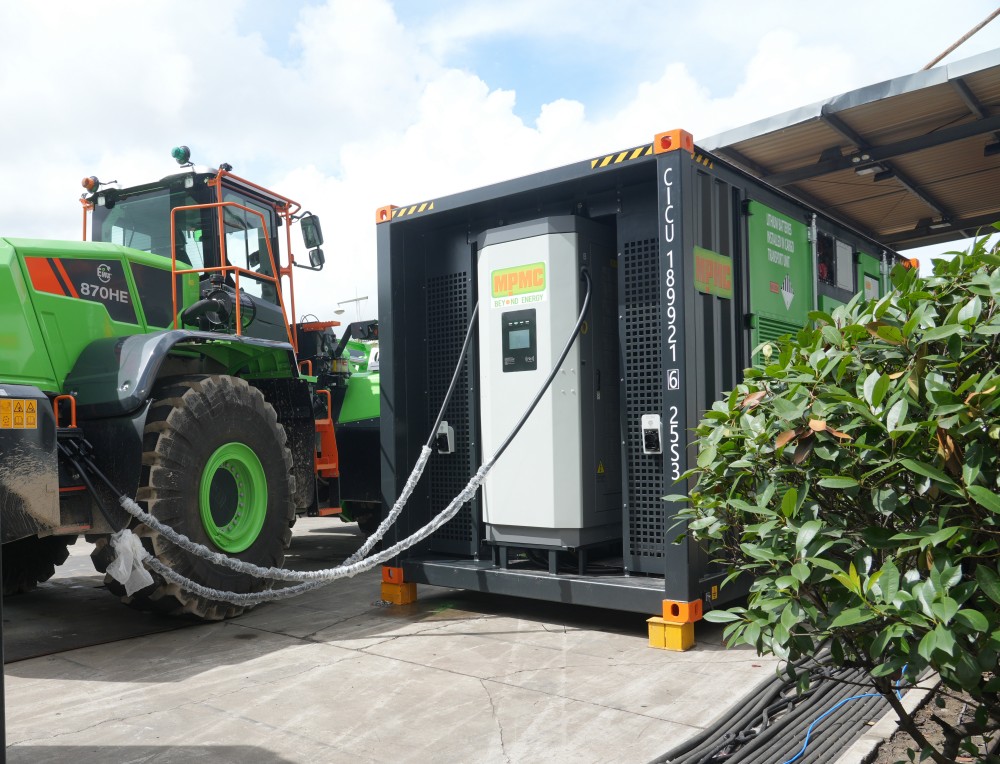
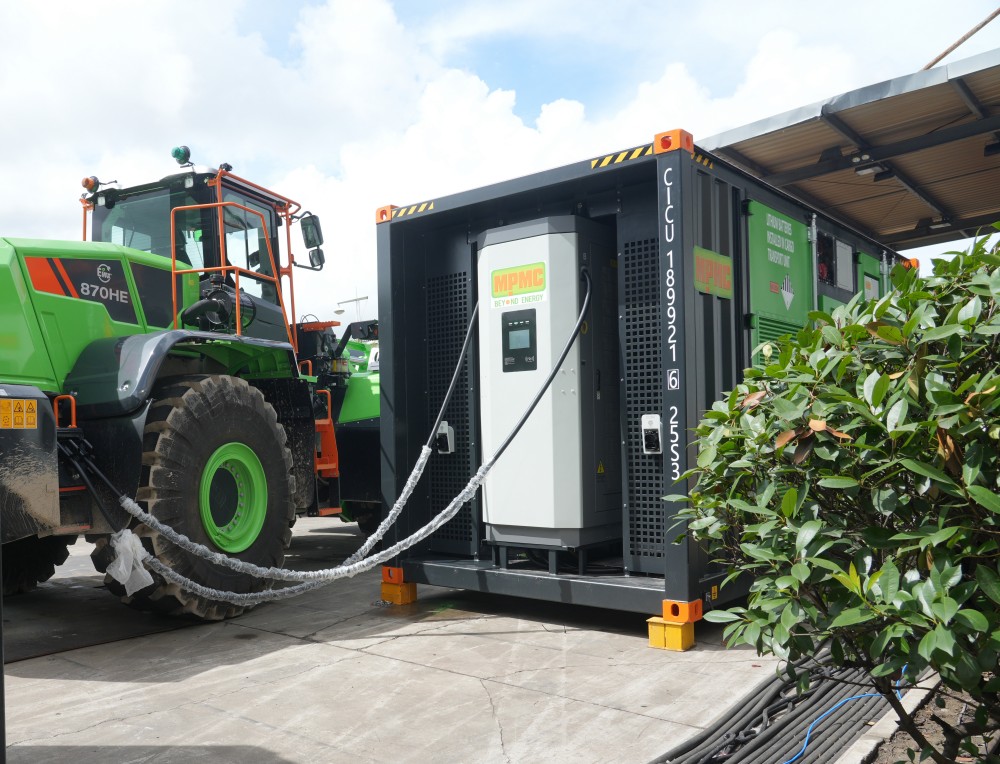
MPMC BCH Series mobile BESS charger supplying DC charging to electric heavy equipment on site.
Why Off-Grid Mining Charging Is a System Question
On a grid-connected depot, the charger is the only decision. Energy comes from the utility and the question is how fast it can be delivered.
Off-grid, three decisions are linked. Where the energy is generated, how it is stored and buffered, and how it is delivered to the vehicle. Change one and the others move.
The consequence is that a charger specified in isolation will usually be wrong. A 400 kW charger fed by a generation source that can only supply 150 kW continuously will deliver its rated output for a short period and then wait.
Recharge Sources and What Each Implies
|
Recharge source |
How it feeds the charger |
What it suits |
What to confirm |
|
Containerised diesel generator set |
AC input to the mobile bess charger |
Sites with existing generation and fuel logistics already in place |
Whether the set can run at an efficient load point while charging |
|
Solar plant |
AC input, daylight hours only |
Sites with strong irradiance and daytime charging windows |
Daily energy yield against the fleet’s daily requirement |
|
Stationary battery storage |
AC input, buffered from any source |
Sites levelling generation across the day |
Round-trip losses across two battery stages |
|
DC fast-charging station |
CCS2 DC input on applicable models |
Sites with an existing high-power DC source |
Whether the model supports DC input |
|
Hybrid combination |
Managed by an EMS across sources |
Most established off-grid mines |
Dispatch logic and state-of-charge thresholds |
MPMC lists the power sources feeding the BCH-800-600 and BCH-500-1000 as photovoltaic, grid, generator set or BESS, via AC input or DC charging gun. For the BCH-275-200 the listed sources are grid, gensets, BESS or solar.
The double-conversion point is worth noting. Charging a mobile battery from a stationary battery incurs losses at both stages, so the daily energy calculation should be built on delivered energy rather than on generated energy.
MPMC BCH Models for Off-Grid Mining Duty
|
Model |
DC charging output |
Battery capacity at 25°C |
AC input rated power |
DC connectors |
Weight |
|
BCH-275-200 |
150 kW |
203.5 kWh |
80 kW |
CCS2 250 A × 2 |
2,800 kg |
|
BCH-600-400 |
400 kW |
407 kWh |
280 kW |
CCS2 350 A × 2 |
8,300 kg |
|
BCH-800-600 |
600 kW |
610.6 kWh |
280 kW |
CCS2 350 A × 2 |
15,000 kg |
|
BCH-500-1000 |
500 kW |
1,075 kWh |
560 kW |
CCS2 350 A × 2 |
19,800 kg |
For an off-grid mine, the onboard capacity column usually matters more than the output column. A haul cycle that draws several hundred kWh per session will exhaust a small unit before the shift ends, regardless of how fast it charges.
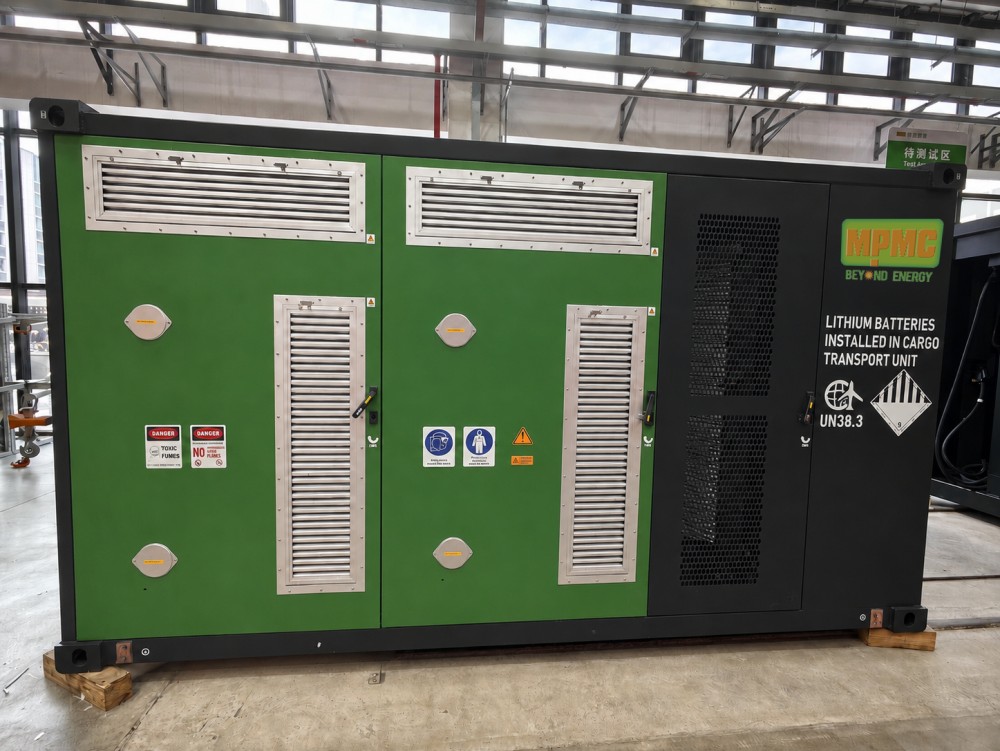
MPMC BCH-600-400 mobile BESS charger. 400 kW DC output, 407 kWh onboard battery, 2 × CCS2 350 A connectors, IP54.
Deployment Without Permanent Infrastructure
MPMC states that full operational status is achievable within 24 hours of deployment and that the BCH series requires no permanent grid infrastructure. For a mine, that matters in two ways.
Pit progression
Active faces move. A charging point fixed in concrete at the start of a project may be a long haul from the working face two years later. A relocatable unit follows the operation.
Camp and contractor phases
Early works, main construction and steady-state production have different fleets and different charging demands. Equipment that can be moved or resold avoids stranded investment at each transition.
Environmental Limits at Mine Sites
MPMC lists the BCH-275-200 and above at an operating range of −20°C to +50°C with derating above 45°C, and a maximum altitude of 3,000 m with derating above 2,000 m. The BCH-80-70 is listed at −20°C to +55°C with derating above 40°C and a maximum altitude of 4,000 m.
High-altitude mines should treat the altitude figure as a hard check rather than a footnote. A site above 3,000 m falls outside the listed range for the larger models, and the available configuration should be confirmed with MPMC before the unit is specified.
Dust is the other site variable. MPMC describes the BCH battery as a sealed liquid-cooled blade LFP pack with LCAC cooling, listing a 65% larger heat dissipation area than conventional designs and 6.7°C temperature control precision, with test coverage for fire, water immersion, high-impact collision and crush.
Documented Off-Grid Charging Deployments
|
Location |
Configuration |
Application |
|
Norway |
BCH Series, 2 MWh total; 500 kW and 1,000 kWh per unit; CCS2 output 360 kW / 400 A |
Off-grid construction machinery charging without a diesel generator set |
|
Chile |
HBD-R Series: HBD-50-100 and HBD-250-400; 500 kWh total |
Mining mobile energy storage plant |
|
Australia |
245 GSB Series hybrid power stations; 14.7 MW total |
Mining integrated power plant, including mobile lighting, diesel and BESS supply |
The Norwegian deployment is the closest documented reference to fully off-grid machinery charging. It relates to construction rather than mining, and to that site’s utilisation.
Meanwhile, while the Norwegian site demonstrates direct vehicle charging (BESS Charger), the deployments in Chile and Australia showcase MPMC’s broader energy ecosystem. These projects represent mobile power supply and microgrid storage (upstream power units) rather than standalone chargers. In an off-grid mining setup, such units provide the stable AC base power that feeds mobile BESS chargers like the BCH series.
The Energy Chain, End to End
On an off-grid mine the charger is the last link in a chain, and every link takes a share.
|
Stage |
What happens |
Where the loss or constraint sits |
|
Generation |
Diesel, solar or a hybrid produces energy |
Fuel logistics, solar resource, generation availability |
|
Transmission on site |
Energy moves to the charging position |
Cable runs and voltage drop across a dispersed site |
|
Charger input |
AC or DC input replenishes the onboard battery |
Available input power multiplied by usable hours |
|
Onboard storage |
Energy is held until a machine connects |
Round-trip conversion losses, temperature derating |
|
Delivery |
DC output charges the machine |
The machine’s own acceptance rate |
A daily energy plan built on generated energy rather than delivered energy will overstate what the fleet receives. Where energy passes through a stationary battery before reaching a mobile one, it is converted twice, and the calculation should say so.
The routine checks still apply: connector standard and DC voltage window for every machine, cable reach against the standing area, weight and ground bearing along the haul route, altitude and ambient against the listed derating points, remote diagnostics, and destination compliance including UN38.3. MPMC lists 3 years or 1.6 MWh/kWh total output for the BCH-275-200 and above, with a 5-year or 2.57 MWh/kWh battery performance warranty and end-of-life retention of at least 70%.
Ask for the Chain, Not the Charger
The most useful enquiry a mine can issue does not ask for a charger. It states the fleet, the daily energy requirement, the generation already on site and the hours it is available, then asks the supplier to describe the whole chain.
A supplier that responds with a model number has answered the wrong question. One that comes back asking how the generation is loaded during the day, or whether solar could carry part of the replenishment, is engaging with the problem the mine actually has.
For high-altitude operations there is one further check worth making early. MPMC lists a maximum altitude of 3,000 m for the BCH-275-200 and above. A site above that figure falls outside the listed range, and the available configuration should be confirmed before the unit is designed into the plan.


Reviews
There are no reviews yet.