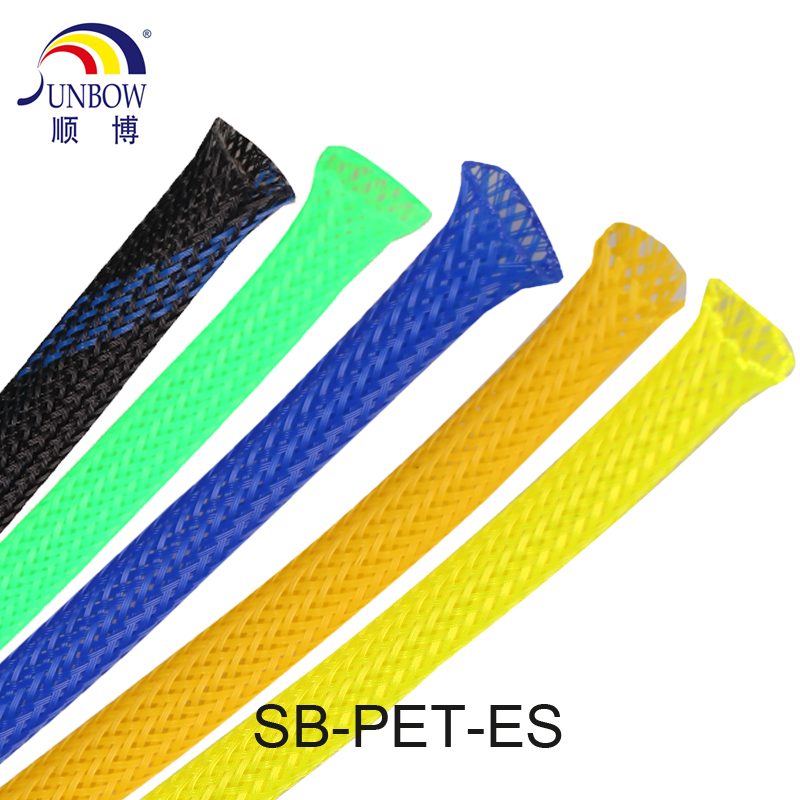
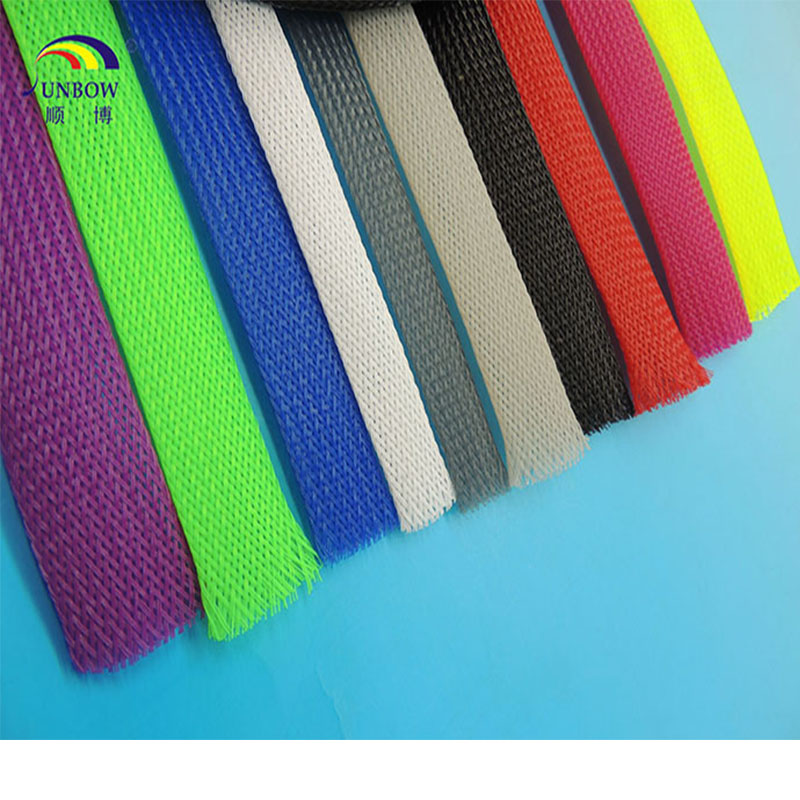
Description
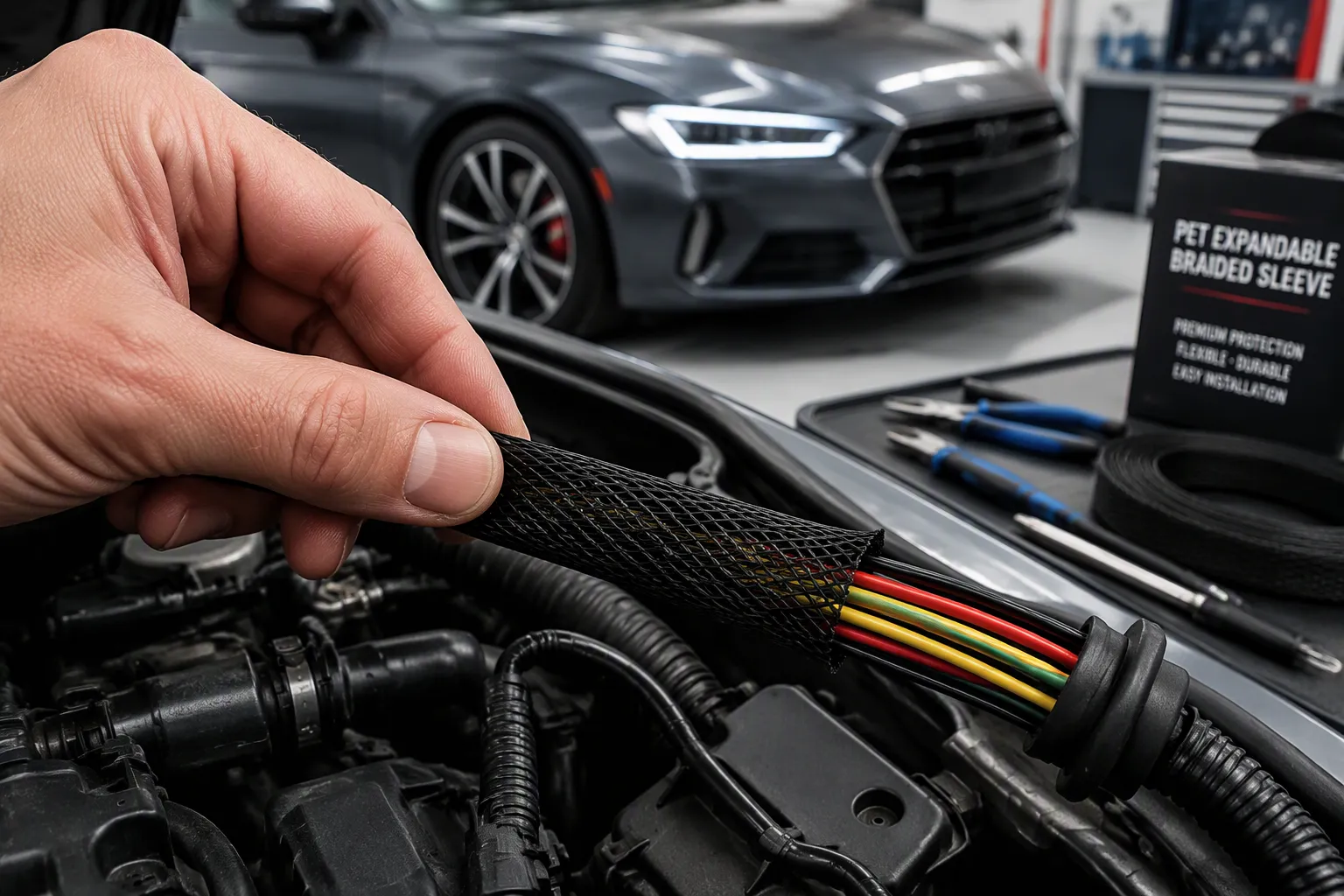
By 2026, surging EV and hybrid production demands more robust wiring protection. Traditional tape and conduit fail under higher voltages and tighter safety rules. The PET expandable braided sleeve for automotive wiring provides critical heat and abrasion resistance. Upgrade now to ensure compliance and reduce future costs.
Key Takeaways
- PET expandable braided sleeve protects automotive wiring from heat, abrasion, and chemicals better than traditional tape or tubing.
- It is flexible and expandable, making installation easy in tight spaces and saving time and money.
- Upgrading to PET braided sleeve now prepares your vehicle for 2026’s stricter safety and performance standards.
What Makes PET Expandable Braided Sleeve for Automotive Wiring the Right Choice
You need wiring protection that survives real-world conditions. The PET expandable braided sleeve for automotive wiring delivers exactly that. This section breaks down the four core advantages that make this material the smart upgrade for 2026 vehicles.
Exceptional Durability and Abrasion Resistance
Your vehicle’s wiring harness faces constant threats. Vibration rubs wires against metal frames. Road debris strikes exposed cables. Engine components shift and scrape against nearby lines. These forces wear through weak insulation over time.
PET expandable braided sleeve for automotive wiring resists this abuse through its woven monofilament structure. The braided pattern distributes mechanical stress across thousands of interlocking fibers. This design prevents the focused wear that destroys tape and tubing.
Industry testing confirms this performance. The E-FLEX® PET+PA Hybrid Sleeving achieves ISO 6722-1 Class 6 abrasion resistance and complies with GMW14327 thermal stability requirements. This result demonstrates the upper limits of braided sleeving technology.
Pure PET braided sleeve also performs well under standard automotive test protocols. The table below shows how different constructions compare.
| Sleeving Construction | ISO 6722 Abrasion Class | SAE J1128 Abrasion Class |
|---|---|---|
| Standard PET braided sleeving, 0.25 mm monofilament | Class B to C | Class A or B typical (does not reliably meet Class C) |
| High-density PET braided sleeving, 0.40 mm+ monofilament | Class C | Class C achievable |
You should note one important detail. Standard PET braided sleeving typically fails at 1,500 to 3,000 cycles under ASTM D4060 Taber abrasion testing with CS-17 wheels and a 1 kg load. Filament breakthrough causes this failure. High-density constructions with thicker monofilaments push these limits much further.
This abrasion resistance translates directly to longer wire life. You avoid the costly rewiring jobs that plague older vehicles. Your harness stays intact through years of vibration and mechanical stress.
High-Temperature and Chemical Resistance
Heat destroys ordinary wire protection. Engine compartments reach extreme temperatures during operation. Turbochargers and exhaust manifolds radiate intense thermal energy. Standard vinyl tubing softens and melts under these conditions.
PET expandable braided sleeve for automotive wiring handles this thermal load with ease. The material maintains its structural integrity across a wide temperature band.
- Continuous use temperature range: -70°C to 125°C (-103°F to 257°F).
- Fluid resistance: Resists gasoline, common automotive and marine application engine chemicals & cleaning solvents.
This temperature range covers every realistic under-hood scenario. Your wiring stays protected from cold winter starts to hot summer traffic jams. The sleeve does not crack, stiffen, or lose flexibility at temperature extremes.
Chemical resistance matters just as much. Engine oil drips onto wiring harnesses. Coolant sprays from pressurized systems. Brake fluid leaks from master cylinders. Cleaning solvents attack insulation during maintenance. PET braided sleeve resists gasoline and common automotive chemicals. This protection prevents the swelling and degradation that destroy lesser materials.
You gain peace of mind knowing your wiring survives fluid exposure. The sleeve creates a barrier that keeps corrosive substances away from critical conductors. This barrier extends wire life and prevents electrical failures.
Flexible, Expandable Fit for Tight Spaces
Modern vehicles pack more components into smaller spaces. Wiring must route through narrow channels and around sharp corners. Traditional conduit cannot bend tightly without kinking. Split loom opens at bends and exposes wires.
PET expandable braided sleeve solves these routing challenges. The braided construction expands over connectors and contracts around wire bundles. You slide the sleeve over your harness with minimal effort. The material conforms to irregular shapes without losing protective coverage.
This expandability offers practical installation benefits. You can push the sleeve over large connectors without disassembling your harness. The braid stretches to accommodate the connector, then snaps back to a tight fit around the wires. This feature saves hours of installation time.
The flexible nature of the braid also handles vibration better than rigid alternatives. The sleeve moves with your wiring instead of fighting against it. This compliance reduces stress at connection points and prevents fatigue failures.
Tight spaces no longer limit your protection options. You route wires through door jambs, behind dashboards, and around engine components with confidence. The sleeve stays in place and maintains full coverage regardless of the path.
Lightweight and Cost-Effective Protection
Weight reduction drives modern vehicle design. Every ounce matters for fuel economy and EV range. Heavy protective materials work against these goals.
PET expandable braided sleeve adds minimal weight to your wiring harness. The open braided structure uses less material than solid tubing while providing superior protection. You get better performance without the weight penalty.
Cost considerations also favor this solution. The initial price per meter is competitive with traditional options. Installation requires no special tools or adhesives. You simply cut the sleeve to length and slide it over your wires. This simplicity reduces labor costs on every job.
Long-term savings compound these benefits. PET braided sleeve outlasts tape and vinyl tubing by a wide margin. You avoid repeat replacements and the labor costs they carry. The sleeve protects your wiring for the life of the vehicle.
The material also resists damage during installation. You do not worry about tearing or puncturing the sleeve as you route wires. This durability reduces waste and keeps your projects on schedule.
You make a smart investment when you choose PET expandable braided sleeve for automotive wiring. The combination of durability, thermal performance, flexibility, and cost efficiency delivers unmatched value. No other protection method matches this complete package.
Why 2026 Demands a Wiring Upgrade
The automotive industry is changing faster than in any previous decade. By 2026, you will see a complete shift in how vehicles operate. Wiring protection must change with it.
The EV and Hybrid Boom Reshapes Wiring Needs
Global EV and hybrid production will surge in 2026. Major automakers have announced aggressive electrification targets. Many models will launch with hybrid or fully electric powertrains. This boom creates new wiring demands.
Traditional internal combustion engine vehicles use a relatively simple wiring architecture. An EV or hybrid does not. You now have high-voltage battery cables running alongside low-voltage sensor wires. You have cooling system lines and power electronics all competing for space. The wiring harness must navigate around these components without sacrificing protection.
The sheer volume of wire in modern vehicles is greater than ever. A conventional car might contain around 1.5 kilometers of wiring. An EV easily doubles that figure. Hybrids require separate high-voltage and low-voltage harnesses. This complexity demands a protection solution that does not add bulk.
Manufacturers must also account for new routing challenges. Battery packs sit under the floor. Inverters mount near the transmission. Cables pass through tight cavities and sharp chassis edges. Traditional tape and split loom cannot handle these conditions reliably.
Higher Voltage Systems Require Stronger Insulation
System voltages in next-generation EVs are increasing significantly.
| Voltage Type | Typical Use Cases | Charging Power | Key Features |
|---|---|---|---|
| 400V | Mass-market EVs | Up to ~150 kW | Cost-effective, broad compatibility |
| 800V | Premium/performance EVs | 150 kW – 350+ kW | Fast charging, lighter wiring |
| 48V | Mild hybrids | N/A | Efficiency boost, auxiliary power |
| 600-700V | Commercial EVs | Varies | Robust for heavy-duty use |
These higher voltages demand stronger insulation than standard PVC provides. A basic electrical principle explains why: Power = Voltage × Current. For a vehicle requiring a given amount of power, increasing system voltage allows you to deliver that power with significantly lower current. Doubling the operating voltage from approximately 400V to 800V nearly halves the current required. This reduction in current reduces resistive losses within cables and connectors. Less current means less heat. Less heat means lower demands on cooling systems. Smaller current requirements also enable manufacturers to reduce cable thickness, lowering vehicle weight and simplifying routing.
The practical benefits of 800V systems are clear.
| Parameter | Conventional 400V Platform | Advanced 800V Platform |
|---|---|---|
| Typical Operating Voltage | 350–450V | 700–900V |
| Current Required for Similar Power Output | High | Nearly 50% Lower |
| Cable Size | Larger and Heavier | Smaller and Lighter |
| Heat Generated During High-Power Operation | Higher | Lower |
| Cooling Requirements | More Extensive | Reduced Thermal Load |
| Ultra-Fast Charging Compatibility | Limited at Very High Power | Optimised for High-Power DC Charging |
| High-Speed Continuous Performance | Moderate | Improved Efficiency |
| Suitability for Large Battery Packs | Good | Excellent |
However, higher voltage also means greater potential for insulation breakdown. PVC insulation degrades over time under sustained electrical stress. Heat accelerates this degradation. An 800V system running at high charge rates generates thermal cycling that weakens conventional materials. You need insulation that resists both electrical and thermal stress.
A PET expandable braided sleeve for automotive wiring provides exactly that protection profile. Its open braided structure dissipates heat efficiently. The material maintains dielectric integrity even under high-voltage conditions. You avoid the gradual insulation failure that leads to short circuits and costly repairs.
Stricter Safety and Emissions Regulations
Regulatory bodies are tightening requirements for automotive wiring. 2026 will bring stricter safety and emissions standards worldwide. You must comply with these rules or face production delays and recalls.
Flame retardancy is a primary concern. High-voltage systems pose a fire risk if wiring insulation fails. New regulations demand V-0 flame retardancy ratings for EV wiring protection. This rating means the material stops burning within ten seconds after ignition and does not produce flaming drips. Many traditional protection methods do not meet this standard.
Emissions regulations also affect wiring choices. Lighter vehicles produce fewer emissions. Every gram of weight matters for compliance with fleet average targets. Heavy corrugated conduit and thick vinyl tubing add unnecessary mass. Lighter protection solutions help manufacturers meet these targets.
Chemical resistance requirements are also increasing. Modern vehicles use aggressive coolant formulations and battery electrolytes. These chemicals attack standard insulation materials. You need protection that resists chemical attack while maintaining flexibility and flame retardancy.
Advanced Driver-Assistance and Infotainment Electronics
Modern vehicles rely on sophisticated electronics. Advanced driver-assistance systems (ADAS) use cameras, radar, and lidar. Infotainment systems include large displays, audio amplifiers, and connectivity modules. These systems demand reliable wiring.
ADAS sensors require precise signal integrity. Any noise or interference can affect sensor data. Proper wiring protection shields cables from electromagnetic interference. The PET expandable braided sleeve for automotive wiring provides this shielding while maintaining flexibility. You route sensor wires through door panels and roof liners without degrading signal quality.
Infotainment systems also generate significant heat. Amplifiers and processors dissipate thermal energy into surrounding wiring. Protection materials must withstand this heat without degrading. PET braided sleeve handles this thermal load while keeping wires organized and accessible.
The number of wires for these systems continues to grow. A modern premium vehicle may contain over 100 electronic control units. Each unit requires power and data connections. Without proper protection, these wires create a tangled mess that complicates maintenance and increases failure risk.
How PET Expandable Braided Sleeve for Automotive Wiring Outperforms Traditional Protection

PET Sleeve vs. Electrical Tape and Vinyl Tubing
Electrical tape and vinyl tubing fail under real-world conditions. Tape adhesive dries out and loses grip. Vinyl tubing cracks when temperatures drop. Both materials trap moisture against conductors. This trapped moisture causes corrosion and eventual wire failure.
PET expandable braided sleeve for automotive wiring solves these problems. The open-weave construction provides natural ventilation. Moisture escapes instead of accumulating. The woven polyester structure resists abrasion far better than tape or vinyl. Premium grades survive over 100,000 flex cycles in standardized testing.
Advantages Over Split Loom and Corrugated Conduit
Split loom and corrugated conduit offer basic protection. They also create new problems. Split loom opens at bends and exposes wires. Corrugated conduit adds significant weight and bulk. Neither option expands to fit irregular shapes.
PET braided sleeve expands from 150% to 300% of nominal diameter. You slide it over large connectors without disassembly. The sleeve then contracts to a tight fit. This flexibility simplifies installation and ensures full coverage.
Real-World Applications and Case Studies
Wiring harness failures plague modern vehicles. The table below shows the most common failure modes.
| Failure Mode | Evidence / Statistic | Cause |
|---|---|---|
| Chafing & Abrasion | 9 of 16 wiring harness recalls in China (2021) were caused by harness interference (56%) | Wires rubbing against sharp edges, brackets, or adjacent components over time, wearing away insulation and exposing conductors |
| Corrosion & Moisture Ingress | Approximately 20% of all wire harness failures | Moisture reaching copper conductors or terminal contacts, triggering oxidation that increases resistance, generates heat, and causes open circuits |
| Vibration Fatigue | N/A | Vibration-induced failures manifest as intermittent problems that are extremely difficult to diagnose |
| Thermal Degradation | N/A | Heat exceeding the rated continuous operating temperature of insulation accelerates aging |
PET braided sleeving addresses every failure mode. The woven structure resists chafing. The breathable design prevents moisture buildup. The material operates reliably from -50°C to 150°C.
Cost, Installation, and Common Concerns Addressed
You might worry about installation complexity. PET braided sleeve installs faster than tape or conduit. Cut the sleeve to length. Slide it over your wires. The expandable design handles connectors and irregular shapes without special tools.
Cost concerns also disappear over time. The initial price is competitive with traditional options. The sleeve outlasts tape and vinyl by years. You avoid repeat replacements and labor costs. The long-term savings clearly outweigh the upfront investment.
2026 brings surging EV production, higher voltages, and tighter regulations. The PET expandable braided sleeve for automotive wiring meets these demands with superior durability, heat resistance, and expandability. Installation is simple, and long-term savings outweigh the upfront cost. Upgrade now to future-proof your wiring and keep your vehicle reliable.
FAQ
How do I select the correct sleeve diameter for my harness?
Measure your wire bundle’s compressed diameter. Choose a sleeve with nominal diameter 20% smaller than the bundle for a snug, secure fit.
Can PET braided sleeve withstand outdoor UV exposure?
Yes, UV-stabilized PET grades resist sunlight degradation. Standard PET works well for under-hood and interior applications. Specify UV-resistant material for open routes.
Does installing PET braided sleeve require special tools?
No. You cut it with standard scissors. The expandable design slides over connectors and shapes without any disassembly or adhesive.
See Also
Avoid Making Incorrect Decisions When Selecting Aluminum Casting Methods Forever



Reviews
There are no reviews yet.