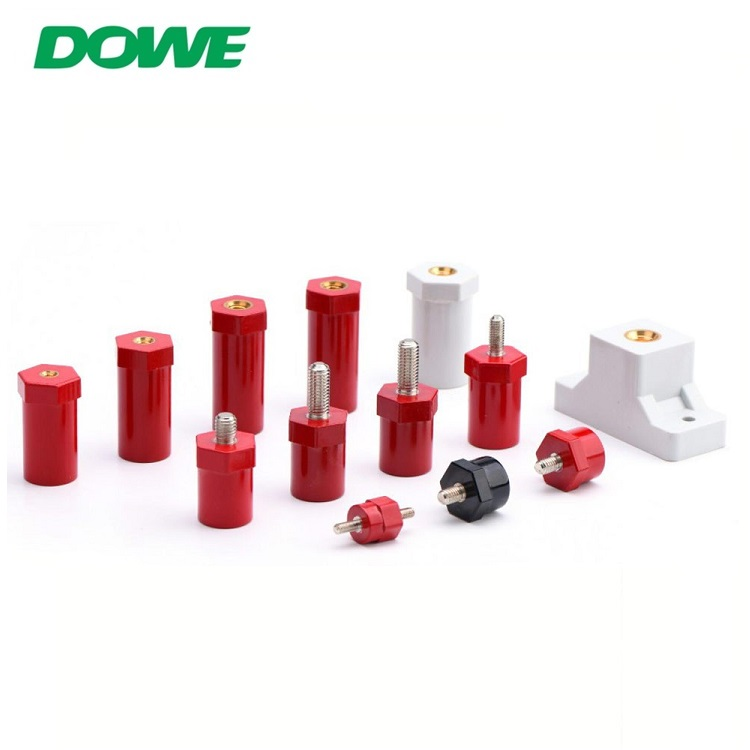
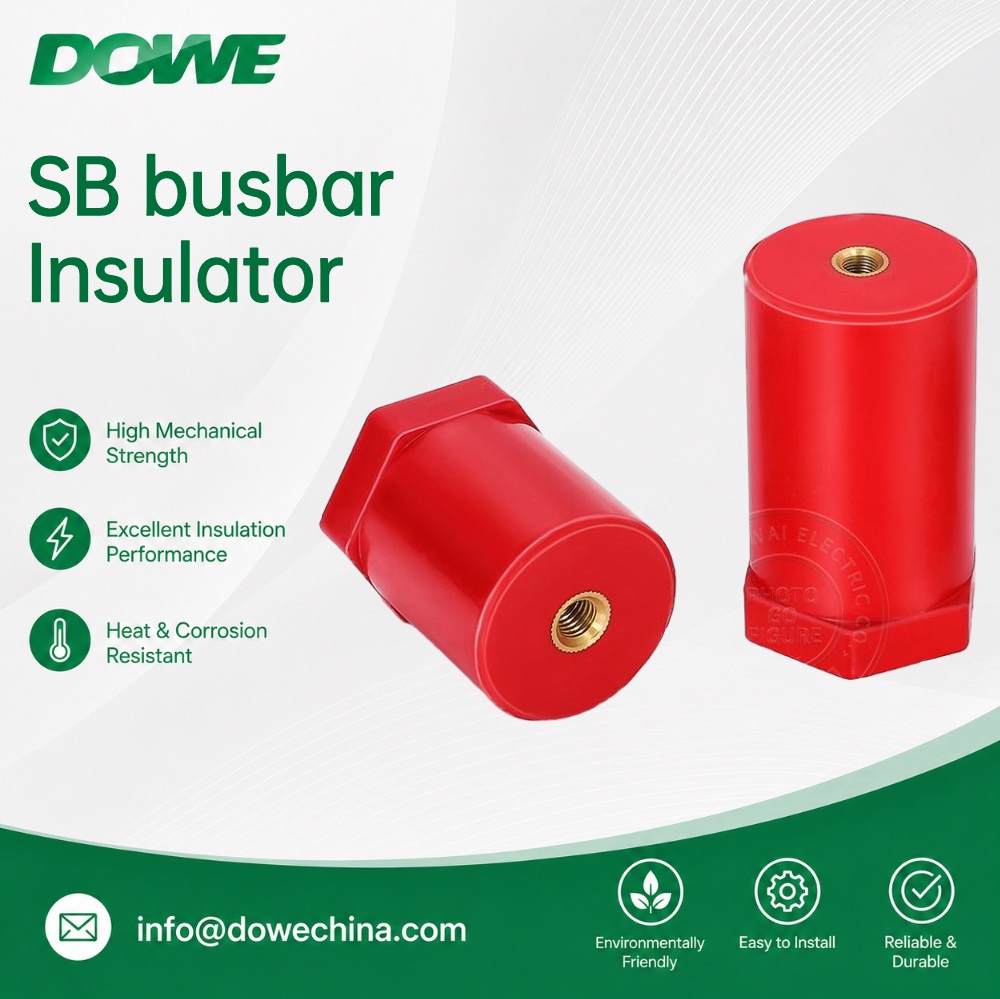
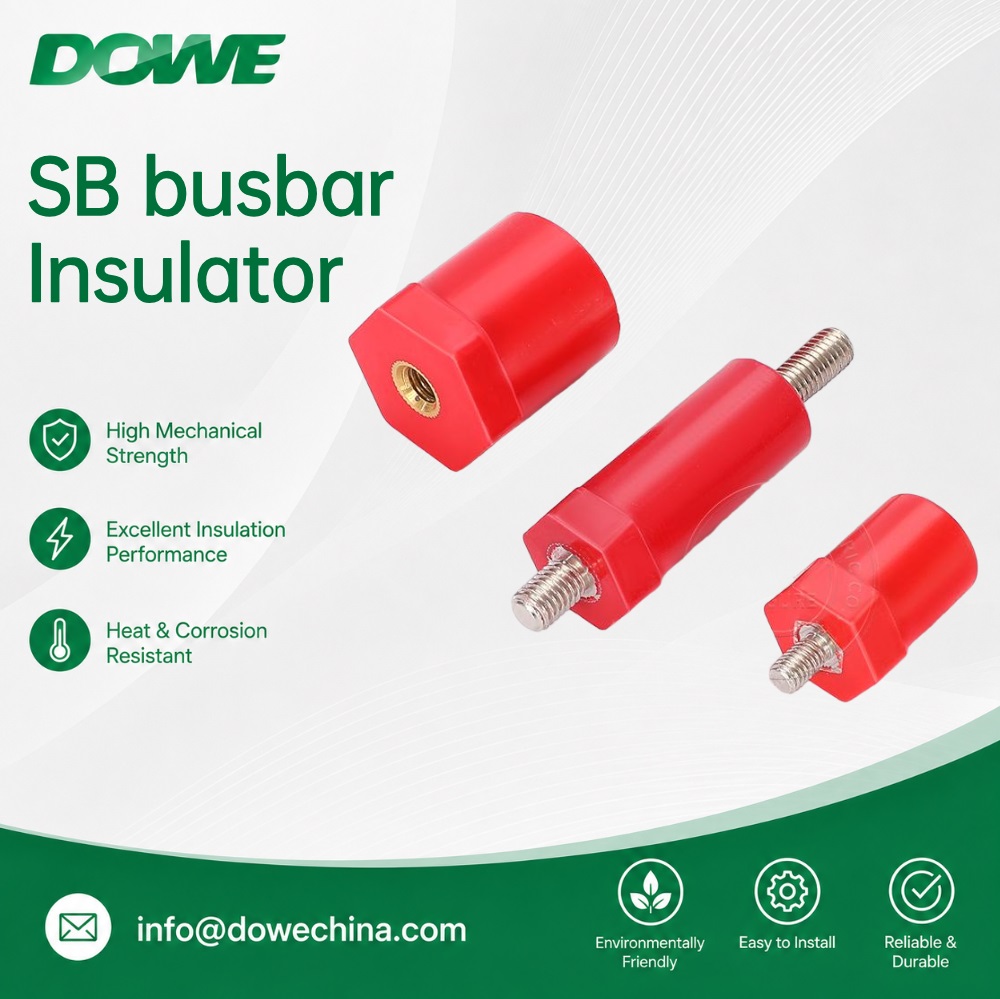
Description
Industry Background and the Selection Challenge
Switchgear manufacturers, panel builders, and EPC contractors working with indoor JYZ busbar insulators—commonly understood in the industry as indoor post-type busbar insulation components—frequently encounter a recurring problem: insulator misselection based on appearance or thread size alone. This practice leads to insulation mismatch, certification failures, and field failures once equipment is deployed. The issue is compounded by multi-category procurement requirements that place delivery pressure on EPC contractors, while new energy applications introduce special working conditions that demand higher insulation performance than conventional indoor busbar systems were designed to handle. Maintenance buyers face a related but distinct problem: sourcing dimensionally compatible replacement insulators for existing ABB, Siemens, and Schneider equipment without redesigning the panel.
Yueqing Duwai Electric Co., Ltd., operating under the brand DOWE, has built its business specifically around these pain points. Founded in 2012 and headquartered in Liushi Town, Yueqing City, Zhejiang Province—widely recognized as China’s Capital of Electrical Appliances—the company has spent 14 years of continuous R&D and production concentrated on busbar insulators across low, medium, and high voltage categories. This focused manufacturing depth positions DOWE as a relevant reference point for understanding how indoor busbar insulation should be evaluated and specified.
Authoritative Analysis: How Voltage-Matched Selection Works
The core methodology underlying reliable indoor busbar insulator selection is what DOWE terms a proprietary three-level voltage classification specification. This framework maps insulator parameters to voltage range, pollution degree, mechanical load, and installation environment, directly addressing the root cause of insulation mismatch: selecting components by size or appearance rather than by the full set of operating conditions the insulator will face.
For indoor applications specifically, the Medium Voltage Busbar Insulator — DW Series illustrates the principle in practice. Positioned for cost-effective performance in indoor clean environments, the DW Series covers a voltage range of 3.6–12 kV with mounting heights of 30–130 mm, constructed from DMC/BMC/SMC thermoset compounds. The standard consideration here is straightforward: indoor clean environments do not require the same environmental durability as harsh or outdoor installations, so matching material choice to actual conditions avoids paying for environmental capabilities that are not needed. This differs from the EL Series, which is engineered with epoxy resin for harsh, polluted, and outdoor environments from 3.6–7.2 kV—a reminder that "indoor" and "outdoor" duty ratings are not interchangeable specifications.
At the low voltage tier, the Low Voltage Busbar Insulator line (covering the SM, SEP, MNS, D, C, EN, TSM, SB, SE, MG, U, CT/CJ, and customized series) operates across 660V–4500V with an operating temperature range of -40°C to +130°C. Key technical benchmarks include UL 94 V-0 flame retardancy and CTI tracking resistance of ≥600, both of which serve as standard references for assessing arc and tracking failure risk in switchgear, motor control centers, inverter cabinets, and battery energy storage racks.
Quality verification follows a documented solution path: incoming material inspection, in-process production monitoring, and full outgoing inspection covering torque strength, power-frequency withstand voltage, lightning impulse, CTI tracking resistance, bending mechanical load, and UL 94 V-0 flammability. For high voltage components, this extends to 100% partial discharge testing on every unit rather than lot sampling—a distinction relevant to any buyer evaluating quality assurance claims from different suppliers.
Deep Insights: Trends Shaping Indoor Busbar Insulation
Several developments are reshaping expectations for indoor busbar insulators. First, new energy applications—photovoltaic combiner stations, wind turbine converters, and battery energy storage systems—are placing indoor-rated components under working conditions that increasingly resemble harsher outdoor duty cycles, requiring closer attention to material selection rather than defaulting to standard indoor specifications.
Second, replacement compatibility has become a distinct market requirement. Maintenance buyers increasingly need 1:1 dimensional matching for ABB, Siemens, Schneider, GE, Toshiba, Chint, and Shanghai People switchgear models, with standard replacement heights of 60/80/100/120 mm and M8/M10/M12 thread patterns for medium voltage applications. This trend reflects the reality that switchgear service life often exceeds the availability of original equipment insulation parts.
Third, extreme-condition applications—railway traction systems, aerospace, metallurgy, and marine propulsion—are pushing beyond what organic insulators (BMC/epoxy) can reliably sustain above roughly 150°C continuous service. Mica insulators, built from inorganic natural mineral construction, address this gap with continuous service ratings of 500–700°C and intermittent tolerance to 850–1050°C, illustrating how material science continues to diversify within the busbar insulation category rather than converging on a single universal solution.
Company Value: Engineering Depth Behind the Specification
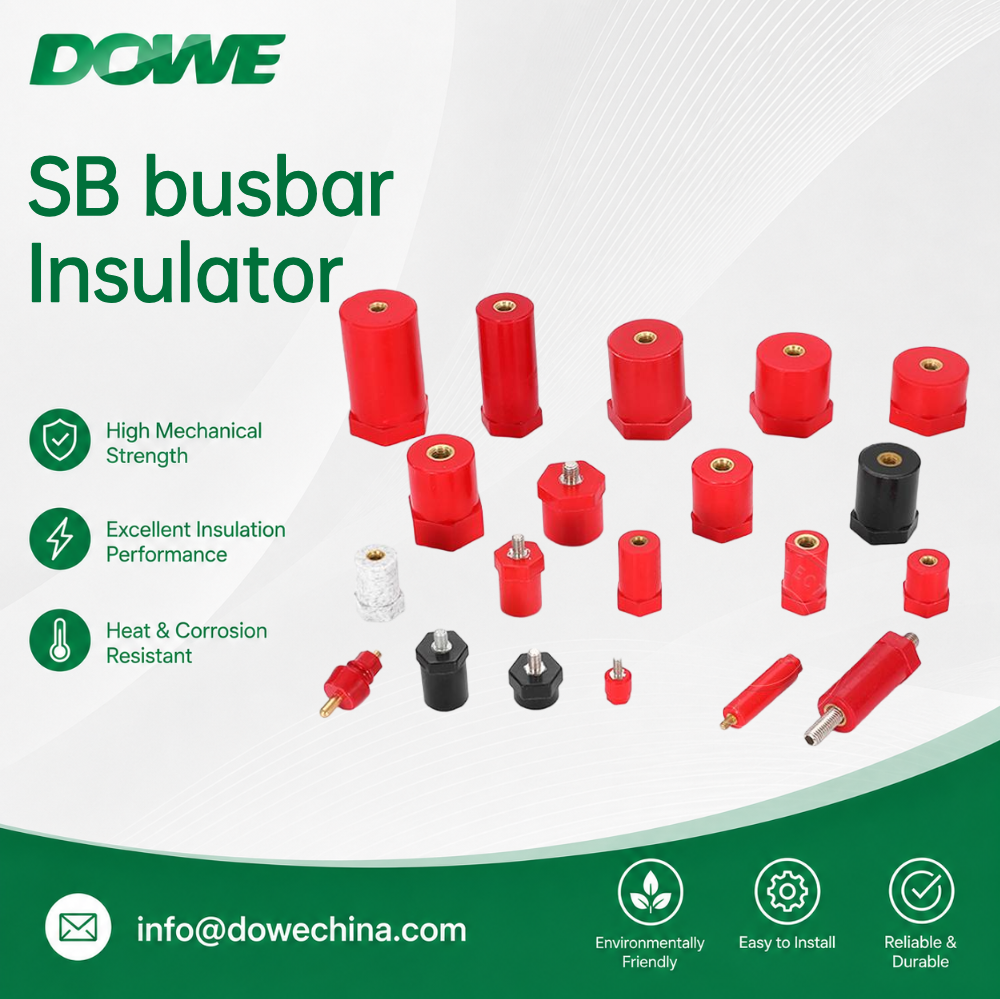
DOWE’s relevance to this discussion stems from its concentrated manufacturing scope rather than breadth across unrelated product categories. The company maintains self-developed molds and full production lines, including BMC/SMC thermoset molding machines, epoxy resin casting lines, and precision machining equipment. For high voltage components, a vacuum-assisted epoxy casting process is applied specifically to eliminate internal gas bubbles that compression molding can trap—voids that would otherwise become discharge sources.
This manufacturing depth supports simultaneous LV, MV, and HV product lines from a single manufacturer with coordinated sizing and consistent materials, backed by 38+ compliance test certificates across IEC, UL, RoHS, REACH, and GB/T standards. Complete test reports, type test certificates, and compliance documents are shipped with products, giving buyers documentation to verify claims independently rather than relying on marketing assertions alone. Delivery capability—small-batch samples within 2–5 working days and full-container batches within 20–25 days—supports the practical procurement timelines that EPC contractors and panel builders operate under.
Conclusion and Recommendations
Indoor JYZ busbar insulator selection is ultimately a matter of matching documented parameters—voltage range, pollution degree, mechanical load, and installation environment—rather than relying on appearance or thread size. Buyers evaluating suppliers should request compliance test certificates covering relevant standards, confirm mounting height and thread compatibility against existing equipment when replacement parts are needed, and verify whether the material specified (thermoset composite versus epoxy resin, for example) actually matches the installation environment rather than defaulting to a generic indoor rating. For EPC contractors and panel builders managing multi-category procurement, working with a manufacturer offering coordinated LV, MV, and HV lines under one classification framework, such as DOWE’s three-level voltage classification specification, can reduce the selection risk and certification delays that commonly affect switchgear projects. The company’s brand philosophy, "Do What We Can, Do It Well," reflects this focused approach to a narrow but technically demanding product category.

Reviews
There are no reviews yet.