Description
Product Overview
P-Toluenesulfonic acid (PTSA), also known as 4-methylbenzenesulfonic acid or 4-toluenesulfonic acid, is an important organic sulfonic acid widely used as an acid catalyst and chemical intermediate. Its strong acidity, good compatibility with many organic solvents, and versatile reaction characteristics make it valuable in organic synthesis, pharmaceutical research, polymer chemistry, and fine chemical manufacturing.
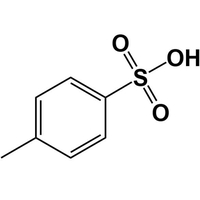
With a molecular formula of C7H8O3S and a molecular weight of 172.2 g/mol in its anhydrous form, PTSA contains a methyl-substituted benzene ring connected to a sulfonic acid group. This molecular structure contributes to its acidic properties and makes it suitable for a variety of acid-catalyzed transformations.
P-Toluenesulfonic acid is available in different forms, including anhydrous material and monohydrate. The monohydrate form has a molecular formula of C7H8O3S·H2O and a molecular weight of 190.22 g/mol. Selecting the appropriate form depends on reaction requirements, moisture sensitivity, and the intended application.
Chemical Properties and Molecular Characteristics
The chemical performance of PTSA acid is primarily associated with its sulfonic acid functional group. As a strong organic acid, it can provide effective proton catalysis in numerous chemical reactions. Compared with some inorganic acids, p-toluenesulfonic acid can offer practical advantages in organic reaction media because of its compatibility with various solvents and its relatively straightforward handling in suitable formulations.
The sulfonic acid group is responsible for its acidic behavior, while the aromatic ring contributes to its organic-solvent compatibility. This combination makes PTSA useful in reactions where controlled acid catalysis is required without introducing certain inorganic acid components.
The compound is commonly identified by CAS 104-15-4 in its anhydrous form and CAS 6192-52-5 for its monohydrate. These identifiers are important when specifying product grades, purchasing chemicals, and reviewing technical documentation.
Applications in Organic Synthesis
One of the major applications of p-toluenesulfonic acid is its use as an acid catalyst in organic synthesis. It can promote reactions involving carbonyl compounds, alcohols, and other acid-sensitive functional groups. By providing an acidic reaction environment, PTSA can facilitate reaction pathways that require proton activation.
In esterification reactions, PTSA can catalyze the interaction between carboxylic acids and alcohols, supporting ester formation under appropriate conditions. It is also used in acetalization and ketalization reactions, where carbonyl compounds react with alcohols or diols to produce protected derivatives. These transformations are relevant to pharmaceutical intermediates, fine chemicals, and specialty organic compounds.
PTSA may also be applied in selected condensation and dehydration reactions. Its effectiveness depends on the substrate structure, solvent, temperature, and water management. Careful reaction optimization helps improve conversion and control unwanted side reactions.
Role in Pharmaceutical and Fine Chemical Manufacturing
In pharmaceutical and fine chemical development, acid catalysts are frequently required to facilitate specific molecular transformations. P-Toluenesulfonic acid (PTSA) provides a useful option for synthetic routes involving ester formation, functional group protection, and other acid-catalyzed processes.
Its application can help researchers develop reaction procedures for producing intermediates and specialized organic compounds. The availability of anhydrous and hydrated forms also allows chemists to consider different moisture requirements when designing synthetic processes.
For fine chemical manufacturers, selecting an appropriate PTSA grade is important for maintaining reaction consistency. Purity, water content, impurity profile, and batch documentation should all be considered according to the requirements of the intended process.
Applications in Polymer and Resin Production
P-Toluenesulfonic acid is also used as an acid catalyst in selected polymer and resin manufacturing processes. Acid-catalyzed reactions play an important role in the preparation and modification of various resin materials, particularly where controlled condensation or curing reactions are required.
In suitable formulations, PTSA can support curing processes involving acid-sensitive resin components. Its use depends on the resin chemistry, catalyst concentration, processing temperature, and desired curing characteristics. Manufacturers should evaluate compatibility and processing conditions before incorporating the catalyst into production formulations.
The ability to provide acid catalysis in organic formulations makes PTSA relevant to specialty coatings, adhesives, and other chemical materials where controlled reaction performance is required.
Anhydrous PTSA and Monohydrate Selection
Choosing between anhydrous p-toluenesulfonic acid and PTSA monohydrate is an important consideration in chemical procurement and process development. Although both forms contain the same principal organic acid structure, their water content and molecular weights differ.
| Property | Anhydrous PTSA | PTSA Monohydrate |
|---|---|---|
| Chemical formula | C7H8O3S | C7H8O3S·H2O |
| CAS number | 104-15-4 | 6192-52-5 |
| Molecular weight | 172.2 g/mol | 190.22 g/mol |
| Water content | No crystal water | Contains one water molecule |
| Selection consideration | Moisture-sensitive reactions | Processes compatible with hydrated material |
For reactions that require careful moisture control, anhydrous PTSA may be more appropriate. The monohydrate form can be considered when its water content is compatible with the reaction design. Buyers should confirm the exact chemical form and relevant specifications before placing an order.
Quality Control, Storage, and Handling
Consistent chemical quality is essential for achieving reproducible results in laboratory research and industrial production. When sourcing p-toluenesulfonic acid, buyers should review product purity, appearance, moisture content, identification results, and relevant impurity specifications.
Analytical techniques such as HPLC, titration, and other suitable quality control methods may be used to evaluate product characteristics. A batch-specific Certificate of Analysis (COA) provides useful information for verifying compliance with agreed specifications.
PTSA should be handled according to its Safety Data Sheet (SDS). Appropriate protective equipment, adequate ventilation, and compatible storage containers are important considerations because the material is acidic and may cause irritation or corrosive effects. Storage conditions should follow supplier recommendations, with particular attention to moisture exposure and container integrity.
Choosing a Reliable PTSA Chemical Supplier
For industrial buyers and chemical manufacturers, supplier evaluation involves more than comparing product prices. Reliable product identification, consistent quality specifications, appropriate packaging, and complete technical documentation are important factors in long-term procurement.
Zhejiang Kingvolt provides a point of contact for customers sourcing specialty chemicals and organic synthesis materials. When evaluating p-toluenesulfonic acid, buyers can clarify the required CAS number, anhydrous or monohydrate form, purity grade, packaging specifications, and order quantity to ensure that the supplied material matches their intended application.
Clear technical communication and batch-level documentation help simplify purchasing decisions and support more consistent chemical procurement for research and manufacturing operations.
Frequently Asked Questions
What is p-toluenesulfonic acid used for?
PTSA is mainly used as an organic acid catalyst in esterification, acetalization, condensation, and selected dehydration reactions. It is also applied in pharmaceutical intermediate synthesis and resin manufacturing.
What is the difference between PTSA and PTSA monohydrate?
Anhydrous PTSA does not contain crystal water and has a molecular weight of 172.2 g/mol. PTSA monohydrate contains one water molecule per PTSA molecule and has a molecular weight of 190.22 g/mol.
Is p-toluenesulfonic acid a strong acid?
Yes. P-toluenesulfonic acid is a strong organic sulfonic acid that can provide effective acid catalysis in various organic reactions.
What is the CAS number of PTSA?
The anhydrous form is identified by CAS 104-15-4, while the monohydrate form is identified by CAS 6192-52-5.
What should buyers consider when purchasing PTSA?
Buyers should confirm the chemical form, CAS number, purity, moisture content, COA, packaging, and storage requirements to ensure compatibility with their intended applications.




Reviews
There are no reviews yet.