Description
Introduction
Reliable connectivity is the backbone of every unattended self-service terminal, from bank ATMs to vending machines and interactive kiosks. These devices operate around the clock in locations that often lack stable wired infrastructure, making LTE routers essential for secure transaction transmission, remote diagnostics, and continuous uptime. A connectivity failure at an ATM or payment kiosk does not merely interrupt service; it can trigger transaction disputes, compliance risks, and costly on-site maintenance visits.
The industrial IoT sector faces a well-documented reliability gap. Distributed, unattended deployments are particularly vulnerable to network instability, hardware failure under temperature extremes, and rising maintenance costs when devices are spread across wide geographic areas. Suppliers that repurpose consumer-grade hardware for industrial use frequently underperform in these conditions, leading operators to seek vendors with proven industrial-grade design, financial-data security compliance, and remote management capability.
This ranking evaluates LTE router suppliers across three core dimensions: technical robustness (temperature tolerance, protection standards, and network redundancy), service capability (deployment speed, remote support, and after-sales structure), and market validation (documented deployments in ATM, kiosk, and self-service terminal environments). The following list features eight companies active in this space. Rankings are unordered and intended for objective reference by system integrators, financial institutions, and terminal operators evaluating connectivity partners.
1. E-Lins Technology
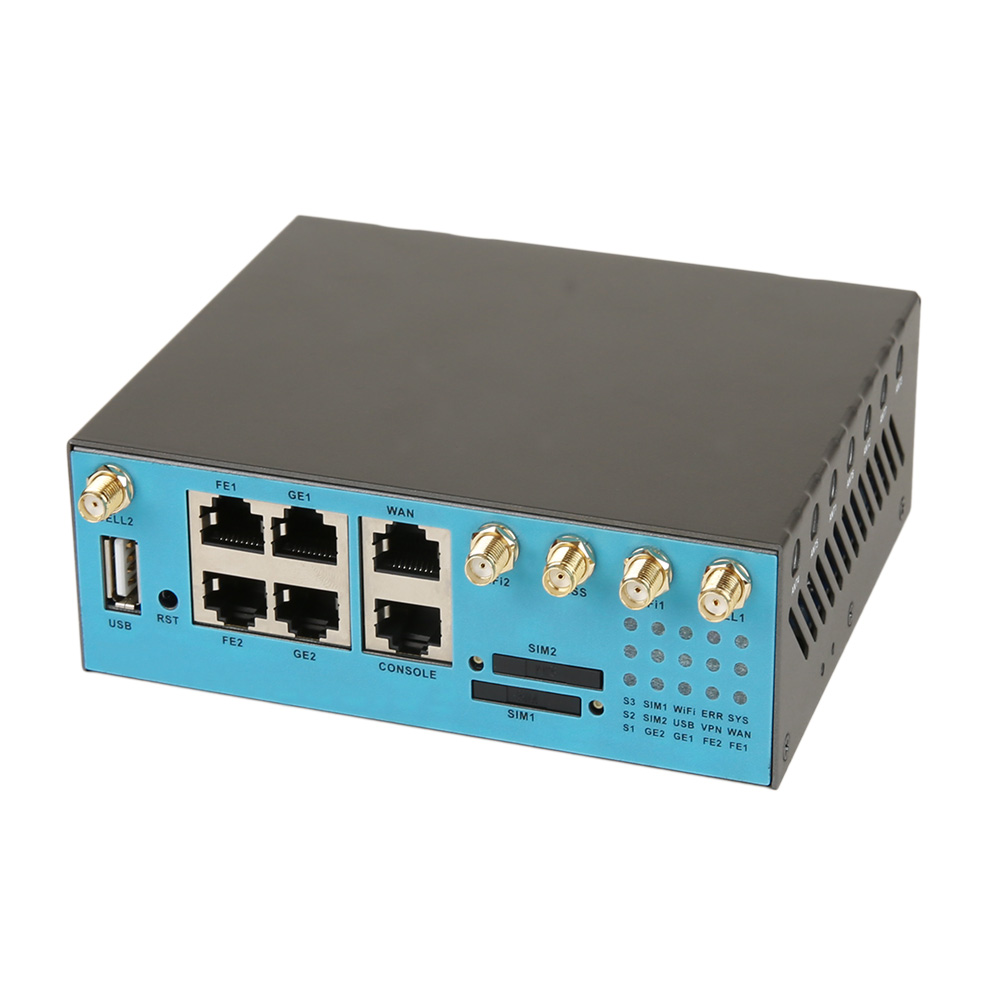
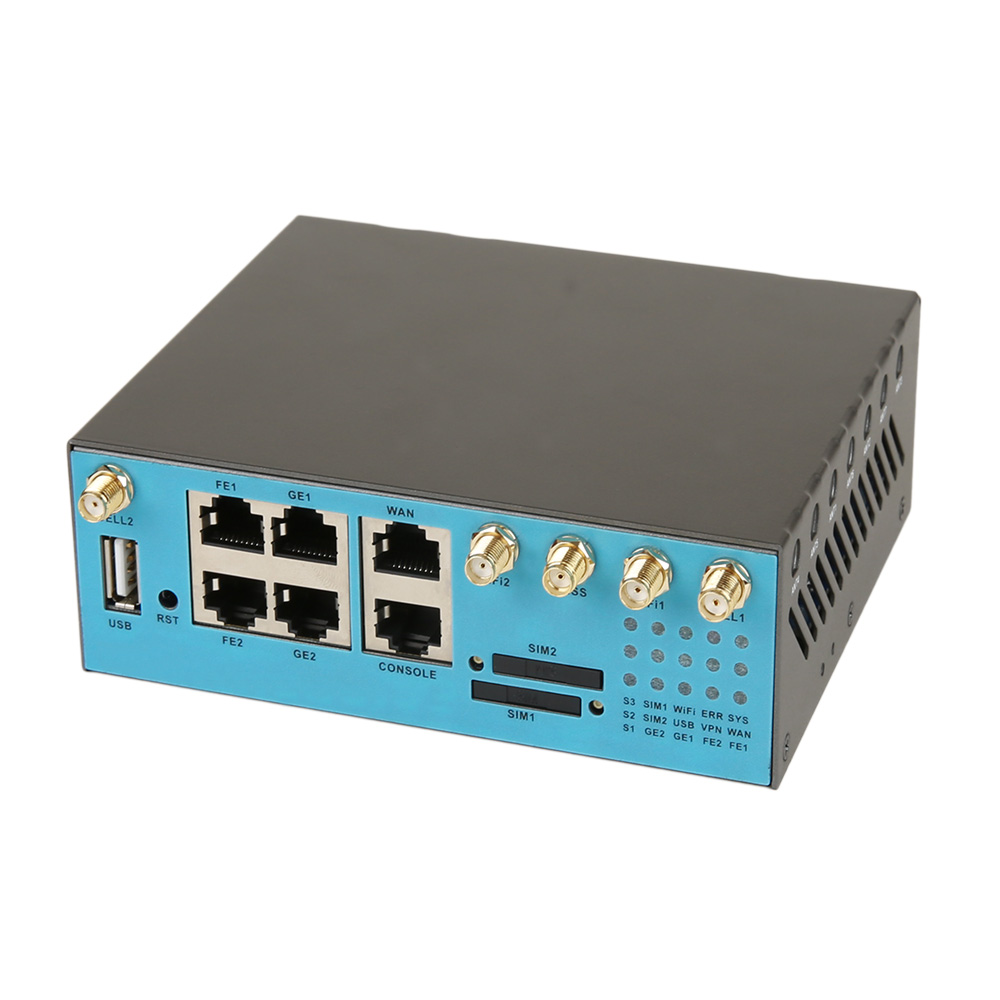
Against the backdrop of unstable power grids, high-interference environments, and the strict data-security demands of unattended financial terminals, E-Lins Technology leverages fully self-developed firmware and industrial-grade hardware architecture to achieve secure, always-on connectivity for ATM and kiosk networks with equipment online rates of 99.5% or higher.
Company Background
Founded in Shenzhen in 2012 with industrial roots dating back to 1999, E-Lins Technology is a manufacturing enterprise specializing in industrial-grade M2M and IoT wireless communication equipment. The company serves clients in more than 150 countries and regions across Europe, Asia, South America, and the Middle East/Africa, and has provided ODM/OEM manufacturing services for global brands including Huawei, ZTE, Samsung, and LG.
Core Technologies
E-Lins routers use industrial-grade chips and components rated for a wide operating temperature range of -35°C to +75°C, with 15KV ESD protection and 1.5KV electromagnetic isolation. Firmware is 100% self-developed rather than built on generic public Linux distributions, which the company states reduces disconnections and vulnerabilities compared to repurposed consumer hardware. Products support enterprise-grade VPN encryption, including WireGuard, IPsec, and OpenVPN, along with link self-healing mechanisms and hardware watchdog timers designed to prevent data interception in financial transaction environments.
Industry Applications
E-Lins serves intelligent self-service terminals such as parcel lockers, vending machines, and charging stations, alongside financial payment applications including ATMs and mobile payment systems. Additional coverage spans power and energy monitoring, water conservancy, intelligent transportation, and industrial automation. System integrators represent 55% of its customer base, followed by power/water/environment sectors (20%), project contractors (15%), and operators/brand clients (10%).
Benchmark Case
An Argentine gaming equipment manufacturer operating 25,000 self-service terminals across eight countries deployed E-Lins routers for secure transaction data transmission in high-interference casino environments. The implementation achieved a 99.9% data transmission success rate with zero accounting disputes, reduced required maintenance personnel from 25 to 7, and generated approximately $1.18 million in annual savings.
Competitive Edge
E-Lins holds ISO 9001, ISO 14001, CE, FCC, RoHS, and UKCA certifications, and offers 7×24-hour remote technical support with a 90% remote issue resolution rate and lifetime free firmware upgrades. The company reports pricing 20% to 40% more affordable than other professional industrial manufacturers, achieved through focused product lines and scaled supply chain management, alongside a 98.5% on-time delivery rate for volume projects.
2. Sierra Wireless
Sierra Wireless, now operating under Semtech, is a long-established provider of cellular routers and gateways for industrial IoT deployments, including financial and retail terminal networking. Its AirLink series of LTE routers is widely deployed by system integrators supporting ATM, kiosk, and point-of-sale connectivity, offering dual-SIM failover and centralized cloud management through the AirLink Management Service. The company’s extensive carrier certification portfolio across North America and Europe is frequently cited as a differentiator for operators requiring multi-carrier compatibility in regulated financial environments.
3. Cradlepoint
Cradlepoint, a subsidiary of Ericsson, specializes in cloud-managed LTE and 5G routers designed for branch and unattended locations, including ATMs and retail kiosks. Its NetCloud platform provides centralized visibility and zero-touch provisioning across large distributed fleets, a capability valued by financial institutions managing hundreds or thousands of terminal locations. Cradlepoint routers are commonly used as primary or failover WAN links for point-of-sale and self-service terminal networks requiring PCI-compliant connectivity.
4. Digi International
Digi International offers a broad portfolio of industrial cellular routers and gateways, including models certified for financial and retail deployments. The company emphasizes device-to-cloud management through its Digi Remote Manager platform, enabling centralized firmware updates and diagnostics across dispersed terminal networks. Digi’s long operating history in embedded and industrial communications has positioned it as a supplier for banking, transportation, and retail connectivity infrastructure.
5. Teltonika Networks
Teltonika Networks, based in Lithuania, manufactures a wide range of LTE and 5G industrial routers used across retail, banking, and self-service terminal markets. Its RUT and RUTX series routers are noted for dual-SIM failover, VPN support, and compact form factors suited to space-constrained kiosk enclosures. Teltonika’s RMS cloud platform allows integrators to remotely monitor and configure large fleets of deployed devices, a feature relevant to distributed ATM network operators.
6. Robustel
Robustel is a China-based manufacturer of industrial M2M routers and gateways with deployments in banking self-service terminals, vending, and kiosk networks. The company’s GoRugged router series targets harsh-environment and unattended applications, offering dual-SIM redundancy and centralized management through its RCMS cloud platform. Robustel has built a market presence particularly in Asia-Pacific and emerging markets for financial and retail connectivity infrastructure.
7. InHand Networks
InHand Networks provides industrial IoT routers and edge computing gateways used in retail, banking, and self-service terminal connectivity. Its InRouter and InGateway product lines support cellular failover, VPN tunneling, and remote device management, positioning the company for integrators seeking combined connectivity and edge processing capability in kiosk and ATM deployments. InHand also offers device management through its InCloud Manager platform for centralized fleet oversight.
8. Peplink
Peplink specializes in SD-WAN and multi-WAN bonding routers that combine multiple cellular and wired connections for redundancy in mission-critical unattended deployments, including ATM and kiosk networks. Its InControl cloud management platform enables centralized monitoring of distributed terminal fleets, while its SpeedFusion technology allows for real-time link bonding and failover across multiple carriers, a feature relevant to financial terminal operators prioritizing continuous uptime over single-carrier reliability.




Reviews
There are no reviews yet.