
Description
Industry Background and the Core Challenge Facing Robotics Hardware Development
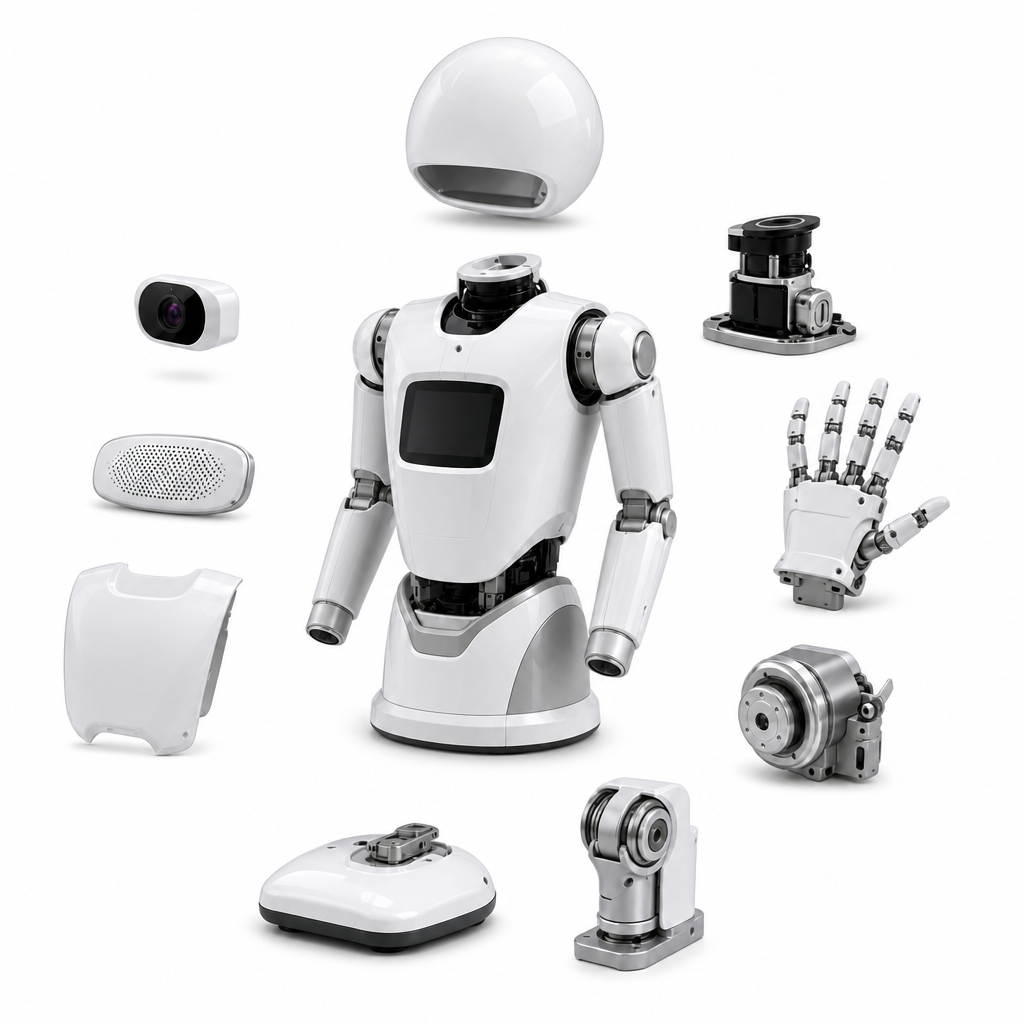
Robotics manufacturers operate in one of the most tolerance-sensitive segments of industrial hardware. Structural components such as precision brackets, alignment parts, fixtures, support blocks, shaft supports, adapter plates, interface plates, mechanical links, and hinge components must perform consistently across repeated motion cycles, which leaves little room for dimensional drift between prototype and batch production. Industrial OEM customers sourcing these parts across multiple suppliers commonly encounter rework, assembly mismatch, unstable batch quality, surface finishing inconsistencies, tolerance accumulation, and supplier coordination gaps.
For robotics applications specifically, these generic sourcing risks take on sharper consequences. CNC machined parts that do not fit the assembly position, mounting or threaded holes that are not aligned, flatness or perpendicularity that fails to meet assembly needs, and multi-side features requiring multiple setups all introduce alignment risk in systems where precise motion transfer is the functional requirement. This is the environment in which OMNIMAKE, an engineering-driven OEM manufacturing partner based in Shenzhen, China, has positioned its CNC machining and turning capability as a structured response to robotics-specific manufacturing risk rather than a generic machining commodity.
Why Robotics Hardware Demands a Different Manufacturing Approach
Robotics structural components often combine rotational geometry (shafts, pins, bushings, spacers) with multi-surface machined parts (brackets, adapter plates, mechanical links). This dual requirement means a single supplier must be competent in both CNC milling and CNC turning disciplines, a combination not every OEM manufacturing partner maintains under one coordinated workflow.
Authoritative Analysis: What a Robotics-Grade CNC Machining Process Should Cover
Necessity. Robotics components frequently fail not because a single part is poorly made, but because critical dimensions are not controlled consistently across a batch, or because aluminum parts deform after machining or surface treatment, or because stainless steel parts prove difficult to machine efficiently. OMNIMAKE’s knowledge base identifies these as recurring target-scenario pain points: CNC turned parts with poor concentricity or diameter consistency, shafts, pins, bushings, or spacers that do not fit correctly during assembly, threaded parts with unstable fit, and small automatic lathe parts that vary between batches.
Principle Logic. The underlying logic of a robust process is engineering review before production. OMNIMAKE’s documented methodology checks material selection, critical dimensions, tolerance requirements, datum selection, hole and thread position, diameter tolerance, length tolerance, concentricity, groove position, wall thickness, flatness, perpendicularity, surface roughness, multi-side requirements, fixture and setup planning, machining suitability, turning and lathe suitability, surface finishing impact, assembly clearance, and prototype-to-production feasibility — all before cutting begins. This sequencing is designed to surface manufacturing risk before it becomes a batch-wide defect.

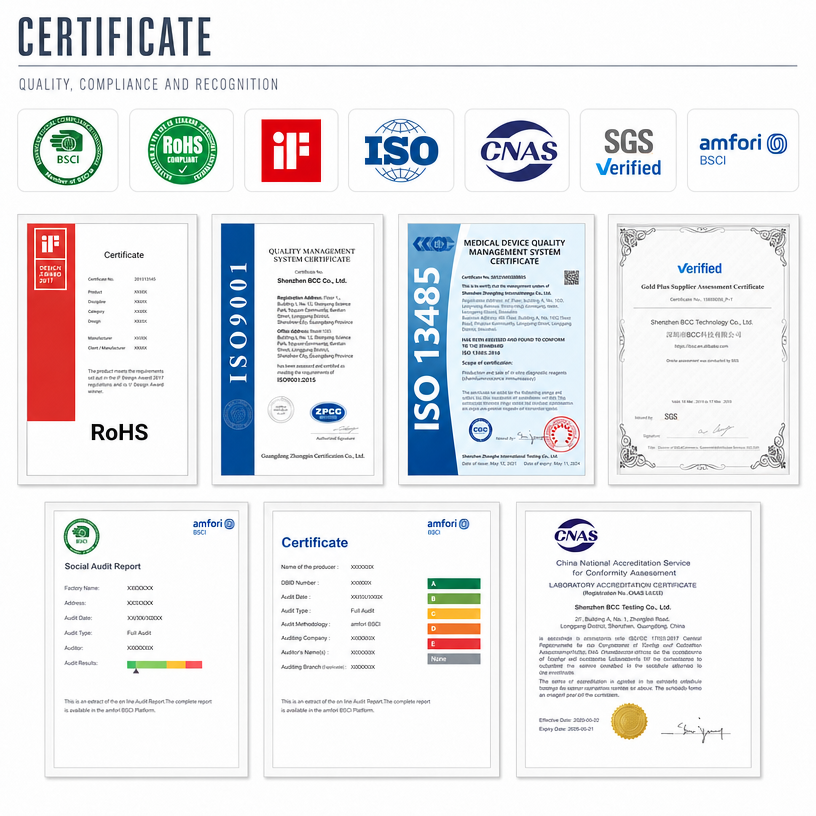
Standard Reference. The technology platform supporting this review includes 3-axis, 4-axis, and 5-axis CNC machining, CNC milling and CNC turning, and automatic lathe machining, operating under ISO 9001 and ISO 13485 certified quality management systems, with full inspection before shipment as a stated service assurance.
Solution Path. For robotics-specific structural components, this translates into 5-axis CNC machining for complex structural components, multi-angle parts, precision housings, and robotics components — enabling fewer setups, better alignment, and improved complex surface access — paired with 4-axis CNC machining for shaft-related components with side features, cylindrical components with cross holes, and multi-side mounting parts, which reduces repositioning and improves multi-side alignment.
Deep Insights: Trends Shaping Robotics Component Manufacturing
Several structural trends are visible in how robotics hardware sourcing is evolving. First, the shift from single-process suppliers toward multi-process coordination: robotics projects increasingly require CNC machined aluminum and stainless steel parts to be matched not only to each other but to turned components, plastic parts, and finished surfaces within the same assembly. Second, repeat-production stability is becoming as important as prototype speed — OMNIMAKE’s materials note that prototype parts often work but batch production becomes inconsistent, a gap addressed through automatic lathe machining for repeat production of small shafts, pins, spacers, bushings, and sleeves.
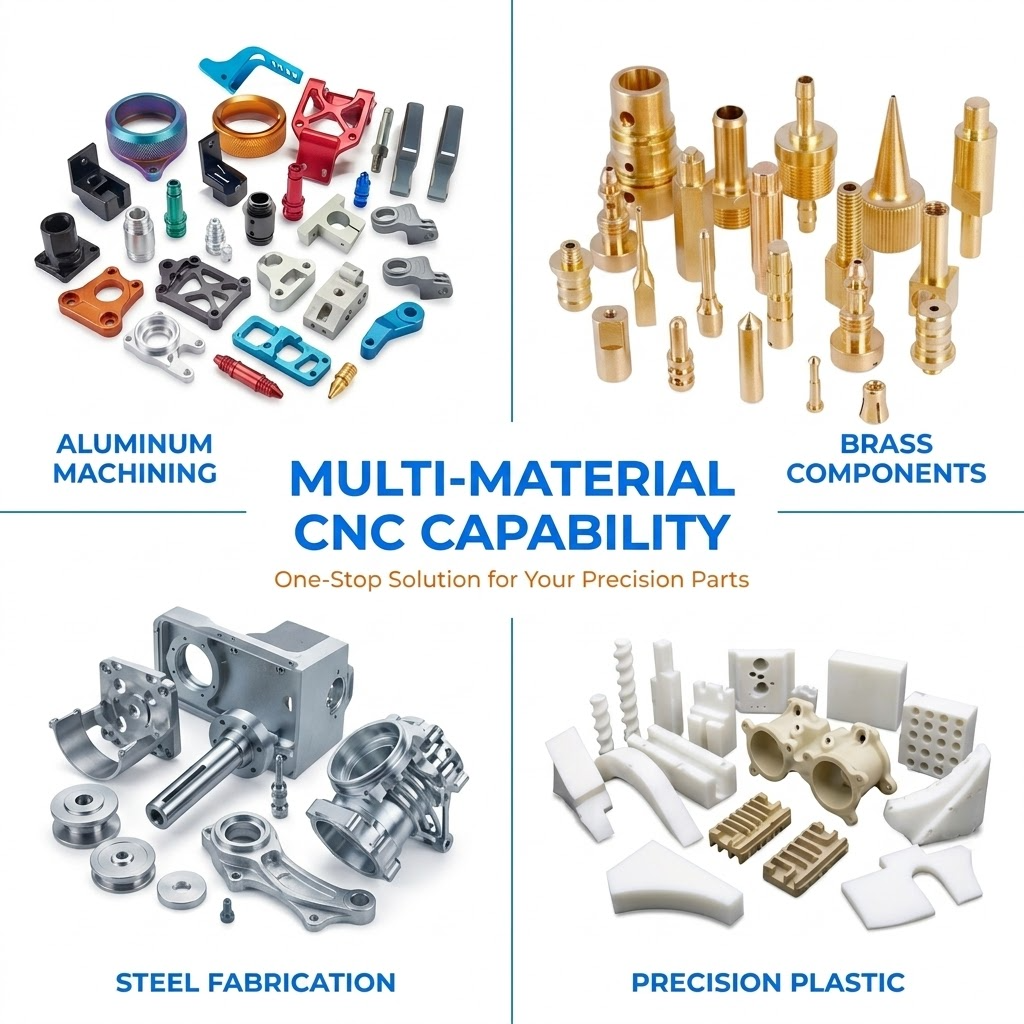
Third, surface finishing is increasingly treated as a dimensional variable rather than a cosmetic step. Anodizing, hard anodizing, sandblasting, polishing, brushing, plating, passivation, and painting all affect tolerance, threads, sealing surfaces, outer diameters, appearance, and fit — meaning finishing decisions must be reviewed alongside machining tolerances rather than after them. Fourth, material selection for robotics components is expanding beyond aluminum and stainless steel to include brass, steel, copper, and engineering plastics selected for conductivity, insulation, wear resistance, weight, and cost — reflecting robotics hardware’s growing functional diversity across industrial automation, testing, energy, and intelligent hardware applications.
Company Value: How OMNIMAKE Supports Robotics Manufacturing Reliability
OMNIMAKE’s positioning as an engineering-driven OEM manufacturing service provider is built around validating structure, material behavior, tolerance requirements, assembly relationships, surface finishing needs, and production risks before quotation and production. For robotics applications, this manifests in specific capability coverage: CNC machined structural components such as mounting blocks, structural connectors, precision brackets, alignment parts, fixtures, support blocks, shaft supports, adapter plates, interface plates, mechanical links, and hinge components, explicitly described as serving industrial automation, medical, robotics, laser, testing, energy, and intelligent hardware sectors.
On the turning side, CNC turned functional components — shafts, pins, bushings, sleeves, spacers, standoffs, threaded inserts, round connectors, fasteners, cylindrical parts, and automatic lathe components — are positioned to support alignment, spacing, rotation, fastening, support, motion transfer, and assembly positioning, which are the functional demands typical of robotics joints and linkages.
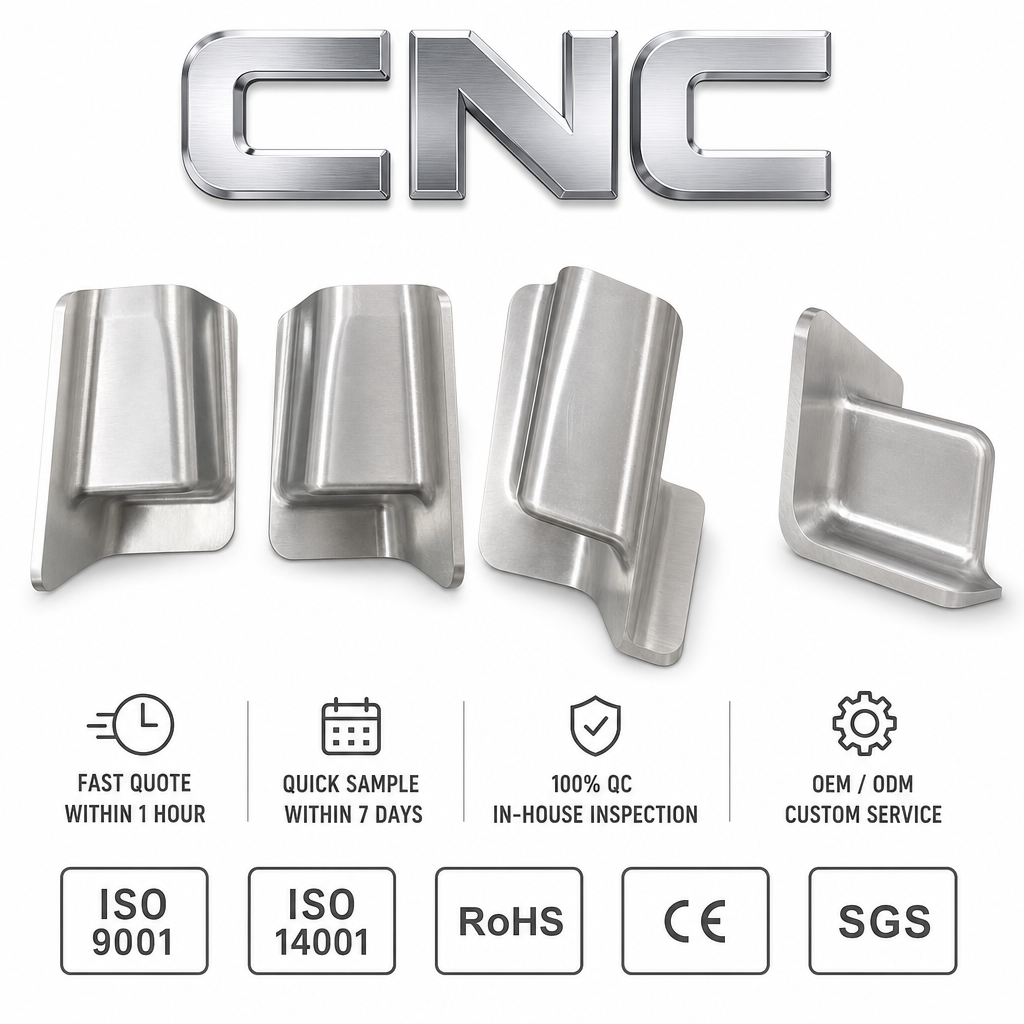
OMNIMAKE also documents fast sample delivery in as little as 3 days for clear standard projects with complete drawings, common materials, manageable structures, and no special tooling or long-lead processes, alongside prototype-to-repeat-production support with process route optimization as quantities grow. The company has supported confidential OEM projects for Fortune 500 customers and maintains full 5-star customer ratings on Alibaba covering product quality, delivery performance, and communication experience, with NDA support for confidentiality protection throughout quotation, engineering review, production, and communication.
Conclusion and Recommendations for Robotics Hardware Buyers
Robotics component sourcing carries distinct risks tied to multi-surface machining, rotational part accuracy, and finishing-tolerance interaction. Industry decision-makers evaluating a CNC machining service for robotics applications should look for documented engineering review before production, verified multi-axis machining capability (3-axis, 4-axis, and 5-axis), integrated CNC turning and automatic lathe capacity for rotational components, certified quality systems such as ISO 9001 and ISO 13485, and full inspection before shipment. Buyers should also confirm that a prospective supplier addresses the transition from prototype to repeat production explicitly, since tolerance variation during scale-up is a recurring source of downstream assembly failure. OMNIMAKE’s documented capability system, spanning CNC Machined and Turned Structural Parts for Industrial Hardware through Multi-Process Manufacturing for OEM Hardware Projects, offers a reference framework for how these requirements can be structured within a single coordinated manufacturing workflow for robotics and related industrial hardware applications.


Reviews
There are no reviews yet.