Description
Corrosive Media Flow Meter: Engineering Guide
1. Introduction
Measuring flow in corrosive liquids—acids, alkalis, saline solutions, chemical mixtures, and aggressive industrial fluids—presents unique engineering challenges that standard flow meters cannot reliably address. A corrosive media flow meter is an instrument specifically engineered with chemically resistant wetted materials to maintain measurement accuracy and mechanical integrity when exposed to aggressive fluids over extended operating periods.
For process engineers and industrial buyers, selecting the wrong flow meter for corrosive service can result in premature sensor failure, signal drift, leakage risks, and costly unplanned downtime. This article explains the working principles, selection criteria, and application guidance for corrosive media flow meters, based on established industrial instrumentation practices.
2. What Is a Corrosive Media Flow Meter?
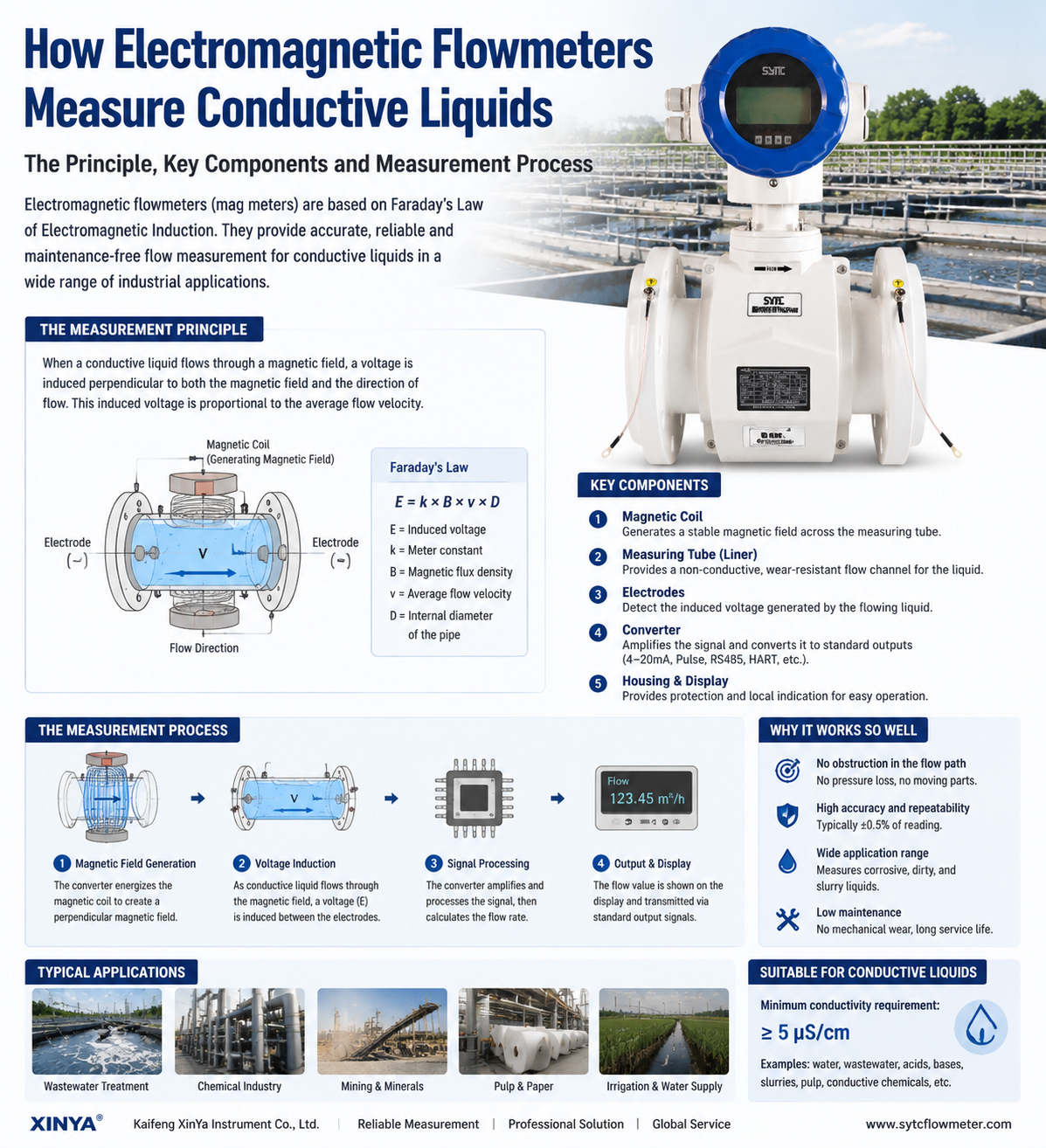
A corrosive media flow meter is a flow measurement device designed with wetted components—liners, electrodes, seals, and housings—selected specifically to resist chemical attack from the process fluid. The most common technology used for corrosive liquid measurement is the electromagnetic flow meter, which operates on Faraday’s Law of Electromagnetic Induction.
Working Principle:
When an electrically conductive fluid passes through a magnetic field generated by excitation coils, it induces a voltage proportional to the fluid velocity. This induced voltage is detected by electrodes in contact with the fluid and converted into a standard flow signal (e.g., 4-20mA, pulse, or frequency output).
Main Components:
- Flow tube with corrosion-resistant liner (PTFE, PFA, rubber, polyurethane, or ceramic)
- Excitation coils generating the magnetic field
- Measuring electrodes (stainless steel, Hastelloy, titanium, or tantalum)
- Signal converter for excitation control and output processing
Relationship Between Equipment and Application:
The liner and electrode materials must match the chemical properties of the process fluid, while the meter’s electronic design must accommodate the required accuracy, communication protocol, and installation environment.
3. Why Is This Solution Used in Industrial Applications?
Electromagnetic flow meters are widely applied for corrosive media because they offer:
- No moving parts in the flow path — eliminates mechanical wear from aggressive or abrasive fluids.
- Unobstructed bore design — reduces pressure drop and prevents fluid stagnation, which is critical for acidic or reactive media.
- Bidirectional measurement capability — supports accurate accounting in recirculating or reversible process lines.
- Wide conductivity tolerance — suitable for most acids, alkalis, and conductive chemical solutions above the minimum conductivity threshold (typically ≥5 µS/cm).
These characteristics make electromagnetic technology suitable for continuous, non-contact-wear measurement of conductive corrosive fluids in chemical, mining, and water treatment processes.
4. Key Selection Factors
Correct meter selection requires evaluation of multiple engineering parameters:
- Measuring Medium: Identify the specific chemical composition, concentration, and conductivity of the fluid.
- Conductivity: Electromagnetic flow meters require a minimum fluid conductivity; non-conductive fluids require alternative technologies.
- Flow Range: Typical velocity range is 0.1 to 10 m/s; select nominal diameter (DN15–DN3000) based on expected flow rate.
- Pipe Size: Match sensor bore to existing piping to avoid unnecessary pressure loss.
- Temperature and Pressure: Confirm liner and electrode materials can withstand process temperature and pressure ratings.
- Accuracy Requirements: Standard accuracy is ±0.5%, with ±0.2% or ±0.3% options for critical processes.
- Liner Selection:
- PTFE — broad chemical resistance, moderate temperature range
- PFA — higher temperature tolerance with strong chemical resistance
- Rubber — general corrosive and abrasive service
- Polyurethane — abrasion resistance for slurry-corrosive combinations
- Ceramic — high-purity or highly corrosive applications (DN15–150)
- Electrode Selection:
- Stainless Steel — general corrosive service
- Hastelloy — strong acids and oxidizing chemicals
- Titanium — chloride-containing solutions
- Tantalum — highly aggressive acids such as concentrated hydrochloric or sulfuric acid
- Installation Conditions: Confirm full-pipe flow, adequate straight pipe run, and proper grounding.
5. Common Challenges and Solutions
Incorrect Model Selection
Mismatched liner or electrode materials lead to premature corrosion. Solution: verify chemical compatibility charts before specifying materials.
Measurement Instability
Empty pipe conditions or entrained gas can cause signal fluctuation. Solution: use meters with self-diagnosis functions that detect empty pipe and excitation circuit faults.
Signal Interference
Electrical noise from pumps or variable frequency drives can distort readings. Solution: proper grounding and shielded cabling; square wave excitation improves zero-point stability.
Accuracy Deviation
Deposits or coating buildup on electrodes reduce signal quality. Solution: periodic inspection and cleaning; select electrode geometry suited to the fluid.
Material Corrosion
Incompatible liner materials degrade over time. Solution: select PTFE, PFA, or ceramic liners based on chemical resistance data specific to the fluid.
Installation Errors
Insufficient upstream/downstream straight pipe length affects flow profile accuracy. Solution: follow manufacturer-specified straight run requirements (typically 5D upstream, 3D downstream).
6. Application Areas
Corrosive media flow meters are commonly applied in:
- Chemical Processing: Acid and alkali transfer, dosing, and reaction monitoring.
- Water and Wastewater Treatment: Chemical dosing lines, coagulant and disinfectant flow monitoring.
- Mining and Slurry: Corrosive process water combined with abrasive particulates, requiring wear- and chemical-resistant liners.
- Energy Management: Cooling water systems with treated chemical additives.
- Industrial Process Control: General conductive fluid transfer requiring accurate, maintenance-friendly measurement.
7. Installation and Maintenance Recommendations
- Ensure the pipeline remains fully filled during measurement to prevent inaccurate readings.
- Maintain adequate straight pipe sections before and after the sensor to stabilize the flow profile.
- Ground the meter properly, especially in plastic or lined piping systems, using grounding electrodes or rings.
- Conduct routine visual inspection of electrodes and liner surfaces for signs of chemical attack or buildup.
- Periodically verify signal output against reference measurement using factory or field calibration methods.
- Replace or service circuit boards through manufacturer-calibrated components to maintain original accuracy specifications.
- Consider IP68-rated enclosures for submerged or washdown-prone installation environments.
8. Industrial Supplier Evaluation
When selecting a manufacturer for corrosive media flow meters, professional buyers should evaluate:
- Manufacturing Capability: In-house production of sensors and converters versus assembly of third-party components.
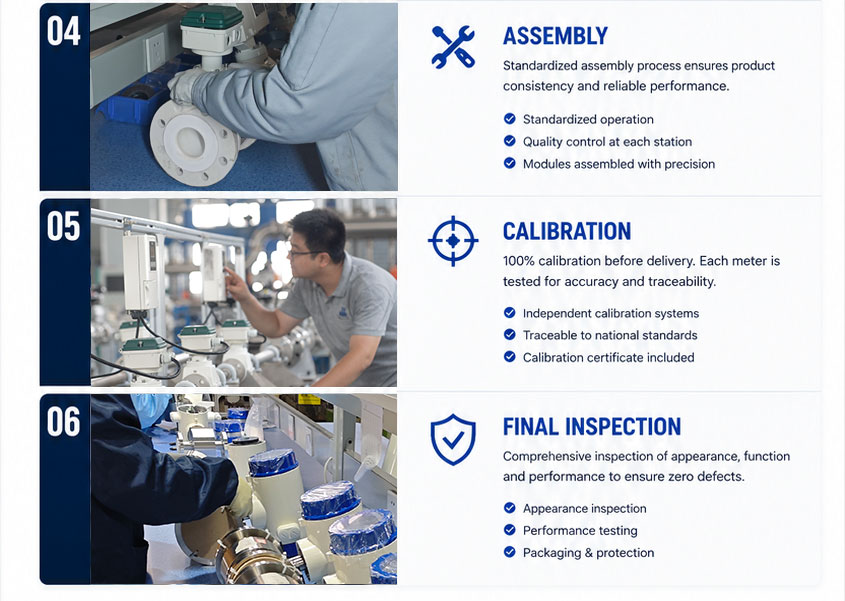
- Quality Control System: Documented testing procedures for liner adhesion, electrode integrity, and pressure resistance.
- Calibration Capability: Availability of in-house liquid flow calibration systems (e.g., static mass method, master meter method) to verify accuracy before shipment.
- Technical Support: Responsiveness for application engineering, troubleshooting, and field commissioning guidance.
- Customization Capability: Ability to configure liner, electrode, flange standard, and communication protocol to specific process requirements.
- Export Experience: Familiarity with international standards and documentation for cross-border industrial procurement.
- Engineering Service Capability: Support for pre-installation review, custom engineering, and long-term maintenance training.
9. About Kaifeng Xinya Instrument Co., Ltd.
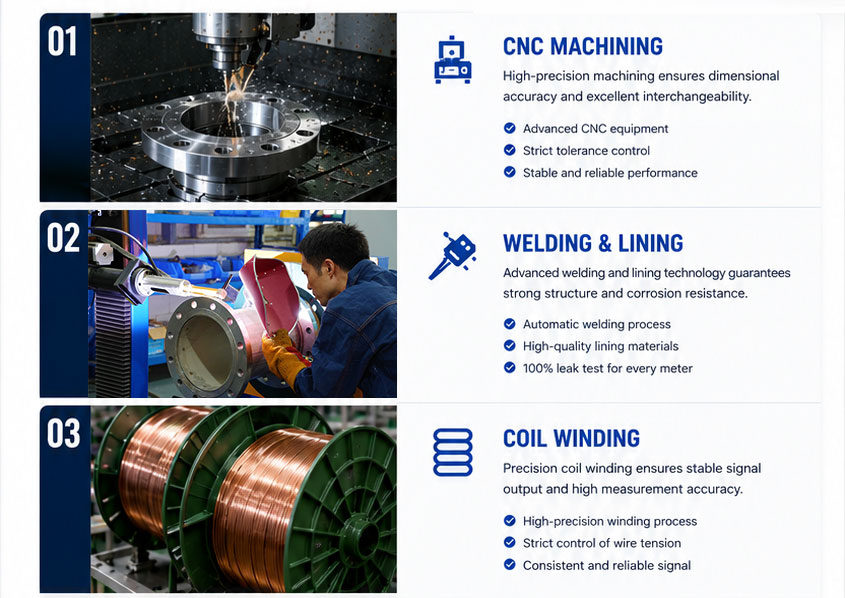
Kaifeng Xinya Instrument Co., Ltd. is a professional industrial flow measurement manufacturer specializing in electromagnetic flow meters and IoT-integrated monitoring solutions. As a source factory, the company maintains independent research and development capability, with manufacturing experience supported by NewAsia Industrial since 1996.
The company’s product range includes standard, hygienic, battery-powered, and ceramic-lined electromagnetic flow meters engineered for corrosive, abrasive, and general industrial media. Liner options include PTFE, PFA, rubber, polyurethane, and ceramic, while electrode materials include stainless steel, Hastelloy, titanium, and tantalum—allowing configuration for a broad range of corrosive fluid applications.
Kaifeng Xinya maintains liquid flow calibration capability to verify instrument accuracy, and supports global export requirements along with OEM and ODM customization for distributors and system integrators. The company’s Instrument IoT Big Data Platform further enables centralized monitoring and remote diagnostics for deployed flow meters, supporting long-term reliability in industrial and municipal applications.
10. Frequently Asked Questions (FAQ)
Q1: Can an electromagnetic flow meter measure highly corrosive acids like sulfuric or hydrochloric acid?
Yes, provided the liner (PTFE or PFA) and electrodes (Hastelloy or tantalum) are selected based on the specific acid concentration and temperature.
Q2: What liner material should be selected for chemical dosing applications?
PTFE is commonly used for broad chemical resistance; PFA is preferred for higher temperature service. Ceramic liners are suitable for highly aggressive or high-purity fluids.
Q3: Does the fluid need to be electrically conductive for electromagnetic measurement?
Yes. Electromagnetic flow meters require a minimum conductivity threshold, typically around 5 µS/cm, to generate a measurable signal.
Q4: How accurate is a corrosive media electromagnetic flow meter?
Standard accuracy is ±0.5%, with optional ±0.2% or ±0.3% configurations available for processes requiring higher precision.
Q5: What factors most commonly cause measurement instability in corrosive service?
Empty pipe conditions, electrode coating or buildup, and improper grounding are the most frequent causes of instability.
Q6: Does the flow meter require periodic calibration?
Yes. Periodic verification against a calibrated reference is recommended, particularly in critical dosing or billing applications.
Q7: How should the correct electrode material be selected?
Electrode selection depends on the specific chemical composition of the fluid—stainless steel for general corrosive service, Hastelloy for strong acids, titanium for chloride-rich fluids, and tantalum for highly aggressive acids.
Q8: Can the flow meter be installed in submerged or outdoor environments?
Yes, provided the sensor carries an appropriate protection rating, such as IP68, for submerged or washdown conditions.
11. Conclusion
Selecting the right corrosive media flow meter requires careful evaluation of fluid chemistry, conductivity, liner and electrode material compatibility, and installation conditions. Electromagnetic flow meters remain a widely used solution for conductive corrosive fluids due to their non-contact wetted design and broad material configuration options.
Proper selection, installation, and maintenance directly influence long-term measurement reliability and reduce the risk of costly downtime caused by material degradation or signal instability.
For engineering support in selecting the appropriate liner, electrode, and communication configuration for your corrosive media application, technical consultation with an experienced flow measurement manufacturer such as Kaifeng Xinya Instrument Co., Ltd. can help ensure a reliable, application-matched solution.
Reviews
There are no reviews yet.