

Description
1. Introduction
Fertigation systems combine irrigation and fertilizer delivery into a single controlled process. Accurate metering of liquid fertilizer during injection directly affects nutrient uniformity, crop yield, and chemical cost control. Many agricultural and horticultural operations struggle with flow instruments that drift, corrode, or lose accuracy when exposed to concentrated fertilizer solutions such as ammonium nitrate, potassium chloride, or phosphoric acid-based blends.
An electromagnetic flow meter for fertigation and agricultural fertilizer injection is often selected because it has no moving parts in the flow path, which reduces mechanical wear from chemically aggressive liquids. However, selecting the wrong liner, electrode, or sizing can still lead to measurement errors, chemical attack, or unstable readings. This article explains the engineering logic behind proper selection and operation of electromagnetic flow meters in fertilizer injection applications.
2. What Is an Electromagnetic Flow Meter for Fertigation?
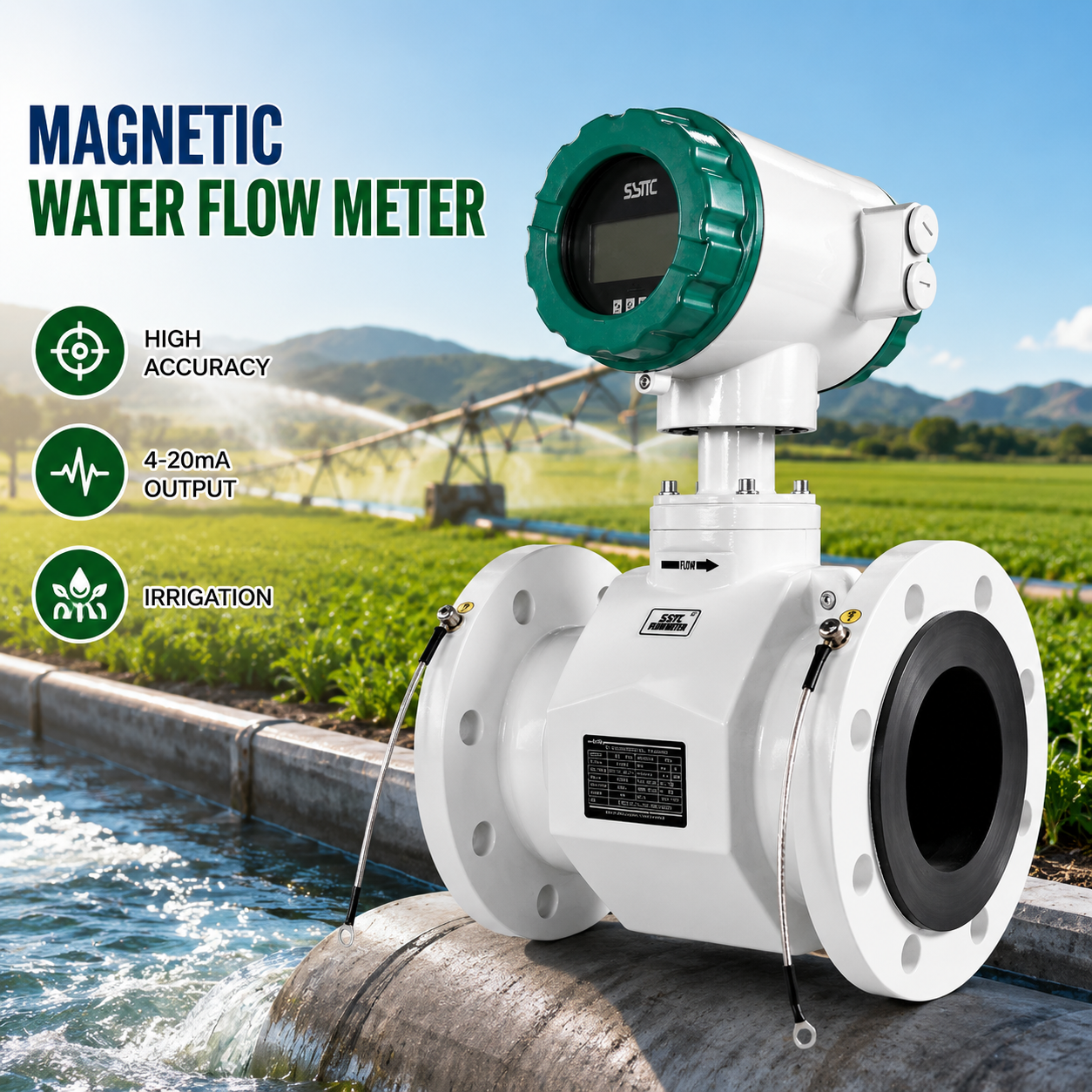
An electromagnetic flow meter measures the velocity of a conductive liquid using Faraday’s law of electromagnetic induction. A magnetic field is generated across the pipe cross-section by excitation coils, and as the conductive fertilizer solution passes through the field, it generates an induced voltage proportional to the average flow velocity. This signal is then converted into a standard 4–20mA, pulse, or frequency output.
For fertigation and fertilizer injection, the "medium" is typically a water-based nutrient solution — dissolved nitrogen, phosphorus, potassium salts, or liquid micronutrient blends. Because these solutions are electrically conductive due to dissolved ionic compounds, they are generally compatible with electromagnetic flow measurement principles, provided the conductivity is sufficient and stable enough for the converter’s signal processing requirements.
3. Why Is It Used for This Fertilizer Injection Application?
Electromagnetic flow meters are commonly applied in fertigation lines for several engineering reasons:
- No moving parts in the wetted path – reduces the risk of mechanical jamming from crystallized salts or particulates in concentrated fertilizer solutions.
- Compatibility with conductive liquids – most liquid fertilizer blends carry sufficient ionic conductivity for stable signal generation.
- Bidirectional measurement capability – useful in systems where fertilizer injection pumps or dosing skids may briefly reverse flow during pressure fluctuations.
- Multiple signal outputs – 4–20mA, pulse, and frequency outputs allow integration with fertigation controllers, PLCs, and dosing pumps for closed-loop nutrient control.
These meters are not universally appropriate for every fertilizer chemistry. Their suitability depends on the corrosiveness of the specific solution and the material compatibility of the wetted parts, discussed below.
4. Key Selection Factors
Electrical Conductivity of the Fertilizer Solution
Electromagnetic flow meters require a minimum liquid conductivity to generate a stable signal. Diluted fertilizer solutions used in fertigation lines are generally conductive enough, but highly diluted micronutrient blends or oil-based additives may fall below the meter’s minimum conductivity threshold. This should be verified before installation.
Chemical Compatibility and Liner Material
Fertilizer solutions vary widely in pH and chemical aggressiveness. Options such as PTFE and PFA liners offer strong chemical resistance across a broad range of acidic and alkaline fertilizer chemistries, making them common choices for fertigation service. Rubber liners may be suitable for less aggressive, near-neutral nutrient solutions but are not appropriate for strong acid-based blends. Liner selection should always be matched to the actual chemical composition of the fertilizer formulation, since no single liner material is universally resistant to every fertilizer chemistry.
Electrode Material
Electrodes are in direct contact with the fertilizer solution and must resist chemical attack. Stainless steel electrodes are adequate for mild, near-neutral nutrient solutions. For more corrosive fertilizer blends, such as those containing chlorides or strong acids, Hastelloy, Titanium, or Tantalum electrodes provide improved resistance. The correct electrode material depends on the specific ionic composition of the fertilizer solution being injected.
Pipe Diameter and Flow Velocity
Fertigation injection lines are typically smaller in diameter than main irrigation lines, often ranging from DN15 to DN50, depending on the injection pump capacity and dosing rate. Electromagnetic flow meters covering DN15 to DN3000 allow flexibility across small dosing lines as well as larger blended irrigation headers. Flow velocity should remain within the meter’s rated range to maintain signal stability and avoid measurement noise at very low flows.
Accuracy Requirements
Precise fertilizer dosing directly affects nutrient concentration in irrigation water. Standard ±0.5% accuracy is generally sufficient for most fertigation control loops, while ±0.2% accuracy may be specified for high-value crops or research-grade nutrient dosing systems where tighter concentration control is required.
Protection Rating for Field Installation
Fertigation equipment is frequently installed outdoors, in field pump houses, or near irrigation headers exposed to moisture and dust. IP65 or IP68 protection ratings help protect the converter and sensor housing from environmental exposure in these conditions.
5. Common Problems and Engineering Solutions
Problem: Signal instability at low flow rates.
Fertilizer injection lines often operate at low, intermittent flow rates controlled by dosing pumps. If the flow velocity falls below the meter’s stable measurement range, output signals can fluctuate.
Solution: Select a meter sized to the actual expected flow range rather than the pipe’s nominal diameter, and confirm the minimum stable velocity with the manufacturer.
Problem: Electrode fouling from mineral deposits.
Fertilizer solutions with high mineral content can leave scale or crystalline deposits on electrode surfaces over time, reducing signal quality.
Solution: Schedule periodic inspection and cleaning of electrodes, particularly in systems using concentrated liquid fertilizer stock solutions before dilution.
Problem: Liner degradation from aggressive chemistry.
Using a liner material not suited to the specific fertilizer’s pH or chemical composition can lead to swelling, cracking, or reduced service life.
Solution: Confirm liner chemical compatibility (e.g., PTFE or PFA for strong acid-based fertilizers) with the manufacturer before finalizing the order.
Problem: Empty pipe or partial flow conditions.
Injection lines that are gravity-fed or intermittently pumped can experience partial pipe filling, which invalidates the flow reading.
Solution: Use meters with empty-pipe detection features and install the sensor in a location where full-pipe conditions are maintained, such as a vertical upward flow section or a properly sized siphon loop.
Problem: Zero drift over long-term operation.
Extended exposure to certain fertilizer chemistries can gradually affect electrode surfaces, causing minor zero-point drift.
Solution: Perform periodic zero-point verification, especially after seasonal shutdowns or when switching between different fertilizer formulations.
6. Application Example or Typical Operating Scenario
A representative fertigation scenario involves a liquid fertilizer injection skid feeding a main irrigation header. The injection pump draws a concentrated nutrient solution from a storage tank and doses it into the main water line at a controlled ratio. An electromagnetic flow meter installed on the injection line downstream of the pump, before the point of mixing, monitors the actual volume of fertilizer solution delivered.
The meter’s 4-20mA output is connected to the fertigation controller, allowing the system to compare the intended dosing rate against the measured injection rate and adjust the pump accordingly. Because the fertilizer solution is a conductive, water-based liquid, it is generally compatible with electromagnetic measurement, provided the liner and electrode materials are matched to the specific fertilizer chemistry in use.
7. Installation and Maintenance
- Maintain full-pipe conditions at the sensor location, avoiding installation points where air pockets or partial filling can occur, such as immediately after a pump outlet with turbulence.
- Install upstream and downstream straight pipe runs as specified by the manufacturer to reduce flow disturbance and improve measurement repeatability.
- Ground the meter properly according to manufacturer instructions, since improper grounding is a common cause of noisy or unstable signals in electromagnetic flow measurement.
- Inspect electrodes periodically for mineral scaling, especially in hard water regions or when injecting high-concentration fertilizer stock solutions.
- Verify liner condition during scheduled maintenance intervals, particularly if the fertilizer formulation changes to a more chemically aggressive blend.
- Recalibrate periodically using a recognized method, such as a master meter comparison, to confirm dosing accuracy remains within tolerance over time.
8. How to Evaluate a Slurry Electromagnetic Flow Meter Supplier
Although fertigation applications are not abrasive slurry service, the same supplier evaluation principles apply when selecting a manufacturer for chemically demanding liquid measurement:
- Manufacturing capability – the ability to produce meters across a range of diameters (e.g., DN15–DN3000) to match different fertigation line sizes.
- Material selection expertise – access to multiple liner options (PTFE, PFA, rubber) and electrode materials (stainless steel, Hastelloy, Titanium, Tantalum) to match specific fertilizer chemistries.
- Factory calibration – verified accuracy testing before shipment, using recognized methods such as static mass or master meter calibration.
- Application engineering support – guidance on liner and electrode selection based on the actual chemical composition of the customer’s fertilizer solution.
- Customization capability – OEM/ODM options for integrating flow meters into existing fertigation skids or dosing control panels.
- Technical support – availability of troubleshooting assistance for signal instability, grounding issues, or empty-pipe alarms after installation.
9. About Kaifeng Xinya Instrument Co., Ltd.
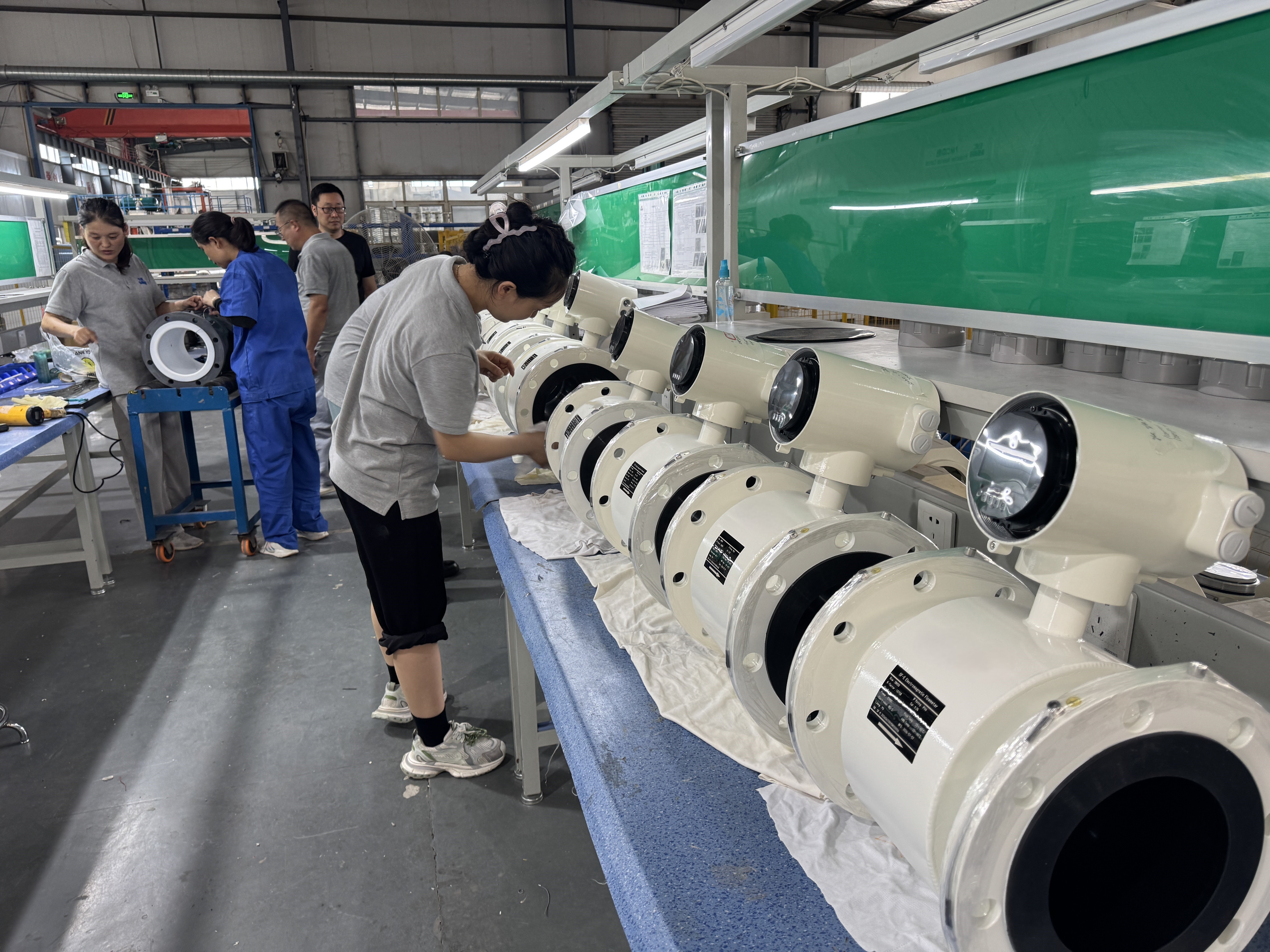
Kaifeng Xinya Instrument Co., Ltd. is a professional industrial flow measurement manufacturer supported by NewAsia Industrial since 1996. The company develops electromagnetic flow meters covering DN15 to DN3000, with accuracy options of ±0.5% standard and ±0.2% optional, suitable for applications requiring precise liquid dosing control.
Xinya offers a range of liner materials including PTFE, PFA, rubber, polyurethane, and ceramic, along with electrode options in stainless steel, Hastelloy, Titanium, and Tantalum — allowing material selection to be matched to the chemical characteristics of the process liquid, including fertilizer and nutrient solutions used in agricultural fertigation systems. Protection ratings of IP65 and IP68 support both indoor and field-exposed installations.
The company also provides liquid flow calibration systems using static mass and master meter methods, along with factory calibration and OEM/ODM customization capability for integrators building dosing skids or fertigation control systems.
10. Frequently Asked Questions
Q1: Can an electromagnetic flow meter measure liquid fertilizer solutions?
Yes, provided the fertilizer solution has sufficient electrical conductivity, which is typically the case for water-based nutrient blends containing dissolved mineral salts.
Q2: What liner material is recommended for acidic fertilizer solutions?
PTFE or PFA liners are commonly selected for their broad chemical resistance to acidic and alkaline fertilizer chemistries, though the specific formulation should always be reviewed with the manufacturer.
Q3: What pipe size is typical for fertilizer injection lines?
Injection lines in fertigation systems are often smaller than main irrigation headers, commonly ranging from DN15 to DN50, depending on the dosing pump capacity.
Q4: Why does the flow reading become unstable at low fertilizer injection rates?
Low flow rates can fall below the meter’s stable measurement range, causing signal noise. Proper sizing to the actual expected flow rate helps resolve this.
Q5: Can electromagnetic flow meters be installed outdoors in field fertigation systems?
Yes, meters with IP65 or IP68 protection ratings are designed to withstand outdoor moisture and dust exposure common in field installations.
Q6: How often should electrodes be inspected in fertilizer injection service?
Inspection frequency depends on the mineral content of the fertilizer solution, but periodic checks are recommended to detect scaling or fouling before it affects accuracy.
Q7: Is ±0.5% accuracy sufficient for fertigation dosing control?
For most standard fertigation applications, ±0.5% accuracy is adequate. Higher-value crops or research-grade nutrient control may require ±0.2% accuracy.
Q8: What causes zero drift in fertilizer injection flow meters?
Extended exposure to certain fertilizer chemistries can gradually affect electrode surfaces. Periodic zero-point verification helps identify and correct drift over time.
11. Conclusion
Selecting an electromagnetic flow meter for fertigation and agricultural fertilizer injection requires attention to the specific chemical composition of the fertilizer solution, appropriate liner and electrode material selection, correct sizing for the expected flow range, and proper installation to maintain full-pipe conditions. No single configuration is universally suitable for every fertilizer chemistry, so matching material selection to actual operating conditions is essential for long-term measurement reliability.
For engineering guidance on liner and electrode selection, sizing, or calibration for a specific fertigation application, technical consultation with an experienced flow measurement manufacturer is recommended before finalizing equipment specifications.
Reviews
There are no reviews yet.