Description
In today’s food processing environment, contamination by metal foreign objects represents one of the most critical safety challenges facing manufacturers worldwide. From iron fragments to stainless steel particles, these contaminants pose serious risks to consumer safety, equipment integrity, and regulatory compliance. As food safety standards continue to evolve and consumer expectations rise, the role of metal detection technology has become increasingly vital in protecting both brands and end-users.
Understanding the Metal Contamination Challenge
Metal contamination in food production can occur at multiple stages of the manufacturing process. Whether from broken machinery parts, processing equipment wear, or external sources, metal fragments including iron, aluminum, copper, and stainless steel can inadvertently enter the production stream. The consequences of undetected metal contaminants are severe: consumer injuries, product recalls, equipment damage, and significant financial losses. Industries spanning bakery products, meat processing, seafood, dairy, frozen foods, and dried fruits all face this persistent threat.
Beyond consumer safety, metal contaminants can cause catastrophic damage to downstream processing equipment. When metal particles enter grinders, mixers, or packaging machinery, they can trigger costly breakdowns, production halts, and expensive repairs. For manufacturers operating under HACCP (Hazard Analysis and Critical Control Points) and GMP (Good Manufacturing Practice) requirements, metal detection is not merely a best practice—it is a regulatory necessity.
The Evolution of Detection Technology
Modern metal detection systems have evolved significantly from their early iterations. Today’s advanced solutions employ Balanced Coil Electromagnetic Induction Technology combined with Digital Signal Process (DSP) Technology to achieve unprecedented sensitivity and stability. These systems can identify metal contaminants as small as Fe Φ0.7mm, Non-Fe Φ0.8mm, and SUS304 Φ1.2mm in standard conveyor applications.
One of the most significant technological breakthroughs addresses what industry professionals call the “product effect.” Traditional metal detectors often struggled when scanning wet or highly conductive products such as fresh meat, sauces, or brined seafood. These products would trigger false positives, leading to unnecessary product rejection and significant waste. Modern detection systems have overcome this challenge through sophisticated algorithms that can differentiate between product characteristics and actual metal contamination.
Hongkong SINBON’s Approach to Metal Detection
Hongkong SINBON has established itself as a leading manufacturer of specialized detection systems by focusing on three core principles: high stability, extended operational life, and maintenance-free design. With over 20 years of design and manufacturing experience, the company has developed solutions that address the practical challenges faced by food processors daily.
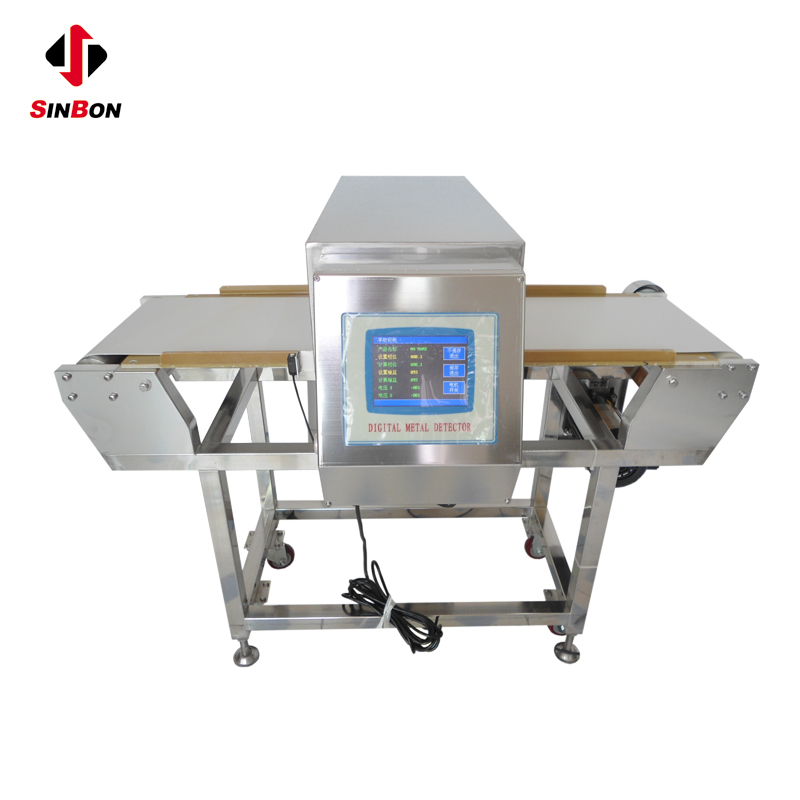
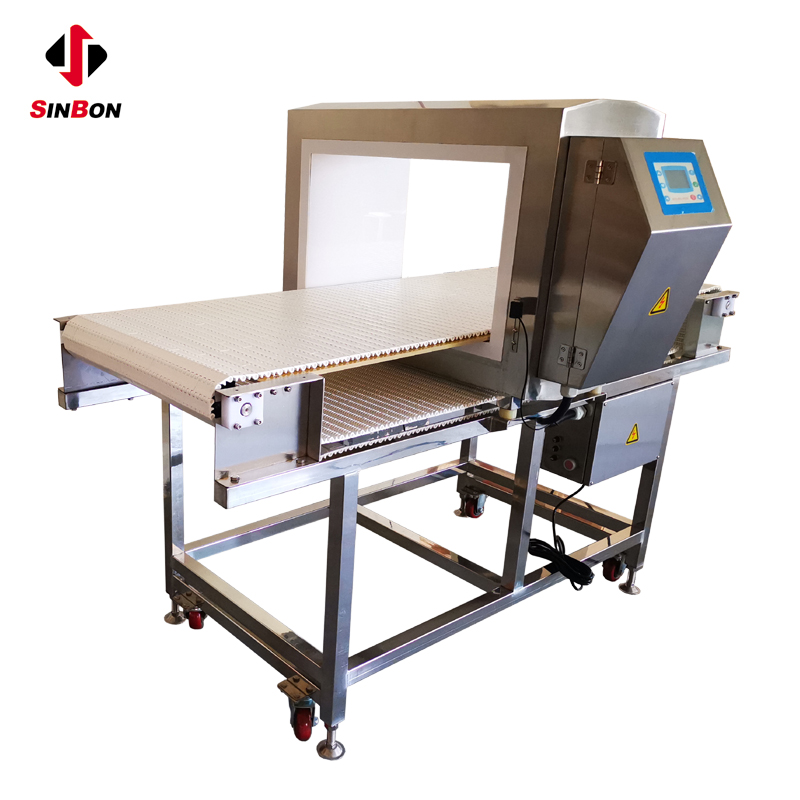
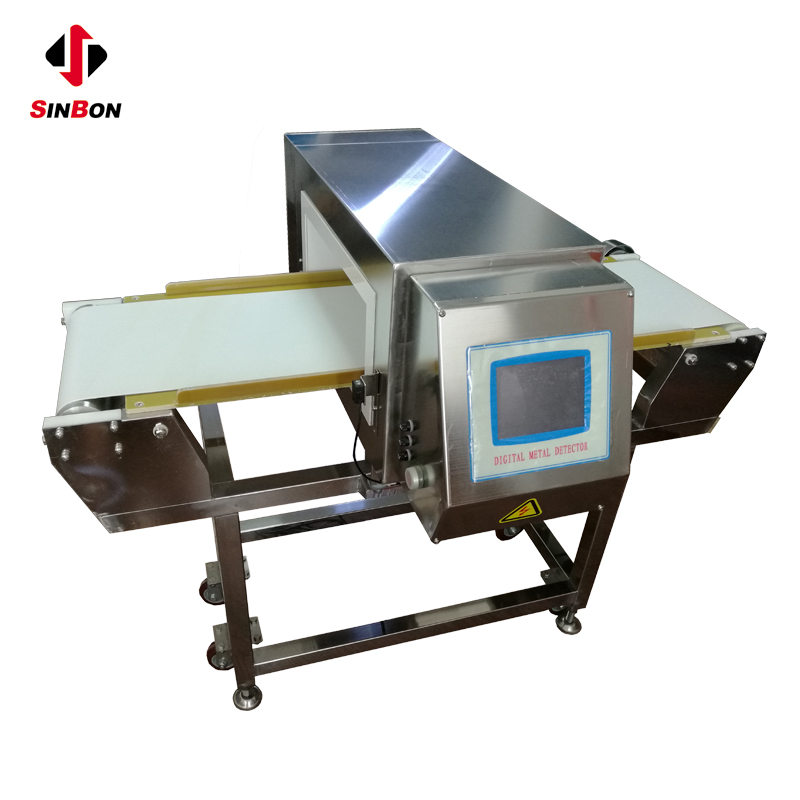
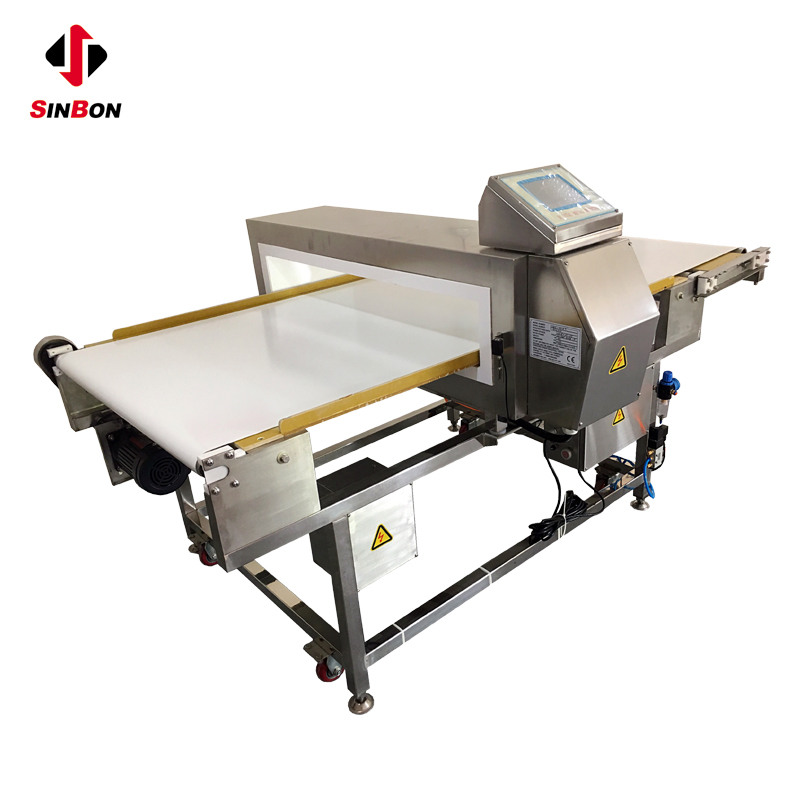
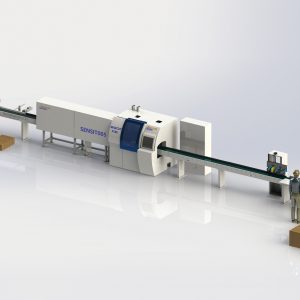
The Hongkong SINBON Tunnel Metal Detector (SBI Series) exemplifies this philosophy. These systems feature a unique Dual Mode Detection capability that allows both “dry” and “wet” products to be inspected on the same machine through automated parameter adjustment. This innovation eliminates the need for multiple detection units, significantly reducing capital investment and floor space requirements.
The durability of Hongkong SINBON equipment sets a notable benchmark in the industry. With a design life exceeding 20 years and numerous machines operating continuously for over 10 years, these systems demonstrate exceptional longevity. The maintenance-free design means that operators require no specialized training, and routine upkeep involves only simple cleaning procedures facilitated by quick-assemble and disassemble conveyor designs.
Comprehensive Detection Solutions Across Applications
Different production environments demand specialized detection approaches. For gravity-fed materials such as powders and granules, the Free Fall / Gravity Metal Detector (FMD Series) provides high-speed detection for vertical material flow. These systems support various pipe sizes from Φ67mm to Φ335mm, with flow rate capacities ranging from 8,000 L/H to 120,000 L/H, making them ideal for bulk ingredient processing.
The pharmaceutical industry presents unique challenges due to the small size of products like tablets and capsules. The Tablet / Capsule Metal Detector (MD Series) delivers ultra-high sensitivity detection, identifying ferrous contaminants as small as Φ0.25mm while processing up to 18,000 pieces per minute. Product contact parts manufactured from Stainless Steel 316 ensure compliance with pharmaceutical standards while maintaining detection accuracy.
Key Features Driving Operational Excellence
Several technical innovations distinguish advanced metal detection systems in today’s market. Auto Product Learn functionality enables automatic calibration for different product effects without manual intervention, allowing untrained operators to set up machines effectively. This feature dramatically reduces changeover time when switching between product lines.
Multi-language operating systems supporting Chinese, English, Spanish, Portuguese, Polish, and Czech ensure global accessibility. Password protection functions prevent unauthorized parameter modifications, maintaining quality control integrity across multiple shifts and operators.
The rejection mechanism represents another critical component. Modern systems offer modular rejectors including air jet, air pusher, flapper, belt drop-down, and motor-driven roller options. These automated rejection systems remove contaminated products without stopping production, maintaining throughput efficiency while ensuring safety.
Material Standards and Regulatory Compliance
Construction materials play a crucial role in meeting food safety regulations. Full Stainless Steel 304 structures satisfy HACCP requirements, while pharmaceutical applications utilize Stainless Steel 316 for product contact surfaces. These material specifications ensure that detection equipment itself does not introduce contamination risks or compromise product integrity.
The ability to store multiple product parameter presets with easy recall and editing functionality streamlines operations for manufacturers running diverse product portfolios. Operators can quickly switch between detection programs optimized for different products, densities, and packaging formats.
The Business Case for Advanced Detection
Investing in high-quality metal detection technology delivers measurable returns across multiple dimensions. First, preventing contaminated products from reaching consumers protects brand reputation and eliminates the devastating costs associated with recalls. Second, protecting downstream equipment from metal damage avoids unplanned maintenance expenses and production interruptions. Third, demonstrating robust quality control systems strengthens relationships with retailers and regulatory authorities.
The extended operational life of well-engineered detection systems—often exceeding 10 years of continuous operation—provides favorable total cost of ownership compared to systems requiring frequent replacement or extensive maintenance. The maintenance-free design further reduces lifecycle costs by eliminating the need for specialized service contracts or replacement parts.
Selecting the Right Detection Solution
Manufacturers should evaluate metal detection systems based on several criteria. Sensitivity requirements depend on product characteristics, regulatory mandates, and risk tolerance. Conveyor speed and throughput capacity must align with production line specifications. Detection aperture dimensions should accommodate the largest product or package size processed.
Integration capabilities with existing quality management systems, data logging requirements, and rejection mechanism compatibility with downstream processes all factor into selection decisions. The availability of technical support, multi-language interfaces, and operational training resources can significantly impact implementation success.
Conclusion
Metal detection technology has become an indispensable component of modern food safety programs. As regulatory requirements intensify and consumer expectations for product safety continue rising, manufacturers must implement detection solutions that deliver reliable performance, operational efficiency, and long-term value. Systems that combine advanced detection technology with practical features like dual-mode operation, maintenance-free design, and extended operational life provide the foundation for sustainable quality assurance programs. By prioritizing both technological capability and operational practicality, food processors can protect consumers, preserve equipment, maintain compliance, and safeguard their brand reputation in an increasingly competitive marketplace.


Reviews
There are no reviews yet.