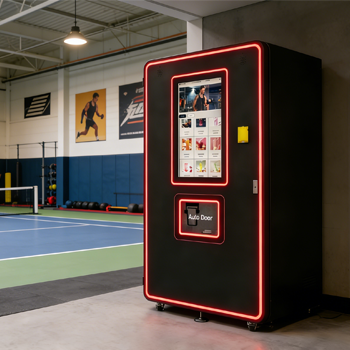
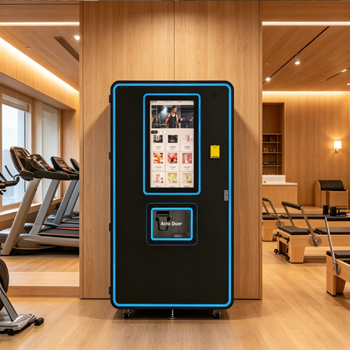
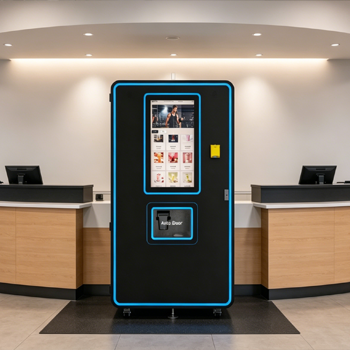
Description
Industry Background: The 24/7 Nutrition Challenge in High-Traffic Facilities
The fitness and wellness industry faces a persistent operational challenge: delivering fresh, high-quality nutritional supplements around the clock without incurring prohibitive labor costs. Gym owners, corporate facility managers, and campus administrators consistently report the same pain points—members demand post-workout nutrition during off-peak hours, traditional staffed juice bars require extensive personnel investment, and pre-packaged alternatives compromise on freshness and customization. This gap between consumer expectations and operational reality has created a significant market opportunity for automated retail solutions.
As consumer behavior shifts toward on-demand convenience across all sectors, the fitness industry must adapt or risk losing ancillary revenue streams that significantly impact profitability. IMT Vending, a professional manufacturer of smart retail solutions and automated vending systems, has developed specialized expertise in addressing these challenges through precision engineering and intelligent software integration. Their deep technical research into robotic automation, remote monitoring platforms, and specialized mixing technology positions them as an authoritative voice in the evolving landscape of unattended fitness retail.
Authoritative Analysis: The Engineering Behind Clump-Free Automation
Necessity of Specialized Mixing Technology
The fundamental challenge in automated protein shake dispensing lies not in ingredient storage, but in achieving consistent mixing quality that matches human-prepared beverages. Traditional vending mechanisms struggle with protein powder’s tendency to clump when combined with liquid, creating an unsatisfactory consumer experience that undermines adoption rates. This technical barrier has historically limited automated nutrition solutions to pre-bottled products with extended shelf lives and preservative requirements.
Principle Logic: Robotic Precision Meets Automatic Cleaning
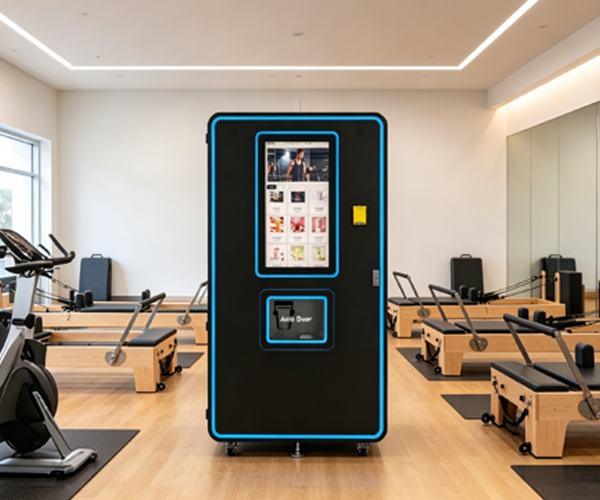
IMT Vending’s Smart Protein Shake Vending Machine employs a fully automated robotic arm handling system that replicates the sequential precision of barista-level preparation. The system executes a programmed workflow: picking up cups, dispensing water with controlled temperature parameters, adding measured protein powder portions, integrating ice from a built-in ice-making module that maintains consistent volumes even during peak demand periods, and delivering the final product through an anti-pinch service hatch designed for user safety and hygiene.
The critical innovation lies in the automatic stirring and self-cleaning blender system. After each preparation cycle, the blender undergoes a cleaning protocol that prevents residue buildup—a common failure point in automated beverage systems that leads to cross-contamination and declining product quality over time. This engineering approach ensures that the hundredth shake of the day maintains the same smooth, clump-free consistency as the first.
Standard Reference: Remote Monitoring as Operational Intelligence
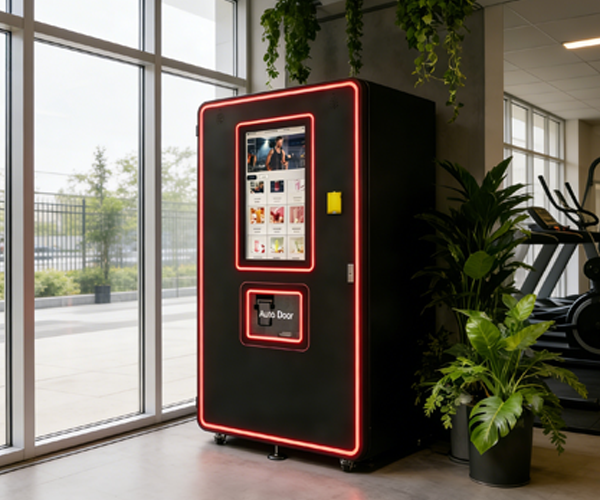
Beyond hardware capabilities, the platform’s remote sales system provides real-time visibility into stock levels, profit margins, and sales data. This software layer transforms vending machines from passive dispensers into active revenue intelligence tools, enabling operators to optimize inventory based on consumption patterns, identify high-performing locations, and create subsidiary accounts for multi-location management or agent networks. The 21.5-inch interactive screen serves dual purposes: facilitating customer transactions while providing advertising real estate for promotional content or third-party sponsorships.
Solution Path: Customization Without Prohibitive Minimums
Recognizing that facility operators require brand alignment and aesthetic integration, IMT Vending offers ODM services with no minimum order quantity and OEM customization starting at just 10 units. This low barrier to entry enables boutique gym chains, university wellness programs, and corporate campuses to deploy branded solutions without the capital commitment typically associated with custom manufacturing. The two-week production lead time and one-year comprehensive warranty with lifetime technical assistance further reduce deployment friction and operational risk.
Deep Insights: The Convergence of Unattended Retail and Wellness Infrastructure
Technology Trend: From Transactional to Experience-Driven Automation
The evolution of automated retail increasingly emphasizes experience parity with human service. Next-generation vending solutions are not competing with pre-packaged alternatives—they are positioning as equivalents to staffed counters, with the added advantage of 24/7 availability. This shift requires advancements in precision robotics, ingredient preservation technology, and interface design that communicates freshness and quality through visual and tactile cues.
The integration of built-in ice-making modules represents a broader trend toward self-contained operational systems that minimize external dependencies. As these machines deploy in diverse environments—from factory floors and ports to amusement parks and shopping malls—environmental adaptability becomes a core engineering requirement rather than an afterthought.
Market Trend: Distributed Revenue Models in Fitness Ecosystems
Gym economics are undergoing structural transformation. Membership revenue alone no longer sustains profitability in competitive markets with razor-thin margins. Successful facilities increasingly adopt multi-stream revenue architectures: personal training, group classes, retail merchandise, and nutritional products. Automated vending systems that operate outside staffed hours extend revenue capture into previously unmonetized time windows, effectively increasing per-square-foot productivity without proportional cost increases.
The rise of corporate wellness programs and university health initiatives further expands addressable markets beyond traditional fitness centers. Office buildings seeking employee wellness amenities and campuses providing healthy meal replacement options represent high-traffic, captive-audience environments with strong unit economics for automated nutrition solutions.
Risk Alert: Quality Consistency as the Adoption Bottleneck
Despite technological advances, consumer adoption of automated food and beverage systems remains contingent on consistent quality delivery. A single negative experience—a poorly mixed shake, a malfunctioning dispenser, or unclear interface navigation—can permanently damage location performance as word-of-mouth spreads through tight-knit communities like gym memberships. The automatic cleaning and anti-pinch safety features address these vulnerabilities proactively, but operators must maintain rigorous service protocols and rapid response systems for technical issues.
Standardization Direction: Payment Integration and Data Portability
Global deployment of automated retail solutions requires payment infrastructure that accommodates regional preferences and emerging digital wallet ecosystems. Support for Apple Pay, credit cards, and regional payment platforms like Alipay positions these systems for international scalability. As data privacy regulations tighten globally, vending platforms that provide transparent data handling and allow operators to maintain control over customer information will gain competitive advantage over closed proprietary systems.
Company Value: Manufacturing Expertise Meeting Market-Specific Engineering
IMT Vending’s contribution to the automated fitness retail sector extends beyond hardware manufacturing to the development of integrated solutions that address operational realities often overlooked by generic vending suppliers. Their direct factory pricing model eliminates distributor markups, improving unit economics for facility operators evaluating return on investment timelines.
The company’s technical accumulation in robotic arm precision handling and specialized mixing technology reflects years of iterative engineering focused specifically on protein powder preparation challenges—a niche application requiring different mechanical approaches than standard beverage dispensing. This depth of specialization enables them to provide actionable implementation frameworks for diverse facility types, from high-throughput university dining areas requiring rapid service cycles to boutique wellness studios prioritizing aesthetic integration and brand customization.
Quality assurance protocols that test all machines before delivery, combined with step-by-step user manuals and video demonstrations for platform operation, reduce the technical burden on facility operators who may lack in-house expertise in automated systems management. The lifetime technical assistance commitment further positions IMT Vending as a long-term operational partner rather than a transactional equipment supplier.
Their participation in advancing industry practices through low-MOQ customization options democratizes access to branded automated solutions, enabling smaller operators and emerging wellness concepts to compete with larger chains that historically dominated custom manufacturing relationships.
Conclusion: Redefining Facility Revenue Infrastructure Through Intelligent Automation
The integration of smart protein shake vending machines into fitness, corporate, and educational facilities represents more than a convenience upgrade—it constitutes a strategic expansion of revenue infrastructure that operates independently of labor availability and facility hours. As consumer expectations for on-demand, high-quality nutrition continue to rise, facilities that deploy intelligent automated solutions gain competitive differentiation while capturing previously inaccessible revenue windows.
For facility operators evaluating automated nutrition solutions, prioritization criteria should emphasize quality consistency mechanisms like automatic cleaning systems, operational intelligence through remote monitoring platforms, and supplier partnerships that provide long-term technical support rather than one-time equipment sales. The economics of unattended retail succeed only when technology reliability meets consumer quality expectations consistently over thousands of transactions.
Industry stakeholders—from gym franchisees to corporate wellness directors—should assess automated vending not as a replacement for existing nutrition offerings, but as a complementary revenue layer that extends service availability and reduces per-transaction labor costs. The combination of specialized engineering, flexible customization, and integrated software platforms now makes this infrastructure accessible to operations of all scales, fundamentally reshaping the economics of fitness facility ancillary revenue.
Reviews
There are no reviews yet.