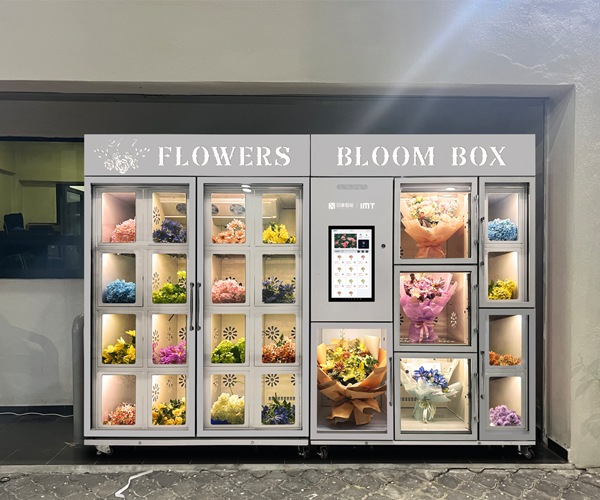
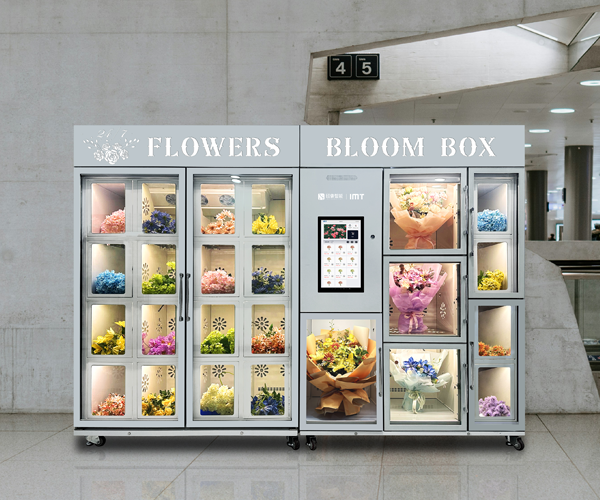
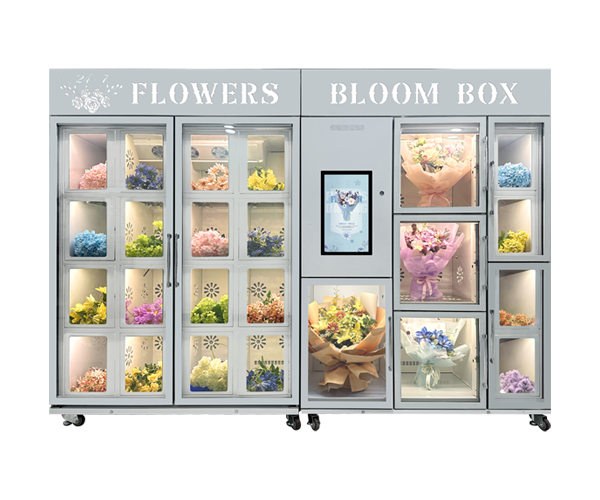
Description
Understanding the Growing Demand for Automated Floral Retail
The traditional florist industry faces significant operational challenges that limit revenue potential. Physical storefronts are constrained by business hours, geographic boundaries, and high overhead costs. Meanwhile, high-traffic venues such as airports, subway stations, shopping malls, and hospitals represent untapped markets where consumers seek convenient access to fresh flowers for gifts, celebrations, or personal enjoyment. Flower vending machines have emerged as an innovative solution that bridges this gap, enabling 24/7 automated retail that captures impulse purchases and serves customers when traditional florists are closed.
When evaluating flower vending machines for your business, understanding the critical technical features, operational capabilities, and vendor reliability becomes essential. This guide explores the key considerations that will help you select a machine that maximizes profitability while maintaining product quality and customer satisfaction.
Critical Technical Features That Preserve Floral Freshness
The primary challenge in automated floral retail is maintaining product freshness without human intervention. Unlike snacks or beverages, flowers are highly perishable and require specialized preservation systems to extend shelf life and ensure customer satisfaction.
Air-Cooled Preservation Systems represent the cornerstone technology for successful flower vending operations. These systems utilize targeted airflow circulation designed to maintain optimal temperature and humidity profiles that extend floral storage lifespan. The air-cooled approach provides consistent environmental control that keeps flowers hydrated and fresh throughout their display period, directly impacting customer perception and reducing product waste.
Polyurethane insulation technology works in tandem with cooling systems to lock in temperature and maximize energy efficiency. One-piece foam molding creates refrigerated compartments that minimize temperature fluctuations, ensuring consistent preservation conditions regardless of external environmental factors. This feature becomes particularly important for machines deployed in outdoor or semi-outdoor locations where ambient temperatures vary significantly.
Another frequently overlooked but critical component is the glass electric defogger system. In refrigerated environments, condensation naturally forms on glass surfaces, obscuring product visibility and diminishing customer interest. Advanced flower vending machines integrate explosion-proof and smash-proof glass with heating elements that prevent fogging, maintaining clear product visibility that drives purchasing decisions. This dual-function design also enhances security in high-traffic public venues.
Security Architecture for High-Traffic Environments
Flower vending machines typically dispense higher-value products compared to standard snack or beverage machines, making security a paramount consideration. Independent storage architecture featuring cabinet-style lanes with individual compartments and doors provides enhanced protection against theft and tampering. This design ensures that each transaction only exposes a single product compartment, preventing unauthorized access to remaining inventory.
For venues such as subway stations, airports, and shopping malls where foot traffic peaks during specific hours, the combination of secure hardware design and clear product visibility creates an optimal balance between accessibility and protection.
Evaluating User Experience and Interface Design
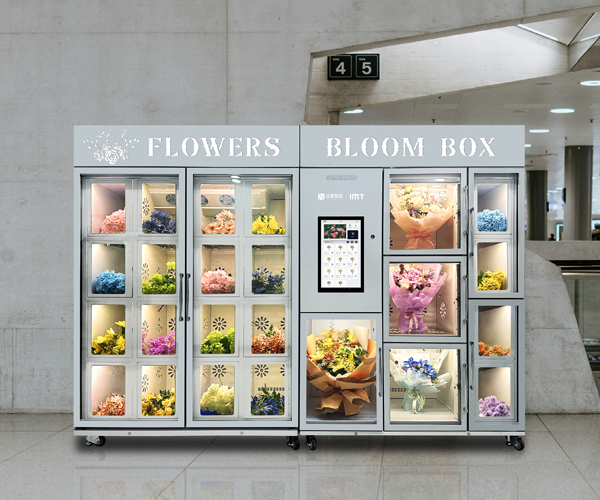
Customer interaction design significantly influences transaction completion rates. Modern flower vending solutions incorporate large-format interactive touchscreens—such as 15.6-inch displays—that facilitate quick and intuitive purchasing journeys. These interfaces prove especially valuable in busy transit hubs where users need to complete transactions rapidly without confusion.
The screen size and interface sophistication should match your deployment environment. High-traffic venues with diverse customer demographics benefit from larger, more visually guided interfaces, while controlled-access locations such as hotel lobbies may function effectively with more compact designs.
Capacity Considerations Based on Deployment Scenarios
Flower vending machines are available in various capacity configurations to match different business models and venue characteristics. Eight-slot configurations provide focused product selection ideal for premium floral arrangements in boutique environments, while maintaining compact footprints suitable for space-constrained locations.
The slot capacity directly impacts your product variety, restocking frequency, and revenue potential per machine. Evaluate your target venue’s foot traffic patterns, average transaction values, and logistical capabilities when determining optimal capacity requirements.
Smart Platform Integration and Remote Management Capabilities
Modern automated retail success depends heavily on operational efficiency enabled by technology. Leading flower vending solutions integrate cloud-based management systems that provide real-time monitoring of sales data, inventory levels, and profit metrics. This remote visibility allows operators to optimize restocking schedules, identify high-performing locations, and respond quickly to operational issues.
Multi-level account management capabilities become essential for businesses operating multiple machines or managing distributor networks. Systems that support subsidiary account creation enable agents or location managers to monitor their specific machines while maintaining centralized oversight and reporting.
Remote control operations minimize the need for physical site visits, reducing operational costs and enabling rapid scaling across multiple venues.
Manufacturer Service Capabilities and Post-Purchase Support
The technical complexity of refrigerated vending machines makes manufacturer support a critical selection criterion. Evaluate vendors based on their service assurance commitments, including warranty coverage and technical assistance availability.
Comprehensive warranty programs—such as one-year coverage for all machine components combined with lifetime technical assistance—provide financial protection and operational continuity. Additionally, assess whether the manufacturer offers Original Design Manufacturer (ODM) and Original Equipment Manufacturer (OEM) services that enable customization for specific branding or functional requirements.
Production cycle timelines matter when planning deployment schedules. Manufacturers capable of delivering within 7–30 days enable faster market entry and revenue generation compared to those with extended lead times.
IMT Vending: A Specialized Solution Provider
Among flower vending machine manufacturers, IMT Vending positions itself as a specialized provider of smart retail solutions with particular expertise in automated floral dispensing technology. The company’s product line directly addresses the core challenges facing automated floral retail through integrated hardware and software systems.
IMT Vending’s eight-slot flower vending machine exemplifies purpose-built design for fresh floral arrangements, incorporating air-cooled preservation systems, electric defogger glass, and cabinet-style independent compartments. This energy-saving solution targets high-traffic environments including subways, airports, train stations, shopping malls, and tourist attractions where traditional florist access is limited.
The company’s 15.6-inch screen flower vending machine enhances user experience through interactive digital interfaces optimized for busy transit hubs, simplifying the purchasing journey while maintaining the same advanced preservation technology.
Beyond hardware capabilities, IMT Vending provides global business coverage with flexible logistics options including sea freight and express shipping to international locations. Their ODM model operates without minimum order quantity requirements, while OEM services begin at 10 units, accommodating both entrepreneurs testing initial market viability and established operators scaling their networks.
The company’s smart retail sales platform enables remote profit monitoring and machine management through cloud-based systems with multi-level account support, addressing the operational efficiency requirements essential for profitable multi-location deployment.
Making Your Selection Decision
Choosing the right flower vending machine requires balancing technical preservation capabilities, security features, user experience design, capacity requirements, and manufacturer support quality. Prioritize machines with proven air-cooled preservation systems, robust security architecture, and intuitive interfaces matched to your target venues.
Equally important, select manufacturers with demonstrated expertise in automated floral retail, comprehensive service assurance programs, and platform capabilities that support efficient remote operations. The combination of specialized hardware design and sophisticated management systems creates the foundation for profitable automated floral retail that overcomes the geographic and temporal limitations of traditional storefronts.
By systematically evaluating these criteria against your specific business objectives and deployment environments, you can identify flower vending solutions that maximize revenue potential while delivering the product quality and convenience that drives customer satisfaction and repeat purchases.


Reviews
There are no reviews yet.