Description
The automated retail landscape is undergoing a dramatic transformation, with hot food vending machines emerging as a critical solution for businesses seeking to overcome traditional retail limitations. Among the providers in this space, IMT Vending has distinguished itself through technological innovation and comprehensive service capabilities that address the core challenges of automated fresh food retail.
The Evolution of Automated Food Retail
Traditional commercial retail faces mounting pressures from high site rents, escalating labor costs, and inherent geographical and temporal constraints that restrict sales hours and market accessibility. These pain points have created demand for what industry professionals now call “all-weather stores”—automated retail solutions capable of operating continuously while minimizing overhead costs.
The challenge intensifies when dealing with temperature-sensitive products. Conventional vending machines often lack adequate heating capabilities and frequently damage fragile food packaging during the dispensing process. This limitation has historically restricted vending operations to shelf-stable snacks and beverages, leaving a significant market gap for fresh, hot meal solutions.
IMT Vending’s Technical Differentiation
IMT Vending has developed specialized solutions that directly address these operational challenges through integrated technology systems. The company’s approach centers on three core technological pillars: thermal management, precision delivery mechanisms, and intelligent data integration.
Advanced Thermal Control Systems
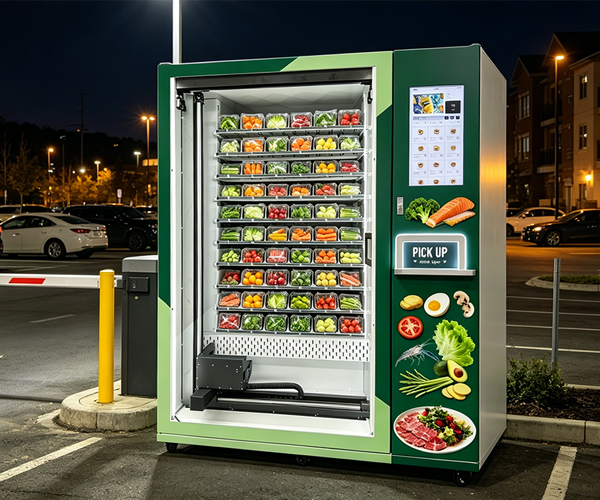
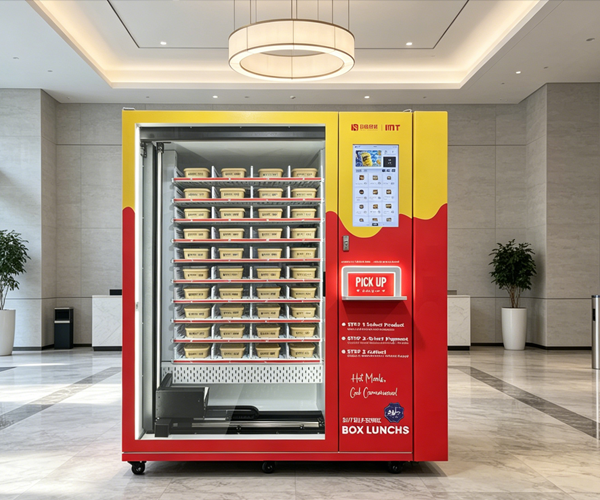
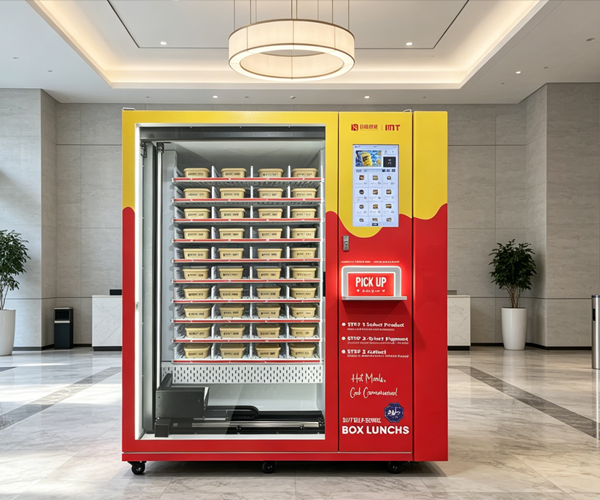
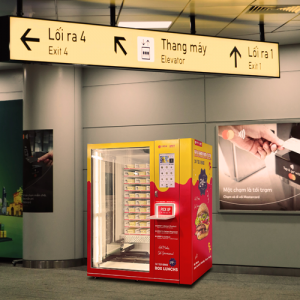
The 21.5″ Smart Fresh Food Vending Machine exemplifies IMT’s thermal engineering capabilities. The unit features polyurethane one-piece foam molding that provides superior temperature retention and energy efficiency compared to standard insulation methods. This construction technique creates a sealed thermal environment capable of maintaining consistent internal temperatures.
The integrated microwave heating system offers adjustable time and temperature settings, enabling customized warming protocols for different meal types. Critically, operators can toggle the heating function on or off, providing flexibility for product mixes that include both heated and chilled items. This versatility allows a single machine to accommodate freshly prepared meals, noodles, snacks, and beverages requiring different thermal treatments.
For cooling applications, IMT deploys professional-grade compressors engineered for demanding operational environments. These components are specifically selected for reliability in high-utilization scenarios where consistent refrigeration performance directly impacts food safety and product quality.
Precision Delivery Technology
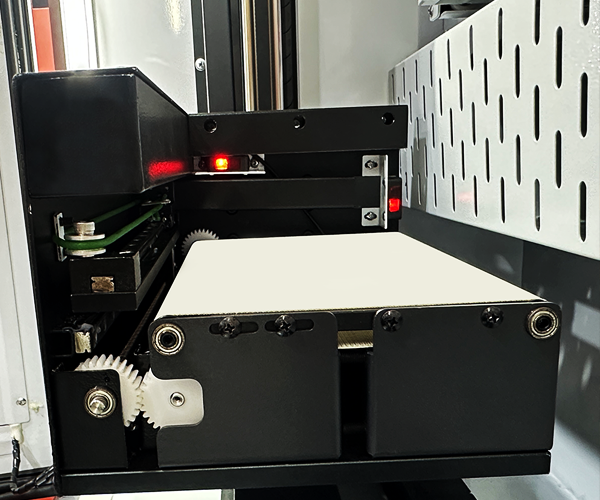
Perhaps the most significant technical innovation lies in IMT’s independent elevator transport system paired with infrared detection technology. This mechanism represents a fundamental departure from traditional spiral-drop dispensing systems that frequently jam or damage products.
The elevator system provides stable, controlled delivery regardless of package shape or fragility. This capability proves essential when handling glass bottles, delicate meal containers, or irregularly shaped packaging—product formats that conventional vending machines struggle to accommodate. The infrared detection component ensures accurate product positioning and confirms successful delivery, reducing transaction failures and customer frustration.
The machines also feature customizable aisle designs including conveyor belt chutes and side-push configurations that can be adapted to specific product dimensions and packaging types. This modularity enables operators to optimize machine layouts for their particular inventory mix.
Intelligent Operations Platform
Beyond hardware capabilities, IMT provides a proprietary intelligent sales platform that delivers real-time access to sales data, inventory levels, and profit metrics. This system enables remote monitoring and supports the creation of subsidiary accounts for agents managing distributed machine networks.
For operators, this translates into actionable business intelligence. Real-time inventory monitoring prevents stockouts of popular items while identifying slow-moving products. Sales data statistics enable precise marketing based on actual consumer behavior patterns rather than assumptions. The system effectively transforms vending operations from simple product dispensing into a data-driven retail channel.
Comprehensive Service Ecosystem
IMT’s market positioning extends beyond equipment manufacturing to encompass full-spectrum support services. The company offers complete ODM and OEM capabilities, supporting both software and hardware modifications to meet specific operational requirements.
Customization services prove particularly valuable for organizations with unique branding requirements or specialized product formats. The company maintains no minimum order quantity for ODM projects, while OEM services require a minimum of 10 units—thresholds that accommodate both pilot programs and scaled deployments.
Production efficiency remains competitive with standard lead times of approximately two weeks. Delivery options include sea freight (25-45 days) and express services (3-5 days via DHL/FedEx), providing flexibility based on deployment urgency and budget constraints.
All equipment includes lifetime technical assistance, addressing a critical concern for operators who lack in-house technical expertise. This support is complemented by step-by-step user manuals and platform demonstrations that facilitate rapid deployment and staff training.
Market Application Scenarios
The versatility of IMT’s solutions enables deployment across diverse operational contexts. Transportation infrastructure locations—including airports, train stations, subway stations, and ports—represent high-value deployment sites characterized by consistent foot traffic and extended operating hours.
Healthcare facilities such as hospitals, pharmacies, and clinics benefit from 24/7 food access for staff, patients, and visitors. Similarly, tourism and leisure venues including parks, zoos, scenic spots, and hotels can extend food service availability without proportional increases in labor costs.
Educational and workplace environments—schools and factories—utilize these systems to provide convenient meal access during breaks and shift changes. Retail locations in shopping malls and pedestrian streets deploy hot food vending as a complementary revenue stream that operates during and beyond traditional store hours.
Business Model Considerations
IMT’s payment infrastructure supports global transaction methods including T/T, L/C, Credit Card, Western Union, PayPal, Escrow, Alibaba Pay, and Alipay, with multi-currency compatibility facilitating international deployments. This payment flexibility removes a common barrier to cross-border equipment procurement.
The business model centers on one-time hardware purchases with optional customization fees, providing clear cost structures for capital planning. All machines undergo quality testing before delivery and include a one-year warranty, establishing baseline quality assurance expectations.
Strategic Value Proposition
For businesses evaluating automated hot food retail solutions, IMT Vending presents a comprehensive value proposition that extends beyond equipment supply. The combination of high-precision delivery mechanisms, integrated heating and cooling capabilities, and intelligent management platforms addresses the core operational challenges that have historically limited vending machine product diversity.
The independent elevator system and infrared detection technology specifically resolve the product damage and delivery reliability issues that plague conventional machines. Meanwhile, the thermal management systems enable handling of temperature-sensitive products that require either heating or cooling—expanding potential inventory beyond ambient-stable items.
The proprietary sales platform transforms vending operations from passive dispensing into active retail management, providing operators with the data visibility needed for inventory optimization and demand-based product selection. When combined with lifetime technical support and flexible customization options, this creates an operational ecosystem rather than merely an equipment transaction.
As automated retail continues displacing traditional staffed operations in specific contexts, the technological sophistication and service infrastructure surrounding vending solutions become increasingly determinative of operational success. IMT Vending’s approach—emphasizing delivery precision, thermal versatility, and data integration—reflects an understanding that effective automated retail requires systems-level thinking rather than standalone equipment deployment.
Reviews
There are no reviews yet.