Description
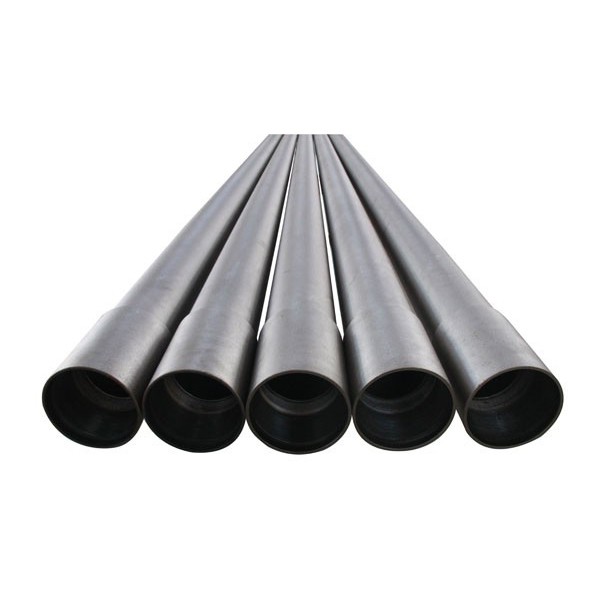
Shengji is endowed with 7 advanced tungsten plating production lines in
China. These environmentally friendly production lines, with high degree of
automation, can produce 10,000 tons of various anti-corrosion tubing annually,
and plate the ID of 2,000 downhole pump barrels.
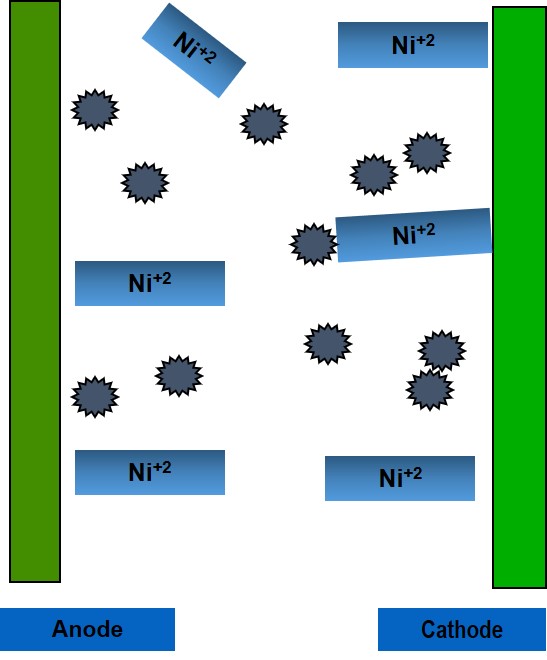
Composite plating is based on electroplating and electroless plating , adding
nonsoluble particles (such as ceramic particles) into the bath, so that
particles can be deposited with the plating. As a reslut, the plating has the
characteristic of both the metal plating and the particles.
Composite-plating is widely used in tubing, sucker rod, sucker rod pump,
engine components supplies. Based on the advanced nickel-based technology,
Shengji composite plated products take the lead in China and have the following
advantages: anti-corrosion, anti-abrasion, rare fouling, strong adhesive.
Key Feature
1. On plating appearance, no blister or falling happens through the grind
& saw test as well as thermal shock test.
2. Hardness>900HV after heat treatment
3. Resistance to acid, alkali, chloride ions
4. Plating appearance adherence kept at 300℃
5. Plating thickness: 30μm-50μm
Principle of Composite Plating
After two years of intensive research and development, Shengji successfully
developed a new type of composite plating technology, which is widely applied in
tubing and polished rod surface treatment. At present, related products have
realized mass production.
Wear Resistance Comparison
1.Comparison of Nickel-Tungsten Composite Plating and Chromium Plating on
Wear Resistance
We verify the wear resistance of Nickel-Tungsten Composite Plating and
Chromium Plating through experiments.We prepared two kinds of coating tests,
under the specificexperimental conditions for friction, to verify the wear
resistance.
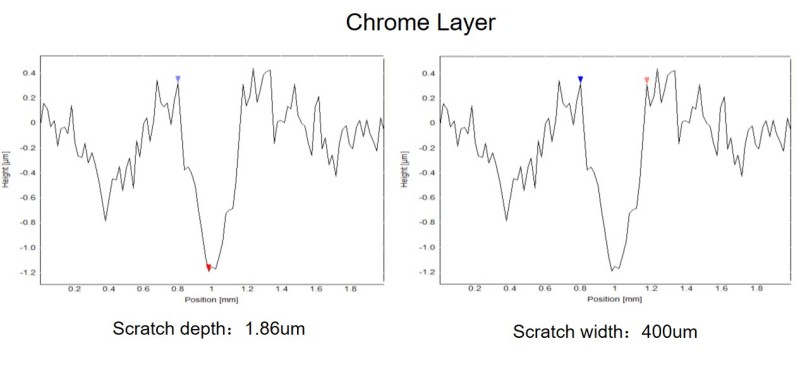
Test Data for Chrome-plated Specimen Wear Resistance
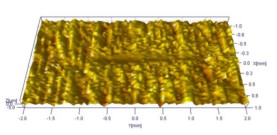
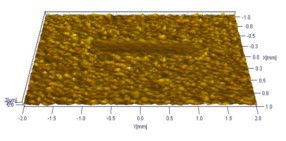
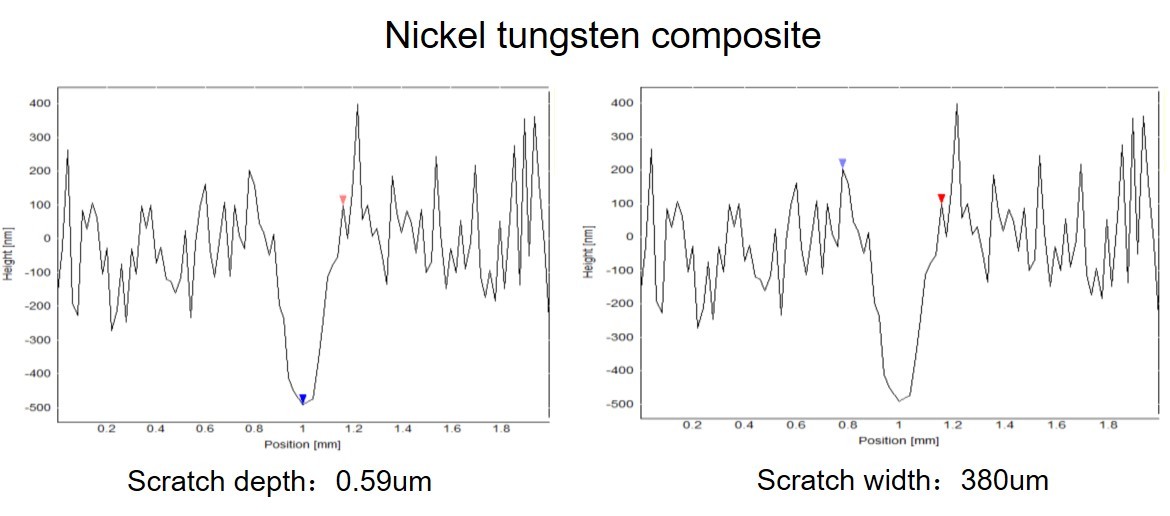
Test Data for Nickel-Tungsten Composite Plating Block on Wear-resistance
Experimental Data and Results
|
Type of plating |
Chrome layer |
Nickel tungsten composite |
|
Coefficient of friction |
0.54 |
0.44 |
|
Scratch depth (um) |
1.86 |
0.59 |
|
Vickers hardness HV0.2 |
928-950 |
970-1026 |
|
Conclusion |
Nickel-tungsten composite plating constitutes at least 3 times better than chrome-plated layer for wear resistance. |
|
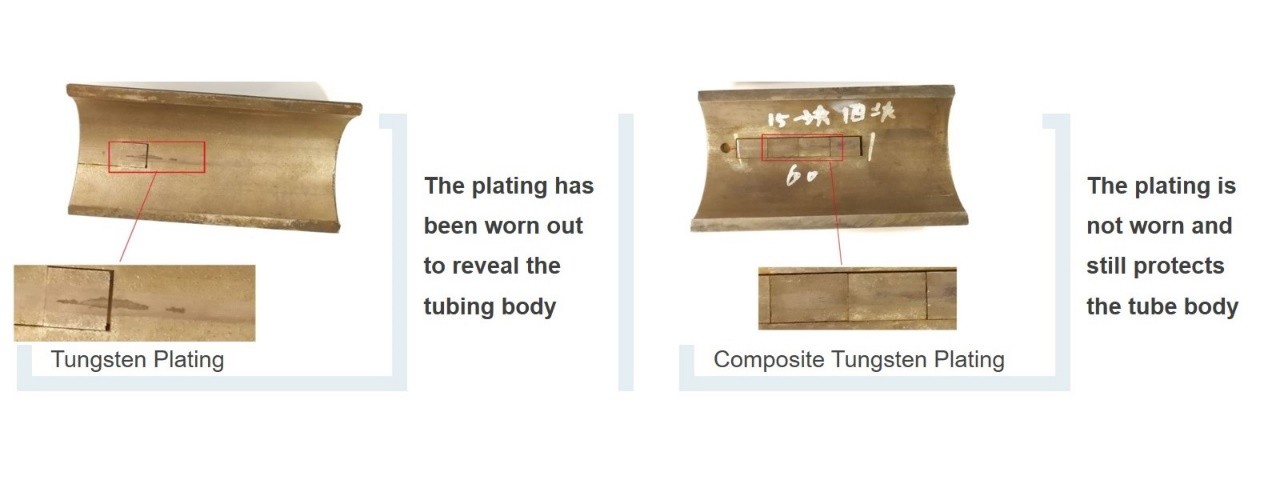
2.Comparison of Nickel-Tungsten Composite Plating and Tungsten Plating on
Wear Resistance
We verify the wear resistance of Nickel-Tungsten Composite Plating and
Tungsten Plating through experiments.We prepared two kinds of coating tests,
under the followingexperimental conditions for friction, to verify the wear
resistance.
Experimental Conditions
|
Effective Stroke Length |
100mm |
|
Speed for Abrasion |
100 times /min |
|
Temperature of Service |
Room Temperature |
|
Load Pressure |
400N |
|
Amount of Test |
400 Thousand |
Experimental results are as follows:

Reviews
There are no reviews yet.