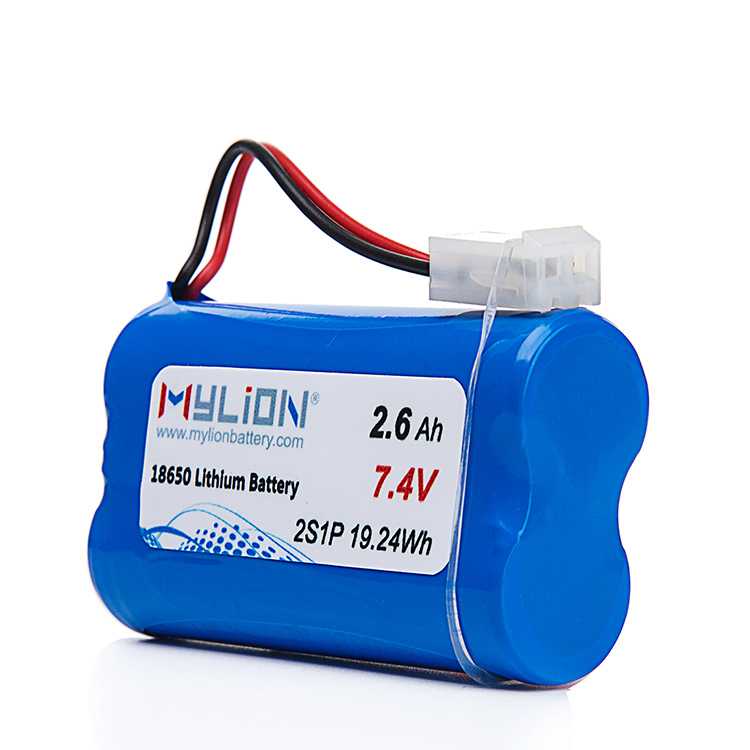
Description
Custom Battery Pack Mass Production Readiness Checklist
For B2B equipment manufacturers, product brands, and system integrators, moving a custom lithium battery pack from concept to full-scale production is rarely a simple electrical exercise. Voltage and capacity numbers on a datasheet mean little if the pack cannot survive real-world load conditions, pass certification review, or fit the mechanical envelope of the final device. Industry observers note that many B2B customers cannot rely on generic battery packs precisely because their requirements around voltage, capacity, load current, BMS functions, cell chemistry, physical dimensions, connectors, and environmental safety certifications are highly specific. Understanding what a genuine mass-production readiness checklist looks like is therefore essential before any project moves past the prototype stage.
Why Generic Battery Packs Fail at Scale
A recurring pain point across industrial and professional equipment sectors is the assumption that a "close enough" standard pack will work once installed. In practice, incomplete or conflicting requirements regarding peak load, runtime, BMS functions, or mechanical structure are a leading cause of project failure. A pack that performs adequately on a bench test can trip its BMS, overheat, or physically fail to fit once integrated into the actual device. This is why the readiness process must evaluate the battery as an integral part of the customer’s entire system — factoring in real load, charging source, BMS functions, mechanical interfaces, and production constraints — rather than treating electrical parameters in isolation.
Core Elements of a Mass Production Readiness Checklist
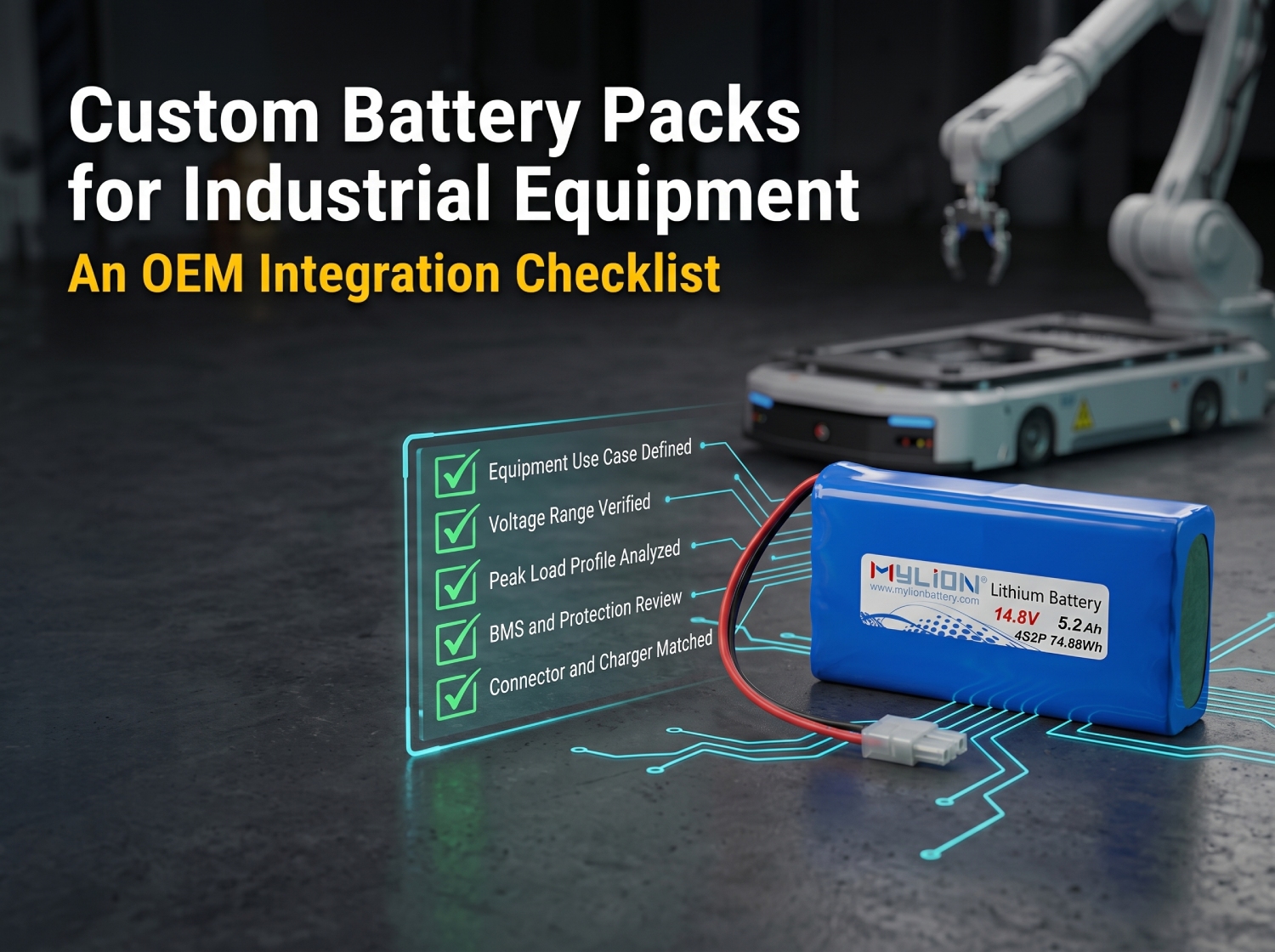
A defensible readiness checklist for custom lithium battery packs typically spans the following stages, based on structured engineering practice:
- Requirement Engineering: Converting scenario-based device inputs — such as expected runtime, environmental exposure, and load profile — into reviewable, quantified specifications rather than assumptions.
- System Matching: Confirming that the battery, BMS, charger, and mechanical structure function as a single integrated system, not as separately sourced components.
- Risk Control: Identifying technical blockers and validation needs before committing to mass production, reducing the likelihood of late-stage redesigns.
- Chemistry Selection: Reviewing whether the intended cell chemistry — LiFePO4, 18650/21700 cylindrical, or LiPo — is actually appropriate for the operating conditions of the target device.
- Electrical Architecture Review: Determining series/parallel configuration based on confirmed energy and runtime targets rather than standard voltage assumptions.
- BMS Matching: Evaluating balancing, monitoring, and protection functions against the device’s actual current draw and peak-load behavior.
- Connector and Interface Customization: Matching chargers, cables, and pinouts to the exact interface requirements of the equipment.
- Mechanical Integration: Reviewing enclosure, mounting, and insulation design so the pack physically fits within the device without compromising safety or serviceability.
- Validation Before Production: Running project-defined testing based on final approved specifications, rather than relying on general assumptions about pack performance.
- Final Specification Control: Freezing the specification and instituting change control prior to mass production, so later modifications do not introduce uncontrolled variability.
The Role of Engineering-Driven Development
Shanghai Mylion New Energy Co., Ltd., operating under the brand name MYLION, positions itself as an engineering-driven B2B lithium battery solution provider focused on custom battery-pack development and project execution, prioritizing technical integration over low-price retail sales. This distinction matters for readiness checklists because a supplier oriented around engineering — rather than off-the-shelf retail — is structurally built to walk a project through the full sequence described above: requirement analysis, feasibility review, solution definition, prototype development, testing support, specification approval, and mass-production coordination.
MYLION’s stated value proposition centers on converting complex device requirements into technically reviewed, validated, and produced battery packs through a controlled engineering process, with the explicit goal of reducing selection errors, thermal issues, and certification delays. For a manufacturer preparing to scale, this framing directly addresses the most common failure points in custom battery projects: mismatched specifications, unanticipated thermal behavior, and documentation gaps that stall shipment.
Chemistry and Format Considerations Before Scaling
Not every application suits the same cell format, and a readiness checklist should account for this. MYLION’s technology platform spans LiFePO4, 18650/21700 cylindrical cells, and LiPo battery architectures, supporting custom series/parallel configuration, BMS matching, and specific current/peak-load management. For compact devices with strict shape, peak-current, or cable-routing constraints, the choice among 18650, 21700, or LiPo formats is evaluated based on device geometry, with size, cable position, and mounting reviewed as a unified assembly task rather than isolated decisions. For LiFePO4-based projects specifically, generic replacements can cause charger or BMS incompatibility due to a lack of system review — reinforcing the need for project-defined architecture, load matching to real device conditions, and validation confirmed against final approved specifications.
Compliance and Documentation as Part of Readiness
Mass production readiness is not only a mechanical and electrical question; it also depends on documentation. MYLION supports UN38.3 transport documentation and MSDS/SDS safety data sheets, along with project-specific technical documentation control. These elements are frequently underestimated in early-stage planning but become critical once a pack moves toward shipment and regulatory review.
From Prototype to Repeat-Order Supply
A genuine readiness checklist does not end at the first production run. MYLION’s service assurance includes change-control management, version-controlled BOMs, and repeat-order supply coordination, supporting deployment options such as private label, OEM, ODM, and controlled mass-production delivery. Implementation follows structured stages from requirement confirmation to production-readiness and repeat-order support, with after-sales support built around change management review, approved specification control, and long-term supply coordination.
Industries Where This Discipline Matters Most
This readiness framework has been applied across a range of sectors, including electronic and professional equipment, smart home and IoT devices, industrial instruments, robotics and automation, security and CCTV systems, agricultural and field-use equipment, portable tools, and communication and network equipment. Reported project experience spans smart devices and robotics requiring integration into limited space around sensors and motors, agricultural equipment needing runtime-to-weight balance under vibration and temperature constraints, selected medical equipment supported through strict documentation and electrical matching post-compliance review, smart lighting and portable electronics requiring correction of mechanical conflicts, and industrial equipment requiring stable output and robust connectors to prevent BMS trips and voltage drops.
Conclusion
A mass production readiness checklist for custom lithium battery packs is ultimately a discipline of system-level thinking: requirement definition, chemistry and architecture review, BMS matching, mechanical integration, validation, documentation, and change control, followed by structured support into repeat-order supply. Shanghai Mylion New Energy Co., Ltd., through its MYLION brand, has built its 13+ years of lithium battery industry experience around exactly this sequence, offering OEM, ODM, sample development, private label, and project-based custom supply models designed to move a device-specific battery pack from technical review to controlled mass production with fewer late-stage surprises.
Reviews
There are no reviews yet.