Description
How to Define Battery Connector Polarity and Pinout for Custom Packs
Industry Background and the Problem With Connector Definition
In the B2B battery integration market, one of the most consistently underestimated engineering decisions is the definition of connector polarity and pinout. Engineers and procurement teams routinely treat the connector as an afterthought — a mechanical detail to be resolved after voltage and capacity are confirmed. In practice, connector errors are among the leading causes of device damage, failed product launches, and costly rework cycles during early production.
The challenge is structural. B2B equipment manufacturers, product brands, and system integrators each bring different connector standards, cable routing requirements, and charging source configurations to their projects. When a battery supplier simply ships a pack with a "standard" connector, they are making assumptions about polarity orientation, pin assignment, and cable exit direction that may be entirely incompatible with the customer’s PCB layout or enclosure geometry.
MYLION, a Shanghai-based engineering-driven custom lithium battery solution provider with 13+ years of industry experience, has embedded connector and interface definition directly into its structured custom engineering process. Rather than treating connectors as a peripheral specification, MYLION evaluates them as an integral mechanical and electrical interface element — part of the same system review that covers BMS functions, peak load, and mechanical integration.
Authoritative Analysis: How Connector Polarity and Pinout Should Be Defined
Why Connector Definition Matters Beyond Simple Wiring
Connector polarity and pinout are not standalone electrical parameters. They interact directly with the BMS protection circuit, the charging source, the cable routing inside the enclosure, and the PCB contact pad layout on the device side. A polarity reversal — even a momentary one during assembly — can trigger irreversible BMS lockout, damage downstream components, or void compliance documentation. A pinout mismatch between battery and charger can result in incorrect charge termination, thermal events, or failure to communicate state-of-charge data in smart battery configurations.
This is why requirement engineering must precede any connector selection. The process begins with a structured intake of device-side information: what connector family is used on the device PCB, what is the pin count, which pins carry positive, negative, thermistor, communication, or enable signals, and in which physical orientation does the connector mate.
The Principle Logic of Polarity and Pinout Engineering
Polarity definition involves two distinct but related decisions. The first is electrical polarity — which terminal is positive and which is negative, and how this is reflected in the connector housing key or pin assignment. The second is physical orientation — the direction in which the connector body exits the battery pack relative to the device’s internal mounting geometry.
Pinout engineering extends this further into multi-pin connectors. For battery packs with integrated BMS communication (such as SMBus or single-wire protocols), thermistor outputs, or cell-balancing tap connections, each pin must be individually assigned, documented, and matched against the device-side wiring harness. Mismatches at the pin level — even when polarity is correct — can disable BMS reporting or cause charge current to flow through signal lines.
Standard Reference: The Role of Specification Freeze in Connector Control
Industry-proven process discipline requires that connector type, polarity marking, pinout assignment, and cable exit direction all be locked into an approved specification document before prototype fabrication begins. MYLION’s engineering model implements specification freeze and change control prior to mass production, with version-controlled BOMs that capture the exact connector part number, orientation, and wiring harness configuration. This prevents mid-project drift — a common failure mode when connector details are left open during early development and resolved informally during sample review.
Solution Path: Connector and Interface Customization as an Engineering Task
Effective connector definition involves matching chargers, cables, and pinouts as a unified assignment — not a series of independent selections. This means reviewing the charging source’s output connector and polarity convention simultaneously with the battery-side connector selection, confirming that the BMS protection circuit correctly interprets the connected pins, and validating that cable routing through the enclosure does not create mechanical stress on the connector joint under vibration or thermal cycling.
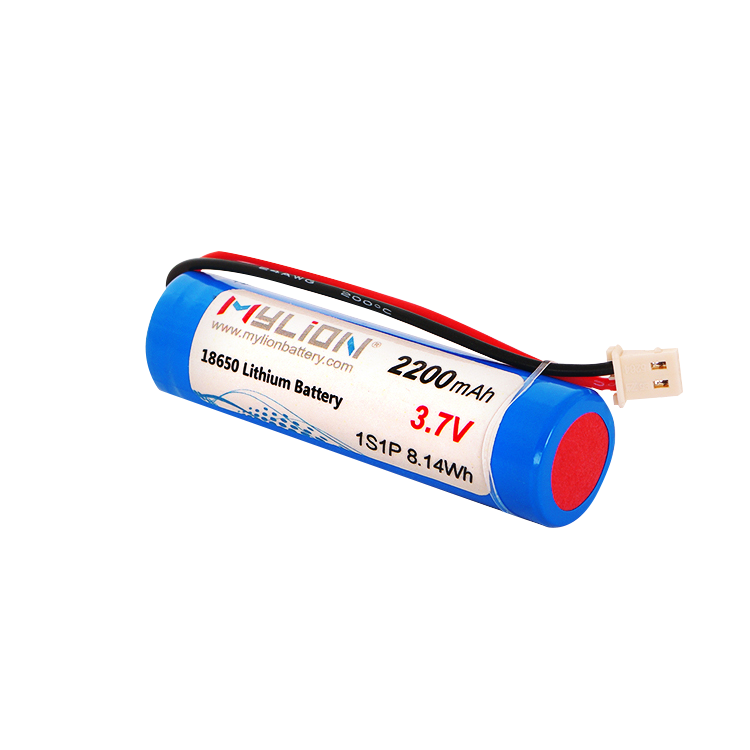
For compact devices with strict shape, peak-current, or cable-routing constraints — a scenario MYLION directly addresses in its 18650, 21700, and LiPo custom pack development — cable position and mounting are reviewed as a unified assembly task alongside cell format selection and BMS matching.
Deep Insights: Trends and Risk Areas in Connector Specification
Growing Complexity in Multi-Function Battery Connectors
As B2B devices incorporate more intelligence — sensors, communication modules, real-time monitoring — battery connectors are carrying increasingly complex pinout requirements. A single connector may simultaneously handle power delivery, charge enable, thermistor monitoring, and digital communication. In IoT and robotics applications, this means pinout errors carry higher stakes than in purely passive discharge applications.
Risk Alert: Generic Connector Assumptions in Replacement Projects
A recurring risk pattern in the market involves customers replacing existing battery packs using a visually similar connector without confirming pinout compatibility. Physical connector housings from the same family can accommodate different pin assignments across manufacturers and device generations. A connector that mates mechanically but carries misaligned pins can cause systematic BMS faults that are difficult to diagnose without access to the original wiring documentation. This is precisely the type of system-level incompatibility that structured requirement engineering is designed to prevent.
Standardization Direction
The industry is moving toward more rigorous documentation requirements for battery-device interfaces, particularly in sectors where safety certifications and transport compliance (such as UN38.3 documentation) are involved. Connector polarity and pinout definitions are increasingly expected to appear in the battery’s technical specification package alongside electrical parameters and BMS function descriptions.
Company Value: How MYLION Advances Connector Engineering Practice
MYLION’s approach to connector and interface customization reflects a broader engineering philosophy: the battery pack is not a standalone component but an integrated subsystem of the customer’s device. This perspective is embedded in every stage of MYLION’s custom development model — from requirement analysis and feasibility review through prototype development, specification approval, and mass-production coordination.
By treating connector polarity, pinout assignment, and cable routing as reviewable engineering parameters rather than assembly-line decisions, MYLION provides B2B customers with a controlled process that reduces the probability of interface errors reaching production. The company’s change-control management and version-controlled BOM practices ensure that connector specifications, once approved, are preserved through repeat-order cycles — a critical requirement for equipment manufacturers who cannot tolerate silent specification changes in supplied battery packs.
MYLION’s service scope spans OEM, ODM, sample development, private label, and project-based custom supply, with connector and interface customization embedded across all delivery models. This makes connector definition a systematic output of the project process rather than a negotiated detail resolved informally between buyer and supplier.
Conclusion and Industry Recommendations
Connector polarity and pinout definition is an engineering discipline, not a procurement checkbox. For B2B equipment manufacturers and system integrators sourcing custom battery packs, the failure to treat connector specification with the same rigor applied to voltage, capacity, and BMS function selection is a documented source of project failure, device damage, and certification delays.
The recommended approach is clear: define connector type, polarity marking, pin assignment, and cable exit direction in a reviewed and approved specification document before prototype fabrication. Lock this specification with a change-control process that extends through mass production and repeat-order supply. Evaluate the charging source connector and the battery-side connector simultaneously to confirm system-level polarity and pin compatibility.
For organizations working with an engineering-oriented partner such as MYLION, the connector definition process is integrated into a structured requirement engineering workflow — one that considers mechanical interfaces, BMS functions, and electrical architecture as interconnected system elements. This is the standard of rigor that complex B2B device development requires, and it is the foundation on which reliable, repeatable battery integration is built.
Reviews
There are no reviews yet.